
Key takeaways
- Early beauty YouTubers prioritized authenticity and community, while modern creators face pressure to maintain profitable brand partnerships and strategic reviews.
- Jaclyn Hill earned $12,000 in her first month after quitting MAC, but later burned out running three separate brands and had to relearn how to separate her online persona from her personal life.
- Desi Perkins took a four-year YouTube hiatus from April 2023 to April 2026 due to motherhood and building two brands simultaneously, returning to an audience hungry for long-form content.
- The original creators miss the intimacy of early YouTube—20-minute tutorials that felt like hanging out with friends—over today's short-form content and algorithmic pressure.
The creator economy has fundamentally shifted since 2016. Back then, people uploaded beauty tutorials for the love of makeup and community. Now, according to Manny Gutierrez, a beauty YouTuber who rose to prominence in that era, many creators “can just see them lying through their teeth.” That disillusionment came into sharp focus when an antiques store owner on Nantucket hung a “No Influencers” sign, sparking renewed debate about how content creation—once a passion project—became a high-stakes business.
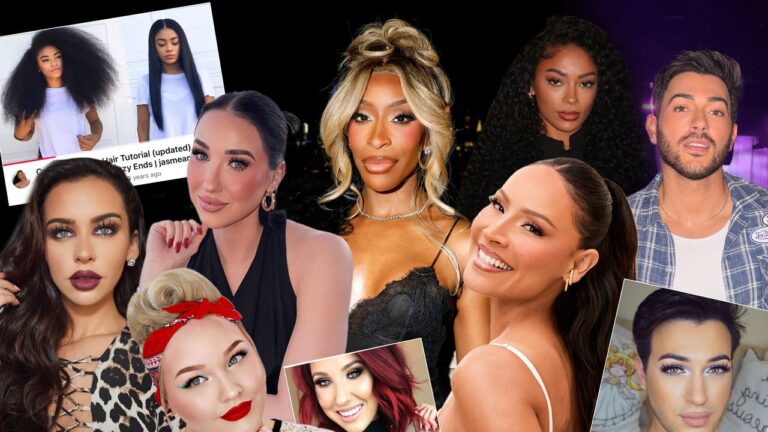
The original beauty YouTubers who built this space are reflecting on that transformation. We caught up with three of the biggest names from that golden era to find out how they’re navigating a decade later, what they’ve built since, and what they genuinely miss about the beginning.
Jaclyn Hill: Building Empires, Then Stepping Back
Jaclyn Hill started uploading to YouTube in 2011 with a single video: a recreated Kim Kardashian New Year’s Eve makeup look from Glamour’s cover. She was working at MAC at the time and making between $2,000 and $3,000 monthly from AdSense revenue—money people told her wasn’t sustainable. She quit anyway. That first month without her MAC salary, she earned $12,000 on YouTube alone.
The Power of a Viral Tutorial
Her breakthrough came from a smoky cat-eye tutorial that took months to gain traction. It started with 15,000 views, then climbed to 70,000, then 100,000. Hill discovered that Kylie Jenner—then known mainly as the youngest Kardashian sister—had shared the video on her Tumblr with a direct link. Within the first year, that single tutorial accumulated 20 million views. Hill has continued using the same eyeliner technique for over a decade, including her rule never to make a “fishy face” when contouring, instead running shadow from the top of the ear down to the mouth.
The Brand Era and Its Costs
Her YouTube success led to three separate brand launches. The opportunity seemed obvious—as a successful creator, she could monetize through AdSense, partnerships, brand collaborations, and her own companies. But the brands consumed her. By her own account, she rushed into ventures, placed trust in the wrong people, and lost touch with what drew her to content creation in the first place. “I was like, how did I get here? Why am I running brands? I’m miserable,” she said. “I used to be so happy posting makeup tutorials.”
Finding Balance and Autonomy
More recently, Hill has learned to set boundaries. She took a six-day trip to Idaho with her husband Jordan Torrey without posting to social media—something she couldn’t have imagined during her ten-year period of never taking a single day off. She recalls being so sick with the flu that she could barely function, yet forced herself to film because her audience would react with anger on Twitter if she didn’t post. Now she separates Jaclyn Hill (the online persona) from Jaclyn Torrey (the person), understanding that public criticism isn’t about her real self but about the character she projects online. That distinction has freed her from some of the paranoia—the feeling that strangers at Trader Joe’s might recognize her and judge based on tabloid gossip or viral drama. She’s spoken about her divorce, though she regrets sharing that much, and she wants to be clear with other creators: you don’t have to broadcast every personal crisis to your audience.
Desi Perkins: Brands, Motherhood, and Returning to Form
Desi Perkins launched her YouTube channel in 2013 with a soft, warm, sultry eye makeup tutorial. Her real introduction to content creation came accidentally—she did her husband Steven’s makeup for a Halloween work party, which led to $50 bookings doing Halloween makeup for neighbors, which led to television makeup work on an ABC Family show. A repost from Vegas Nay, one of the biggest beauty accounts at the time, sent her followers exploding.
From Creator to Founder
In 2014, she signed on as an Ipsy creator—the first time she was paid directly for content creation work. She was living in a makeshift garage apartment at the time, making the opportunity feel transformational. She eventually launched two brands: Dezi, a sunglasses company, and Dezi Skin, a skincare line. Eyewear offered immediate gratification—she could spot people wearing her frames in public. Skincare required patience and trust-building; customers had to buy repeatedly to justify the investment. She built both companies while simultaneously becoming a mother, a combination she describes as hectic.
A Four-Year Break
Perkins didn’t post to YouTube from April 2023 until April 2026. Motherhood forced an identity crisis: “You come out of it thinking, who am I? What am I doing? Am I the same person?” That introspection, combined with building two brands from scratch, pulled her away from her creator identity. The timing coincided with 2020, when few people wanted to watch makeup tutorials and the world felt heavy. When she returned in April 2026, her first video was a makeup look that was half 2016 and half 2026—a direct reference to her own evolution and her audience’s hunger for her return.
Jackie Aina’s Foundations
Jackie Aina started earlier than both Hill and Perkins. She uploaded her first video to YouTube in 2009, featuring an electric purple eyeshadow look broken down through photos and graphics. It wasn’t until year six—around 2015—that she made enough money to leave her side job completely. Her breakthrough came with a parody video called “Trends We’re Ditching,” which went viral and sent her other videos into rotation. Subscribers arrived “by the hundreds of thousands damn near overnight.” She’s now the founder of FORVR Mood, a lifestyle and fragrance brand, with 3.41 million YouTube subscribers and significant followings across Instagram and TikTok.
An Industry Transformed
The creators themselves recognize how fundamentally the beauty influencer space has changed. Brands once rejected YouTubers outright, with one cosmetics company explicitly telling Perkins they didn’t hire people with a following. Now, brands actively court creators of all sizes, and opportunities extend beyond traditional sponsorships—affiliate links, user-generated content contracts, and paid partnerships are available to anyone producing quality content. The barrier to entry has lowered, but authenticity has become harder to find.
When products launched in the early days, creators gave honest opinions. If a new lip gloss wasn’t good, they said so directly. Now, according to Hill, many creators avoid negative reviews because they fear losing brand relationships and PR packages. “Point-blank period,” Hill emphasized, many creators now think, “I want to work with that brand and I don’t want that brand to stop sending me PR.” That strategic calculation is what she wishes could change.
What’s Missing From Modern Beauty Content
Hill misses logging into YouTube and seeing four of her favorite creators had all uploaded within 24 hours, each video 20 to 30 minutes long—content you could settle in with like a television show. There was no drama, no negativity, just makeup. Perkins noticed that people back then weren’t afraid to try experimental looks, even knowing not everyone would wear a glitter cut crease in real life. The appeal was in the fun of watching someone create something bold. Both creators describe that era as less about aesthetics and more about community and exploration.
What they don’t miss: the pressure to post constantly. Hill remembers the intensity of a tiny creator pool where the audience felt personally betrayed if you took a day off. The demand was suffocating, even when it came from a place of genuine love.
The Path Forward
Hill wants to relaunch her lipstick line eventually—”I just feel like it’s a box that I need to check for myself”—but on her own terms this time. Perkins sees long-form content staging a comeback as people burn out on short-form video. “Let’s meet back over there on YouTube,” she said, sensing her audience’s hunger for depth and connection again. Both creators are thinking about legacy, authenticity, and how to build without losing themselves.
Frequently Asked Questions
When did Jaclyn Hill start posting on YouTube?
Jaclyn Hill uploaded her first video in 2011, a recreated Kim Kardashian New Year's Eve look from a Glamour cover. She was working at MAC at the time and making $2,000 to $3,000 monthly from AdSense before quitting to pursue YouTube full-time.
Why did Desi Perkins take a break from YouTube?
Desi Perkins took a four-year hiatus from YouTube (April 2023 to April 2026) due to the combination of motherhood and building two brands—Dezi Skin and Dezi sunglasses—simultaneously. Motherhood forced an identity crisis, and the early pandemic years made beauty content feel irrelevant.
What do these creators miss most about early beauty YouTube?
Hill misses the community aspect—logging in to see her favorite creators upload 20–30 minute videos within 24 hours, each containing purely makeup content with no drama. Perkins misses people being willing to create experimental looks like glitter cut creases just for the fun of it, rather than pursuing aesthetic perfection.
