
Key takeaways
- At-home whitening kits use hydrogen peroxide or carbamide peroxide at lower concentrations than professional treatments, delivering visible results when used as directed.
- Six top products include Crest Whitestrips, Opalescence Go trays, Colgate Optic White pen, AuraGlow LED kit, Quip dissolving strips, and Burst non-slip strips, each suited to different preferences and sensitivity levels.
- Yellowing from coffee, tea, and wine responds well to whitening; graying teeth or banded stains require professional treatment.
- Dentist consultation before starting ensures teeth and gums are healthy enough for whitening and maximizes the treatment's effectiveness.
Yellowing and staining happen to most people eventually, whether from daily coffee consumption, tea, wine, or simply the passage of years. While professional treatments at a dentist’s office deliver the strongest results, at-home whitening kits offer a realistic alternative for maintaining brightness between dental visits. These systems use whitening agents at lower concentrations than in-office procedures, but when selected carefully and used as directed, they produce noticeable changes. The key is understanding how they work and which formula suits your teeth and lifestyle.
How Teeth Whitening Actually Works
The Science of the Enamel Matrix
Tooth enamel resembles a crystalline structure that, under magnification, looks similar to chicken wire or mesh. Stains become embedded within this matrix, and whitening products work by opening that structure temporarily to release the discoloration before sealing it back. This process requires a peroxide-based agent to trigger the color bubbling that lifts stains away.
Peroxide Strengths: Over-the-Counter vs. Professional
At-home kits use either hydrogen peroxide or carbamide peroxide, a more stable compound that manufacturers favor because it maintains consistency in products sitting on store shelves. The critical difference between home and professional whitening lies in concentration levels. Dentists can apply stronger formulas—up to 40% peroxide in their offices—because they protect gum tissue and ensure the agent touches only tooth surfaces. Over-the-counter products must use lower concentrations since they risk contact with gums or accidental swallowing.
Realistic Expectations About Results
Whitening restores teeth to their natural shade by removing stains, but it doesn’t create the artificially white or opaque appearance sometimes seen in media. According to Sharon Huang, a cosmetic dentist in New York City, the goal is brightness achieved through stain removal, not a drastically altered tooth color. This distinction matters for setting realistic hopes before starting any treatment.
Six Standout Whitening Products
Crest 3D Whitestrips for Established Results
Crest Whitestrips remain among the most recognized over-the-counter systems, and their staying power comes from consistent performance. Neil Hadaegh, a board-certified cosmetic and restorative dentist in Beverly Hills, recommends them specifically, noting that patients with naturally lighter teeth or mild discoloration report satisfaction. Giri Palani, also based in Beverly Hills and Palos Verdes, confirms that when used correctly, these strips deliver results approaching professional whitening. One tester followed the manufacturer’s protocol—45 minutes daily for 20 days—and successfully addressed years of coffee staining without aggravating sensitive teeth.
Opalescence Go Whitening Trays with Built-in Benefits
These pre-filled trays come in 10% or 15% hydrogen peroxide concentrations, available in Mint or Melon flavors. The gel formula remains dense and adheres to the tray surface, minimizing leakage onto the tongue or down the throat. Chrystle Cu, a board-certified dentist in San Mateo and Cocofloss founder, praises the dense formula for this reason. Clement Kairouz, a cosmetic dentist splitting time between New York and Dubai, highlights that the trays soften with body heat and conform to individual tooth contours, providing more even coverage than flat strips that can gap. These trays also incorporate potassium nitrate and fluoride, addressing sensitivity and strengthening enamel during the whitening process—features absent from most drugstore alternatives. Marina Gonchar, a board-certified dentist at Skin to Smile in Morristown, New Jersey, endorses the product but urges caution with the higher-concentration formula, which can intensify tooth sensitivity with extended use.
Colgate Optic White Express Pen for Quick Results
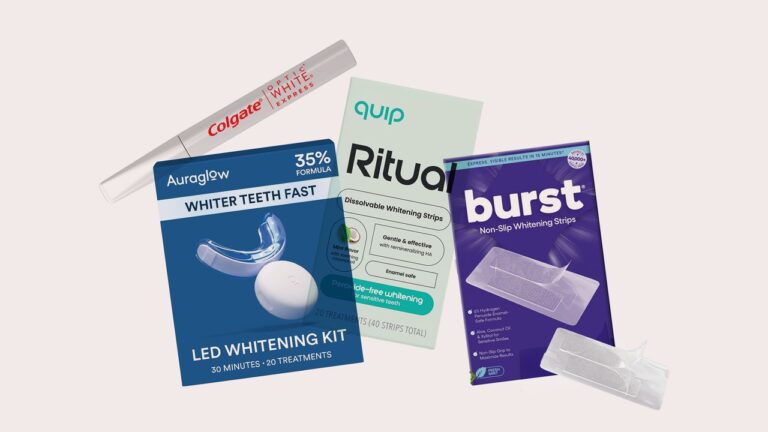
This portable pen contains 35 treatments delivered through a simple formula of alcohol solvent, copolymer, hydrogen peroxide, and water. The pen applies whitening directly to tooth surfaces, and results emerge within an hour—requiring only that food be avoided during that window (water is acceptable). A dried film forms and brushes away with water. The manufacturer recommends a week-long course: three applications on day one, then two applications daily through day seven. For urgent situations, even a single day of use or three applications produces visible improvement, making this option ideal for pre-event touch-ups.
AuraGlow LED Kit with Professional-Level Concentrations
LED devices pair whitening agents with light technology intended to activate the formula. Pia Lieb, a board-certified cosmetic dentist in New York City, recommends the AuraGlow kit for its effectiveness and affordability compared to other LED systems. The kit provides trays and an LED mouthpiece for simultaneous treatment of upper and lower teeth. With 35% carbamide peroxide—approaching the 40% strength used in many dental offices—the formula demonstrates the product’s capability. Noticeable improvements appear after one or two 30-minute sessions, and after a week of use, teeth should appear 10 shades brighter.
Quip Ritual Dissolving Strips for Sensitive Teeth
Designed for people whose teeth cannot tolerate peroxide-based whiteners, this option uses hydroxyapatite to reinforce tooth enamel alongside pentasodium triphosphate and phthalimidoperoxycaproic acid (PAP) to break down stains. PAP functions more gently than hydrogen peroxide while maintaining effectiveness for stain removal, though research indicates hydrogen peroxide performs better against deep discoloration. The strips contain coconut oil to nourish and calm gums, providing immediate brightness and long-term gum health. Sharon Huang notes the simplicity of use: lick, stick, and the strip dissolves within 15 minutes.
Burst Non-Slip Whitening Strips with Protective Ingredients
Available in Mint and Watermelon flavors, these strips deliver improvements after a single 15-minute application, though daily use for a week maximizes results. Beyond hydrogen peroxide, they contain xylitol, which increases saliva production and neutralizes mouth acids that erode enamel—resulting in less post-treatment sensitivity than other peroxide-based options. The strips grip teeth firmly to ensure even coverage and prevent slipping. Aloe and coconut oil formulation makes them potentially suitable for people with sensitive or inflamed gums.
Which Stains Respond Best to At-Home Whitening
Yellowing from coffee, tea, wine, and age responds well to whitening treatments. Graying teeth or banded staining—horizontal discoloration embedded in the tooth—stem from antibiotic use or tooth trauma and resist at-home treatment. These stubborn conditions require professional intervention. Deep yellow stains also benefit from dentist-administered whitening.
Side Effects and Precautions
At-home whitening can increase tooth sensitivity and irritate gums, potentially worsening existing issues like exposed roots or gum recession. Overuse thins enamel and may leave teeth appearing grayer at the edges rather than brighter. After completing a whitening course, dentists recommend waiting one or two weeks before starting another. Whiteners also have no effect on veneers, bonding, crowns, or fillings, so whitening must account for existing dental work or align with future restoration plans.
Expert Tips for Success
Schedule a dental cleaning before starting at-home whitening to ensure the product contacts tooth enamel rather than tartar or buildup, maximizing effectiveness. Giri Palani emphasizes checking product shelf life and storing the kit in the refrigerator for longevity. Consult with a dentist before beginning—cavities, periodontal disease, or other conditions that cause discoloration make whitening inappropriate until those issues resolve. All peroxide-based over-the-counter whiteners yield comparable results when instructions are followed; use for 7 to 10 days initially, then maintenance every other week or as needed.
Frequently Asked Questions
How long do at-home whitening kits take to show results?
Results vary by product: Colgate Optic White pen works within an hour, Burst strips show improvement after one 15-minute session, Crest Whitestrips require 45 minutes daily for 20 days, and AuraGlow promises 10 shades whiter after a week of use.
Are at-home whitening kits safe for sensitive teeth?
Products with added protective ingredients like potassium nitrate, fluoride, aloe, and coconut oil reduce sensitivity—examples include Opalescence Go, Burst strips, and Quip strips. However, overuse can worsen sensitivity by thinning enamel, so a break of one to two weeks between courses is recommended.
What types of stains respond best to at-home whitening?
Stains from coffee, tea, wine, and age-related yellowing respond well. Graying teeth, banded staining from antibiotics or trauma, and deep discoloration are better treated by a dentist.
