
Key takeaways
- Spray sunscreens require rubbing in after application to ensure even coverage and achieve the full SPF listed on the label.
- Mineral formulas with zinc oxide are gentler for reactive skin, while chemical sunscreens dry faster and feel lighter on the skin.
- Water-resistant spray sunscreens protect skin for 40-80 minutes depending on the formula, but reapplication every two hours is still recommended.
- Travel-friendly sizes and fragrant options make spray sunscreens practical alternatives that encourage consistent reapplication throughout the day.
Sun protection isn’t a one-and-done affair. While the first application of sunscreen is crucial, dermatologists emphasize an equally important rule: reapply every two hours, or sooner if you’re in the water or sweating heavily. For many people, this constant vigilance presents a real-world obstacle. Lotions are cumbersome, potent, and leave skin feeling thick on hot days. This is where spray sunscreens step in—lightweight, portable, and designed to make the reapplication ritual feel less like a chore. Dr. Mona Gohara, a board-certified dermatologist based in Connecticut, explains the appeal: “The convenience and the lightweight, airy application of a mist makes it very easy for reapplication.”
The catch? Dermatologists stress that sprays require a different technique than lotions to deliver the full SPF protection promised on the label. “It’s not that spray sunscreen is ineffective,” notes Dr. Taryn Huizenga of Spring Street Dermatology in New York City. “It’s that most people don’t apply enough to achieve the SPF listed on the label. When sprayed directly onto the skin, it can go on unevenly or too thin, leaving you less protected than you’d be with a lotion.” The solution, however, is straightforward: after misting the product onto your skin, rub it in thoroughly to ensure even distribution. Dr. Huizenga recommends an alternative technique for extra assurance—spray the sunscreen directly into your hands first, then massage it in like a traditional lotion. Environmental factors matter, too: applying in a breeze allows the product to drift away before it reaches your skin.
Dermatologist-Backed Picks That Actually Work
EltaMD’s UV AOX Mist Broad Spectrum SPF 40 has earned the trust of dermatologists including Dr. Huizenga and Dr. Brendan Camp, a board-certified dermatologist based in New York. The formula uses mineral actives with a lightweight texture that feels surprisingly airy on the skin. What sets it apart is its deceptive appearance: the product emerges white from the bottle but turns transparent within seconds of contact with skin. The formula includes aloe vera and glycerin for soothing properties, and contains antioxidants that fight environmental damage. The nozzle operates at any angle and locks securely via twist mechanism, making it leak-proof for travel. Allure recognized the product with a Best of Beauty Award in 2024.
Antioxidant-Rich Formulas Beyond Basic SPF
For those seeking additional antioxidant protection beyond basic SPF, Supergoop’s Play Antioxidant Body Sunscreen Mist SPF 50 combines chemical sunscreen actives with green tea extract and acai extract to defend against free radicals—unstable molecules that drive cell damage and contribute to skin cancer, dark spots, and collagen breakdown. The spray is ultrafine and delivers staying power: it resists water and sweat for up to 80 minutes. Dr. Camp notes that the lightweight, refreshing consistency encourages people to actually reapply throughout the day. The product also arrives in fragranced versions—sunny citrus, vanilla orchid, and whipped coconut—adding a sensory dimension to sun protection.
Formulas for Sensitive and Reactive Skin
Those with reactive skin or sensitivity to chemical sunscreens often find mineral formulas gentler. Blue Lizard’s Sport Mineral Sunscreen Spray omits drying alcohols and irritating fragrances, and relies on zinc oxide—a mineral blocker that sits on the skin’s surface rather than penetrating it. Dr. Camp describes it as “a strong choice for those looking for a mineral-based formula that is gentle on reactive skin while still offering reliable UV protection.” The spray propels with consistent strength, though the instruction to shake before application is essential, and rubbing it in afterward ensures even coverage.
Hydrating Formulas for Active Days
La Roche-Posay’s Anthelios UV Pro-Sport Invisible Spray Sunscreen SPF 45 was formulated and tested under conditions of extreme heat and humidity, designed for endurance athletes and active outdoor enthusiasts. Its hallmark is the addition of the brand’s signature thermal spring water, which lends a noticeably hydrating quality to the formula—a departure from the drying sensation some spray sunscreens leave behind. The product remains water-resistant for 80 minutes and contains no fragrance, making it suitable for people with fragile skin barriers. The formula dries quickly and feels comfortable rather than heavy or oily upon application.
Unique Formulations and Niche Applications
Naked Sundays’ Hydrating Glow Mist Setting Spray SPF 50 occupies a distinct category: rather than serving as a first-line defense, it layers over your existing face sunscreen and makeup as a setting spray. This two-in-one approach boosts radiance while delivering additional UV protection and antioxidant defense against free radicals. The formula combines hyaluronic acid and watermelon extract for lightweight hydration, with chemical filters that remain invisible and easily blendable into makeup. Application requires about seven pumps followed by gentle rubbing, and the formula dries swiftly despite its hydrating ingredients. The product comes in travel-friendly sizes, crucial for on-the-go reapplication during a day outdoors or abroad.
Hybrid Spray-Lotion Formulas
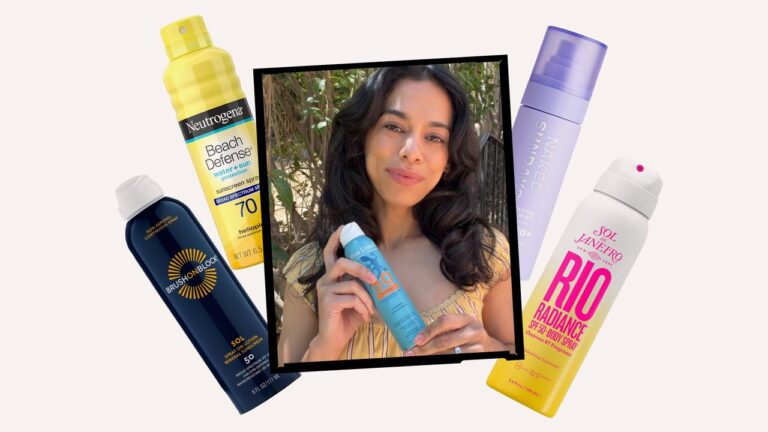
Brush On Block Sol SPF 50 Mineral Spray On Lotion merges the hydrating benefits of traditional lotions with the convenience of spray application. Avocado oil nourishes the skin, niacinamide supports the skin barrier, and aloe vera soothes sun-exposed areas. The visual cue is helpful: the product appears white upon spraying, then clears as it sets, allowing users to see exactly where coverage has been applied and identify any gaps. Despite its moisturizing profile, the formula avoids stickiness or greasiness once set, and maintains water and sweat resistance for 80 minutes.
Budget-Friendly and Fragrant Options
Neutrogena’s Beach Defense Sunscreen Spray SPF 70 delivers serious protection at an accessible price point. The lightweight, oil-free formula applies in a strong, continuous spray and becomes virtually imperceptible once rubbed in. Water resistance lasts up to 80 minutes, and the product won’t melt, run, or migrate into eyes. One caution: the spray contains a chemical propellant that can irritate if inhaled, so application in a well-ventilated area is advisable.
For those who prioritize fragrance and sensory experience alongside sun protection, Sol de Janeiro’s Rio Radiance SPF 50 Body Spray infuses warm sand, coconut milk, ylang ylang, and vanilla notes into a sun-protective formula. Niacinamide brightens while coconut water hydrates without excessive shine. The formula earned an Allure Best of Beauty Award, and provides water resistance for 40 minutes—a shorter window than some competitors, but intentional for a product designed for reapplication throughout the day.
Application Technique Determines Success
The common thread across all these products is that success hinges on proper technique. Spray sunscreen is not a set-and-forget product; it demands the extra step of rubbing in to ensure thorough, even coverage. Environmental conditions matter—wind direction, humidity, and application setting all influence how effectively the product lands on and adheres to skin. Shaking mineral formulas before use ensures even dispersion of actives. The payoff for this additional attention is real: a sunscreen that travels easily, feels comfortable in heat, and transforms the tedious reapplication ritual from an obstacle into an achievable habit.
Frequently Asked Questions
How often should you reapply spray sunscreen?
Dermatologists recommend reapplying every two hours, or sooner if you're swimming or sweating heavily.
How do you apply spray sunscreen correctly?
After spraying onto skin, rub it in thoroughly to ensure even distribution. You can also spray directly into your hands and rub it in like a lotion. Avoid applying in windy conditions.
What's the difference between mineral and chemical spray sunscreens?
Mineral sunscreens like zinc oxide sit on the skin's surface and are gentler for sensitive skin, while chemical sunscreens are absorbed and typically dry faster with a lighter feel.
