
Key takeaways
- Gap's reformulated '90s fragrances replace outdated polycyclic musks with modern alternatives that offer better biodegradability and safety without sacrificing scent quality.
- Master perfumers Honorine Blanc and Nicole Mancini developed two-year formulations that balance nostalgia with contemporary fragrance trends, creating a 'rebirth' rather than a 'revival.'
- The five-scent collection—Heaven, Grass, Dream, Om, and new Harmony—splits longtime fans between pure nostalgia seekers and those who embrace the modern evolution.
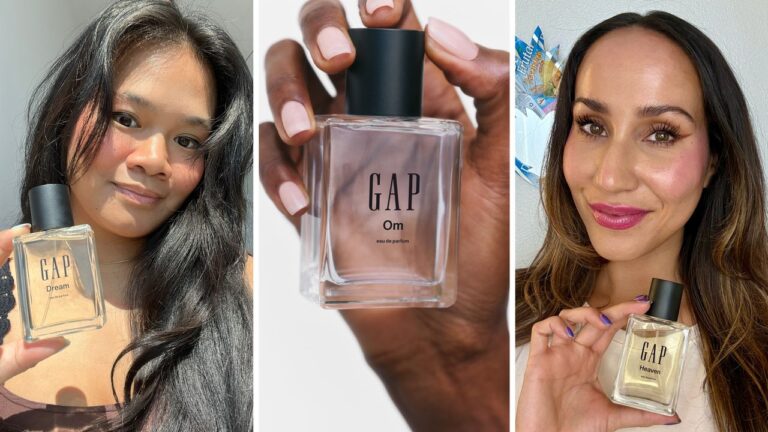
- Testers found the new fragrances read more grown-up and polished than the originals, with deeper floral and woody notes that reflect 2026 preferences over '90s transparency.
When Gap Inc. decided to resurrect its storied fragrance collection from the 1990s, the company faced a challenge that went beyond simply dusting off old formulas. The world has changed dramatically since the decade when these scents first captured the imagination of mall shoppers everywhere. Between technological advances, shifts in consumer preferences, and updated ingredient standards, reimagining Heaven, Grass, Dream, and Om for 2026 required more than nostalgia—it demanded a careful recalibration of chemistry.
The project tasked two master perfumers from DSM-Firminich with solving this puzzle. Honorine Blanc, who originally created Om in 1996, returned to refresh that fragrance along with Dream and an entirely new composition called Harmony. Nicole Mancini stepped in to evolve Heaven and Grass. The two-year development process was deliberate and thorough, with Deb Redmond, Gap Inc.’s head of beauty, overseeing the vision.
“There is definitely an emotional foundation there,” Redmond explained of the original collection. “You’ll recognize that emotional connection in the new eaux de parfums, but the scents definitely have a new modernity to them that I feel is more of what the beauty customer today is really looking for.”
A Decade Defined by Fragrance
The Original Era
Before the internet defined our personalities, the fragrance counter did. In the 1990s, Gap’s inaugural scents told a specific story. Heaven and Grass debuted in 1994, followed by Dream in 1995 and Om in 1996—four fragrances that became shorthand for identity during a cultural moment when we were all testing and retesting who we wanted to be. A walk through the mall revealed distinct tribes: the Dream devotees, Heaven supporters, the selective Om admirers, and the nature-forward Grass enthusiasts. These weren’t interchangeable fragrances; they carried meaning.
The collection eventually faded from Gap’s main retail presence, though bottles lingered in outlet locations for years. But for those who wore them during that specific moment, the scents became locked in memory. My mother’s signature was Grass; my own childhood beauty rituals involved raiding her collection. These weren’t anonymous designer fragrances—they carried the specific scent architecture of their time.
Why We Needed This Reboot
Now, after more than three decades, Gap is bringing them back alongside a new companion, Harmony, marking a full-scale return to the fragrance market. The company’s timing reflects a broader cultural moment. Blanc describes it this way: “It’s very important today. Since 1996, we had COVID, a different war, we now have better technology, AI, a smarter consumer, huge changes. This new generation is looking for what was in the ’90s because there was this comfort. The ’90s is becoming today like the comfort, the safety.”
The Science of Nostalgia
The Polycyclic Musk Problem
The most significant challenge in reformulating these scents wasn’t creative—it was chemical. The original Heaven relied on a specific ingredient that’s now largely phased out: polycyclic musk. This note created the clean laundry effect that defined many beloved fragrances from that era, including products like CKOne and The Body Shop’s White Musk.
“Some of the original raw materials and methods from the ’90s aren’t used the same way now,” Blanc noted. Over the past 30 years, scientific evidence accumulated that polycyclic musks resist biodegradation, making them problematic from an environmental perspective. The shift has become industry-wide, with fewer brands incorporating these ingredients as understanding of their impact grows.
Modern Solutions
Mancini’s approach was methodical: replace the outdated musk structure with modern alternatives that perform similarly but safely. “More and more, the fashion is that they’re not being used in a lot of brands anymore,” Mancini said of the retired ingredient. Stephen Nilsen, a master perfumer at Givaudan, explained the broader shift: newer musk structures offer “better safety, performance, and biodegradability” without sacrificing the olfactory experience.
For Heaven specifically, Mancini introduced Amberever, a DSM-Firminich amber that sits prominently at the top and lingers throughout wear. This substitution allowed her to capture the warmth and skin-like comfort of the original while meeting contemporary formulation standards.
Dream: Capturing Optimism
The new Dream centers on a warm musk base layered with bergamot, jasmine, and cedarwood—a formula Blanc intentionally brightened with orange blossoms and more pronounced wood notes to evoke the original’s “clean white T-shirt” aesthetic.
“When I came to the US in 1994, Gap fragrance had just come to the market, and everybody was talking about the iconic Gap Dream,” Blanc reflected. “Gap Dream is optimism, freshness, and clean.”
The new formulation splits longtime fans and newcomers. Sophia Panych, a longtime admirer, felt the recreation succeeded immediately: “Dream at first spritz takes me right back to sitting on the floor in eighth grade, spritzing the last drops of my travel-size spray. I haven’t smelled the original Dream in decades, but the first time I smelled this new version on me, I was like, that’s it! That’s Dream.”
Others found more complexity in the evolution. Jesa Marie Calaor noted the reformulation’s increased roundness—”less sharp and metallic”—while still feeling contemporary. “It’s more rounded and still feels very in-line with what I’d wear today,” she observed. Sable Yong appreciated the heavier development but mourned the loss of the original’s metallic aquatic facet. “The new version is more robust, more floral,” she said. “If I am comparing it to the one from the ’90s, it almost feels like the full-fat version of the original, made a bit more dense to last.”
Heaven and Earth
Mancini described reconceiving Heaven as painting with light and wonder—the feeling of gazing at a dark sky dotted with stars. The new composition layers solar vanilla, modern simple musks, juniper, and cardamom into something Mancini calls “cocooning and comforting.”
The original Heaven relied on transparency and florality—sharp, crystalline, resembling freshly laundered cotton pillowcases. This version arrives as something different entirely: grown-up and amber-forward, with powdery undertones that contradict the aquatic memory many carry. Marianne Mychaskiw articulated this friction clearly: “It’s different, but objectively, it’s a very pretty scent. There is actually a nostalgic element that reminds me of another scent I was obsessed with back in ’99 and the early ’00s.”
For those seeking fidelity to the original, Mychaskiw has advice: “If you’re looking for a biblically accurate recreation of Heaven, the eau de toilette version is very close, and features that iconic white floral bouquet that instantly transports me back to the mall circa ’97. The 2026 version veers more fancy ’90s bombshell who is the newest neighbor at Melrose Place, clad in a white satin robe with a mean blowout.”
Completing the Circle
Om maintained its mysterious, luminous character, staying closest to the original formula because, as Blanc noted, it “was ahead of its time.” With notes of ginger, incense, sandalwood, musk, and resin, the new version feels “more balanced” and “more golden and warm” than the spicy, slightly cold predecessor. Yong described it this way: “like if the cool ’90s grunge kid grew up, got a 401k, and expanded their fragrance palate, but still plays the same Nirvana vinyls that they’ve held onto for decades, albeit on a very nice record player.”
Grass underwent perhaps the most radical conceptual shift. Rather than literal fresh-cut lawn, Mancini redirected it toward wellness and nature-as-therapy, incorporating matcha to bring meditative qualities. The new composition layers mandarin (representing sunshine), green notes, and that meditative matcha character. Calaor found the shift successful: “It’s definitely a very green scent and is more dynamic than the original, which smelled just like a freshly cut lawn. Still, it evokes the feeling of being outside in nature.”
Harmony, the collection’s new fifth member, arrives as an effervescent fruity-floral combining apricot, mandarin, gardenia, jasmine, and tuberose. “I wanted to create a fragrance that is an explosion of happiness,” Blanc said. The result reads distinctly early-2000s in sensibility—bright, juicy, summery—and immediately resonated with testers. Calaor enthused: “This is so bright and juicy. It’s a smack in the face with fruity notes. It’s giving early 2000s MTV Spring Break. All I want to do is head to the mall and shop for a trip to the beach.”
Frequently Asked Questions
What happened to the original Gap fragrances from the 1990s?
The original Heaven, Grass, Dream, and Om fragrances slowly disappeared from Gap's main retail shelves after their 1990s launches but continued to be found in Gap Factory Outlets for years. Gap is now rereleasing all four with updated formulations, plus introducing a new fifth fragrance called Harmony.
Why did Gap replace the original musk formulas?
The original fragrances, particularly Heaven, used polycyclic musks—the same ingredient in popular scents like CKOne and The Body Shop's White Musk. Scientific studies found these musks resistant to biodegradation. Gap's perfumers replaced them with modern, simpler musk structures that offer better safety, performance, and environmental biodegradability while maintaining the olfactory character.
Who created the new 2026 fragrances?
DSM-Firminich master perfumer Honorine Blanc, who originally created the 1996 Om, reformulated Om along with Dream and the new Harmony. Nicole Mancini, a principal perfumer, reimagined Heaven and Grass. The two-year development process was led by Gap Inc. head of beauty Deb Redmond and prioritized consumer testing with both longtime fans and new customers.
