
Key takeaways
- Fine hair requires lightweight hydration with glycerin and panthenol applied to mid-lengths and ends only to prevent flatness while avoiding dryness and breakage.
- Top volumizers like Rōz Foundation and Virtue Full use protein and oil blends that strengthen without weight, with multiple Best of Beauty Award wins.
- Use protein treatments once or twice monthly—overuse makes fine hair brittle—alternating with lightweight hydrating conditioners for optimal balance.
- Avoid silicone-heavy formulas; instead prioritize humectants and lightweight conditioning agents that won't accumulate and weigh strands down.
Fine hair presents a unique conditioning challenge: each strand has a smaller diameter than thicker hair types, making it more prone to damage from routine brushing, heat styling, and even tight ponytails. Yet the very lightness that makes fine hair vulnerable also means it rejects heavy conditioners that most hair types benefit from. Striking this balance between nourishment and weightlessness is where the right product becomes transformative.
According to Julie Dickson, a hairstylist based in New York City, the key lies in understanding how fine hair absorbs products differently. “While fine hair has a smaller fiber and absorbs products differently, it still craves the same essential nourishment as any other hair type—which comes down to the right mix of ingredients and how they’re distributed throughout your hair,” Dickson explains. “You want to avoid oversaturating and weighing the hair down.” The goal is to find a formula that moisturizes dry hair without buildup, strengthens without stiffness, and adds body without grease.
The Problem With Most Conditioners
Skipping conditioner altogether creates its own problems. Fine hair left untreated becomes dry, tangled, and brittle—prone to breakage that makes strands look even thinner. Yet using the wrong formula can be equally damaging, creating limp, lifeless texture or greasy buildup at the roots. The difference between a formula that works and one that backfires often comes down to how the conditioner is formulated and, critically, how you apply it.
Choose Lightweight Hydration Over Rich Butters
Glycerin is one of the most effective ingredients for fine hair, acting as what Dickson calls a “moisture magnet” that keeps hair hydrated without the heavy feel. Panthenol works similarly—it provides slip for detangling while maintaining movement. These humectants draw moisture into the hair shaft without the residue that thicker emollients leave behind.
Focus on Proteins With Purpose
Proteins strengthen fine hair, but they must be used strategically. According to Gina Rivera, a hairstylist based in Las Vegas, “proteins have their place, but they are not to be overused; too much protein can have adverse effects.” Her recommendation: apply a protein treatment once or twice a month, relying on lightweight hydrating conditioners between treatments. Wheat protein, specifically, builds body in thin, fine hair without the weight that heavier proteins introduce.
Best Volumizing Conditioners for Fine Hair
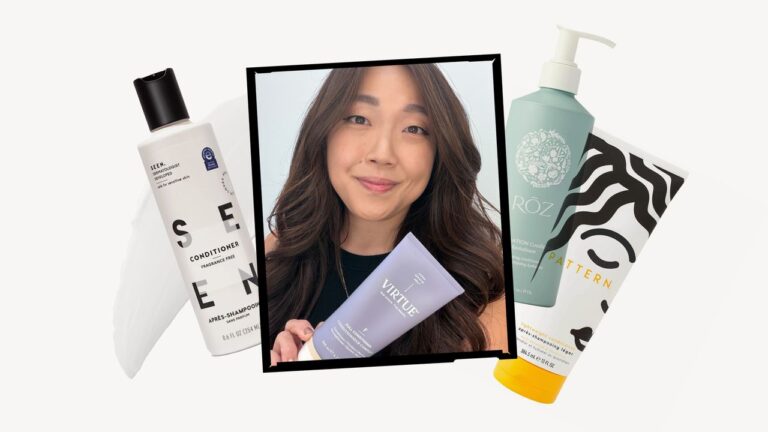
Mara Roszak, a celebrity stylist whose A-list clients include Emma Stone, Olivia Wilde, and Zoe Saldana, launched her Rōz line with fine-hair conditioning as a central focus. Her Rōz Foundation Conditioner earned a 2023 Best of Beauty Award for good reason: it’s sulfate-free and infused with walnut oil, which is packed with omega-3 fatty acids that strengthen strands and shield hair from damage. Julie Dickson describes it as “perfectly balanced—lightweight but hydrating, strengthening but never heavy.” The formula works on both virgin and color-treated hair, providing immediate nourishment while building long-term resilience.
Virtue’s Full Volumizing Conditioner, a Best of Beauty Award winner, approaches volume through a different mechanism. The brand’s proprietary Alpha Keratin 60k protein repairs and strengthens hair from the inside out, while hydrolyzed quinoa locks in moisture and biotin supports overall scalp and hair health. Kristina Maccaro, a colorist based in Jersey City, notes that “the formula works best for anyone with fine hair looking to prioritize volume over adding intense hydration.” For those needing extra moisture or recovery from very dry, damaged hair, Maccaro recommends pairing it with a deep-conditioning mask once weekly.
The Lightweight Conditioner That Feels Like Silk
Ouai’s Fine Hair Conditioner, created by founder Jen Atkin, combines biotin for strengthening, keratin for smoothing, and chia seed oil for deep hydration—yet maintains an airy texture. The creamy-but-lightweight texture moves through hair cleanly and rinses without residue. Clients often notice a difference after just one or two washes, and the Mercer Street–inspired scent is subtle enough that it doesn’t linger after styling.
For those with an oily scalp, Kérastase’s Spécifique Fondant Densité offers a different strategy. Glycerin provides hydration while lightweight conditioning polymers and ceramides smooth the cuticle and reduce tangles without richness. The formula also contains salicylic acid, a familiar skin-care ingredient that dissolves excess sebum and product buildup on the scalp. Applied strategically to mid-lengths and ends only—never the roots—it delivers hydration where fine hair needs it while maintaining body at the crown.
Fine, Curly Hair: The Delicate Balance
Pattern’s Lightweight Conditioner, by curly-hair innovator Tracee Ellis Ross, addresses the specific needs of fine curls, which naturally crave moisture but are easily weighed down. The silicone-free formula pairs glycerin, panthenol, lightweight conditioning agents, and coconut oil to hydrate and detangle while preserving movement and bounce. Irish moss keeps curls soft and moisturized, while biotin conditions the hair. According to Kenna Kennor, a hairstylist based in Brooklyn, “it never drags down the curl pattern or flattens the root.” For those mornings when hair needs refreshing without a full shampoo, this conditioner also doubles as a lightweight co-wash.
Repair-Focused Formulas for Compromised Hair
Fine hair exposed to bleaching, highlights, or chemical treatments requires extra reinforcement. K18’s Damage Shield Protective Conditioner, a 2024 Allure Best of Beauty Award winner, employs the brand’s signature K18Peptide to replenish proteins while a fortifying ceramide blend smooths the cuticle and reinforces weak spots. A biotech-derived polysaccharide shields strands from pollution and environmental aggressors. Despite its reparative power, Kenna Kennor notes that “it’s repairing at the strand level, not just coating things, so the hair feels genuinely stronger”—without the heaviness typically associated with repair formulas. Lightweight sweet almond and jojoba oils provide softness and detangling slip, and the conditioner also protects hair from UV damage for up to three days.
Biolage’s Volume Bloom Conditioner takes a gentler approach, designed specifically for color-treated hair. Its key ingredient, cotton extract, helps plump the hair for added fullness. Gina Rivera emphasizes that “it’s silicone-free and rich in texture, yet it doesn’t weigh the hair down,” making it ideal for those who’ve experienced buildup from traditional silicone-heavy products.
Sensitivity Matters
If you’re prone to scalp irritation or fragrance sensitivity, Seen’s Fragrance-Free Conditioner offers a minimalist solution. The formula relies on glycerin to draw in moisture and bisabolol to soothe sensitive skin, with shea butter-derived emollients providing softness and slip without richness. It has earned the National Eczema Association’s Seal of Acceptance, meaning it’s been vetted for ingredients less likely to irritate sensitive or eczema-prone skin.
How to Build Your Fine-Hair Routine
The right conditioner is only half the equation. Application matters enormously. Always focus product on your mid-lengths and ends, avoiding the roots entirely—this prevents the dreaded flatness at the crown while delivering nourishment where it’s most needed.
Reserve intensive protein treatments for once or twice monthly. On the days between, use lightweight hydrating conditioners with humectants like glycerin and aloe vera. Aloe vera is particularly effective for deep moisture and softness, delivering hydration without the heaviness. If your hair still feels parched after daily conditioning, a weekly hydrating mask or leave-in conditioner can provide an extra hydration boost.
Be cautious with silicone conditioners, which many stylists avoid for fine hair. While silicones temporarily seal the cuticle and create shine, they accumulate over time and can make fine hair feel flat and greasy. Instead, prioritize formulas with lightweight conditioning agents, peptides, and humectants that provide lasting results without buildup.
Frequently Asked Questions
What ingredients should fine hair prioritize in a conditioner?
Lightweight hydrating ingredients like glycerin, panthenol, and aloe vera work as humectants that draw moisture without heaviness. Proteins like Alpha Keratin 60k strengthen strands, but should be used strategically—once or twice monthly in treatments, not daily.
Why does most conditioner weigh down fine hair?
Many conditioners use heavy emollients or silicones that coat and accumulate on the hair shaft over time. Lightweight formulas with glycerin, panthenol, and proteins provide strength and hydration without residue, maintaining volume at the roots.
Should fine hair use protein treatments?
Yes, but sparingly. Protein treatments like those with wheat protein or Alpha Keratin 60k strengthen fine hair, but using them more than once or twice monthly can make strands brittle. Alternate them with lightweight hydrating conditioners on other days.
