
Key takeaways
- A new $499 full-body scan technology is disrupting a wellness market dominated by $1,200–$4,000 competitors, with the same celebrity appeal but different imaging approach.
- Reported discoveries like stage 3 lung cancer have driven consumer interest, but medical experts caution that success stories do not constitute scientific evidence of benefit.
- The medical community remains skeptical, warning that these scans lack scientific validation and may cause more harm than good by flagging incidental findings and displacing proven screening tests.
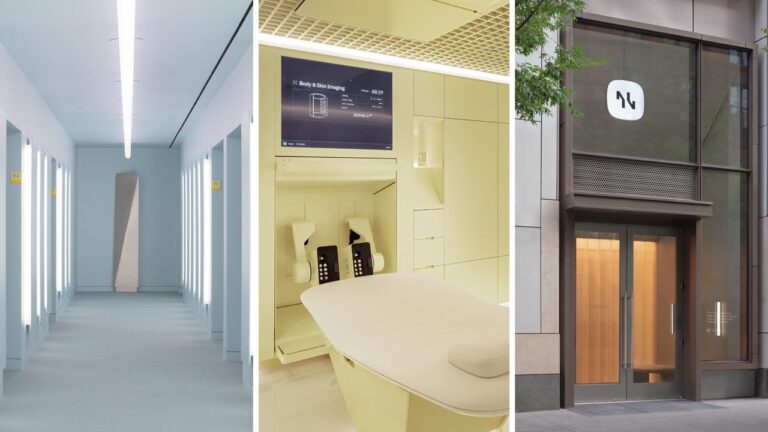
Neko Health, a health-screening company that already operates in Sweden and the UK, is now bringing full-body scans to New York City at a significantly lower price point than celebrity-endorsed competitors. The company’s signature scan costs $499, a stark contrast to Prenuvo’s $1,200 to $4,000 offerings. This represents a major shift in the commercial wellness market, where preventive imaging has become increasingly popular among celebrities and health-conscious consumers seeking early detection of potential health issues.
The appeal is evident: Neko Health reports more than 350,000 people globally on its wait list. The company plans to expand beyond New York to Miami, Washington, DC, and San Francisco, signaling serious ambitions for the US market. Hjalmar Nilsonne, Neko Health’s cofounder and chief executive officer, explained the strategic choice to launch in NYC: “It’s a city where people are used to having access to the best of everything—and we think health care should be no different.”
What Sets Neko Health Apart
Unlike many competitors that rely on MRI technology, Neko Health employs 2D cameras, thermal imaging, and depth sensors to generate detailed health assessments. The scan is paired with a blood test, skin evaluation, and key biomarkers including blood pressure and heart rate measurement. This combination of imaging and biomarker data differentiates Neko Health’s approach from traditional MRI-based screening.
The affordability of Neko Health’s offering addresses what has been a significant barrier to commercial scanning adoption. At $499, the scan is accessible to a wider demographic than premium competitors. Nilsonne told Allure: “Understanding your health shouldn’t mean waiting until something feels wrong. Our goal has always been high-quality preventive health care for everyone—and that means building the technology and clinical approach to make it genuinely accessible.”
The Competitive Landscape
The commercial full-body scan market includes several established competitors. Prenuvo, endorsed by celebrities including Kim Kardashian, Kate Hudson, and Cindy Crawford, offers multiple packages ranging from head-to-thigh scans with blood tests to comprehensive whole-body scans with body-composition analysis, brain imaging, and heart-health scanning.
Function (which acquired Ezra) and SimonMed also compete in this space. These companies operate across different geographic footprints: Prenuvo serves multiple major cities including Washington, DC, Los Angeles, and New York; Ezra reaches 40 states; and SimonMed concentrates in Florida, Arizona, Texas, and California.
Celebrity Endorsement and Reported Success
The push toward preventive full-body imaging has been amplified by celebrity participation and reported health discoveries. Kim Kardashian’s use of a Prenuvo scan uncovered a small brain aneurysm, leading her to pursue additional brain imaging. More notably, Emmy Awards executive producer Dionne Harmon revealed that a Prenuvo scan detected her stage 3 lung cancer after she was inspired by Kardashian’s endorsement—despite having no symptoms at the time.
These high-profile cases have fueled consumer interest in full-body scans, particularly among those seeking early detection of serious health conditions. Ernest Hawk, MD, head of the division of Cancer Prevention and Population Science at the University of Texas MD Anderson Cancer Center, attributes the rise in demand partly to public awareness of screening benefits: “The whole population has learned that screening detection can be important for preventing cancer. There’s a hope that doing a whole-body evaluation might help people to identify things in an asymptomatic stage and thereby improve outcomes.”
The Social Media Effect
Social media campaigns from major companies have accelerated adoption. Dr. Hawk notes that strong social media presence combined with public desire for longer, healthier lives has made these scans increasingly appealing to Americans.
Medical Community Concerns
Despite consumer enthusiasm, major medical organizations have not endorsed these scans. The American Medical Association notes that full-body scans “have not been scientifically validated for screening purposes,” stressing the need for further research. An editorial published in the Journal of the American Medical Association in May advised a “buyer beware” approach, while the American College of Radiology stated in 2023 that the organization “does not believe there is sufficient evidence to justify recommending total-body screening for patients with no clinical symptoms, risk factors, or a family history suggesting underlying disease or serious injury.”
Limitations in Detection
Radiologists point out significant blind spots. Richard Reitherman, MD, PhD, radiologist and medical director of breast imaging at Memorial Care Breast Center at Orange Coast Medical Center in Fountain Valley, CA, explains that breast cancer is not typically detected through these scans because “whole-body MRI is not a contrast-enhanced study” and is “especially not effective in screening for breast cancer.”
Alexander McKinney, MD, chair of radiology at the University of Miami Health System, highlights another gap: “The whole-body MRI is indicated in those with known high-risk for diseases better detected by MRI—most tumors. However, the thing most people are five to seven times more likely to die from is cardiovascular causes, for which CT is better to detect those risk factors.” While some commercial companies offer add-on CT scans, they are not typically included in base packages.
Risk of Unnecessary Intervention
Dr. Reitherman raises a critical concern: some patients may assume they are healthy after receiving a negative scan result and consequently skip proven, targeted screening tests. “The population that uses whole-body MRI as a substitute for specific proven screening tests such as contrast-enhanced breast MRI or CT scanning for lung cancer is at significant risk,” he notes.
Dr. Hawk echoes this worry and points to the cost implications of findings that may not warrant intervention. Any screening program carries the risk of detecting incidental findings—abnormalities that may not impact quality or lifespan. At the prices of these scans, discovering something that requires expensive follow-up imaging could create financial burden without clear health benefit.
The Evidence Gap
The strongest challenge facing the commercial full-body scan industry is the absence of robust scientific evidence. Dr. Hawk emphasizes that while these scans could theoretically detect disease at earlier, more treatable stages, “there is an absence of conclusive evidence that it improves outcomes for anyone. Scientists measure benefit in terms of reduction of mortality. None of that exists at this point.”
Dr. McKinney notes that while whole-body MRI can detect some larger, actionable tumors and signs of dementia, it also tends to identify many benign findings that require unnecessary follow-up work. Whole-body MRI may sound appealing, but CT screening—lung, heart, vascular, stroke risks—detects conditions the majority of the population is much more likely to die from.
Is a Full-Body Scan Right for You?
For those with the budget to spare and comfort with the possibility of additional follow-up scans, Dr. Hawk suggests that participating in a full-body scan screening is unlikely to cause harm. “Indeed, it may find disease at an earlier stage and permit strategies to prevent the development of cancer. There is that potential benefit. We just don’t have data yet on how beneficial this will be. In the future, I hope these are proven to be impactful and helpful.”
The question remains whether the cost—even at Neko Health’s $499 price point—justifies the potential benefit, particularly for those without specific risk factors or symptoms.
Frequently Asked Questions
How much does Neko Health's scan cost?
Neko Health charges $499 for its full-body scan, which is 60 to 85 percent less expensive than Prenuvo's offerings, which range from $1,200 to $4,000.
What technology does Neko Health use?
Neko Health uses 2D cameras, thermal imaging, and depth sensors—rather than MRI technology. The scan includes a blood test, skin check, blood pressure measurement, and heart rate assessment.
Do doctors recommend full-body scans?
No. The American Medical Association states the scans "have not been scientifically validated for screening purposes," and the American College of Radiology found insufficient evidence to recommend them for patients without symptoms or risk factors.
