
Key takeaways
- Pattern Beauty's vibrating flatiron delivers 12,000 vibrations per minute for curls, coils, and textured hair, reducing friction during styling.
- The OO!Brush uses over 6,000 micro-strokes per second to detangle with 65 percent less hair follicle damage, according to the brand.
- Dermatologists confirm vibration reduces friction and trauma to hair strands, but robust studies measuring long-term effects remain limited.
- Vibrating tools work best on healthy scalps for massage and stimulation; users should avoid them on irritated, inflamed, or painful scalps.
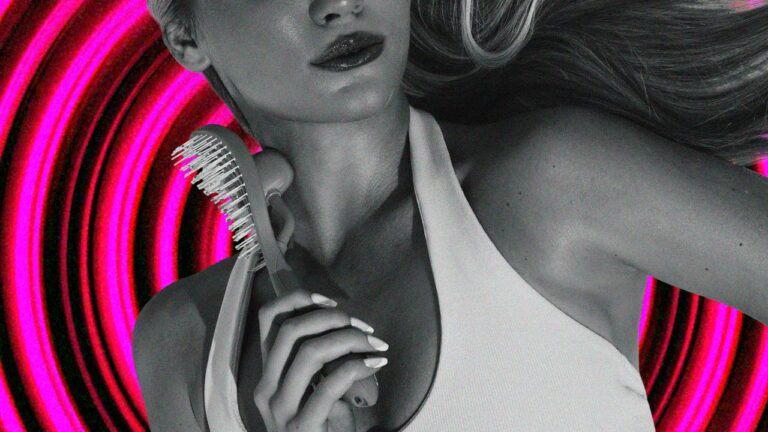
Vibrating hair and scalp tools are making an unexpected comeback, with multiple brands launching oscillating devices to tackle detangling and scalp health. The trend feels nostalgic for anyone who remembers the early 2000s—yet modern engineering and creator promises position vibration as a serious method for reducing hair damage during styling and maintenance.
Two major launches anchored the recent surge: Pattern Beauty’s vibrating flatiron, which launched on August 14, and the OO!Brush, created by Dave Richmond, the inventor behind the InStyler. Both tools claim to use vibration technology to improve how hair is treated during styling and daily care, moving beyond the novelty factor that initially surrounded motorized hair gadgets.
Pattern Beauty’s Vibrating Flatiron for Textured Hair
Pattern Beauty’s vibrating flatiron specifically targets curls, coils, and tight textures, delivering 12,000 vibrations per minute. To contextualize: the original Magic Wand maxes out at 6,000 pulses per minute, making Pattern’s tool twice as fast. The theory underlying this speed is that rapid vibrations reduce tension and snagging as the flatiron passes through each section, easing out tangles and knots while delivering a smoother glide through strands.
The vibrations are engineered to decrease the friction typically created by stationary styling tools, meaning less pulling and catching on cuticles during the straightening process. For textured hair types that frequently encounter tangling and breakage, this approach aims to minimize physical trauma while achieving the desired finish.
The OO!Brush: Engineering Bristles That Move
Dave Richmond’s OO!Brush operates differently than Pattern’s flatiron, delivering over 6,000 micro-strokes per second to create what the brand describes as a deeper scalp massage. Richmond’s reasoning for the vibrating design reveals the engineering logic: traditional brushes drag stiff bristles through hair, catching cuticles and snagging knots until something gives. His vibrating bristles “move with purpose” instead—the motion shifts the hair itself, allowing strands to untangle independently rather than being yanked through resistance.
“You drag stiff bristles through hair, they catch the cuticle, they snag a knot, and you pull harder until something gives,” Richmond explained. “Once we decided the goal was less friction, the engineering got specific.” This intentional movement drastically reduces contact between bristle and strand, the primary source of damage in conventional brushing. The OO!Brush claims to create 65 percent less damage to hair follicles during detangling.
The paddle design allows gripping with one or two hands, and a bonus feature includes a built-in scalp massager housed in the bulbous back end that can be flipped around to stimulate the scalp or other areas needing attention.
How Science Explains Vibration’s Effects on Hair
What Dermatologists Observe
Dr. Toral Vaidya, a board-certified dermatologist based in New York City, confirms that the vibration premise is sound: these tools create less friction and thus less trauma to hair strands. However, she offers an important caveat—robust scientific studies specifically measuring the long-term impact of vibrational hair tools on hair health remain limited. “The theory here is that through the vibration, the tools are creating less friction and thus less trauma to the strands,” Vaidya explained. “There are no robust studies to my knowledge studying the impact of vibrational hair tools on hair health.”
Trichologist Insight on Scalp Stimulation
Shab Caspara, a board-certified trichologist based in New York City, points to scalp-specific benefits rooted in cellular research. Mechanical stimulation from vibrating tools can influence signaling in dermal cells, potentially affecting the hair growth cycle. When vibration reaches the dermal papilla—the very base of the hair follicle—it may theoretically extend the active growth phase. “What we’ve seen in research is that mechanical stimulation can affect signaling in dermal cells, so that controls the hair growth cycle,” Caspara said. “It can potentially extend the hair growth cycle when that kind of stimulation reaches all the way down to the dermal papilla.”
Safe Use and Scalp Health
Vibrating technology is not appropriate for every scalp. Caspara recommends using vibrating brushes primarily on healthy scalps, particularly for enhanced sensation and relaxation. “Scalp vibration is nice for someone with a healthy scalp who likes scalp massage and stimulation, perhaps for more of a sensory, relaxing feeling,” she noted. However, anyone with an inflamed, irritated, or sensitive scalp should avoid vibrating tools. “I would avoid it on an irritated or inflamed scalp, or a scalp with any pain or open sores. You don’t want to further irritate the scalp.”
Vibrating Tools in the Broader Beauty Landscape
Vibrating technology is far from new to beauty. Oscillating devices have been experimentally used across multiple categories for years. In skincare, vibrating facial cleansing brushes are now standard market offerings, and brands sell palpitating gua shas and facial rollers marketed for deeper product penetration. Medicube recently introduced the Booster Pro X2, which added a new pulsing feature specifically designed to help skincare actives penetrate deeper into the skin.
Hair-specific vibrating irons are not entirely novel either. Conair and José Eber both offered vibrating flatirons in their lineups, though these products were eventually discontinued. Bio Ionic and Drybar currently sell vibrating irons, indicating that some brands have maintained faith in the technology even as it faded from mainstream awareness.
The Practical Reality
When Allure’s office received samples of the OO!Brush, the reception blended novelty with curiosity about how the device might integrate into regular routines. The sensory experience of a vibrating hair tool certainly contributes to its marketability, though this doesn’t diminish the engineering behind either product.
History offers perspective: the Magic Wand began as a muscle massager before becoming iconic in a different context. Consumer interest in new applications of existing technology can drive innovation. Vibrating hair tools may simply be the beginning of how oscillation integrates into professional and at-home care.
These tools are unlikely to serve as standalone solutions for significant hair issues, nor should they replace proper conditioning and damage prevention. But for someone seeking a novel approach to detangling and scalp stimulation while potentially reducing mechanical trauma during styling, vibrating options now exist—and they’re worth trying if you’re curious about the trend.
Frequently Asked Questions
What is the difference between Pattern Beauty's flatiron and the OO!Brush?
Pattern Beauty's flatiron (12,000 vibrations per minute) straightens curls and coils, while the OO!Brush (over 6,000 micro-strokes per second) detangles and provides scalp massage with a built-in massager housed in the paddle's back end.
Do vibrating hair tools actually reduce hair damage?
Dermatologist Dr. Toral Vaidya confirms vibrating tools create less friction and trauma to strands, but she notes there are no robust studies specifically measuring their long-term impact on hair health.
Who should avoid using vibrating hair brushes?
According to trichologist Shab Caspara, anyone with an inflamed, irritated, or sensitive scalp should avoid vibrating tools, as mechanical stimulation can further irritate existing scalp issues.
