
Key takeaways
- The Dyson CameraJet combines brushing, water flossing, and automatic jet targeting in one $499 device, powered by AI trained on 470,000 dental images.
- Multiple users reported failures within weeks of use, with defects traced to water seepage in the jet tube assembly across one production batch.
- Dyson removed the product from retail after acknowledging the manufacturing issue, with no announced timeline for return to market.
- Clinical evidence supporting the claimed 69 percent plaque reduction advantage compared the toothbrush only to manual brushes, not competing electric models.
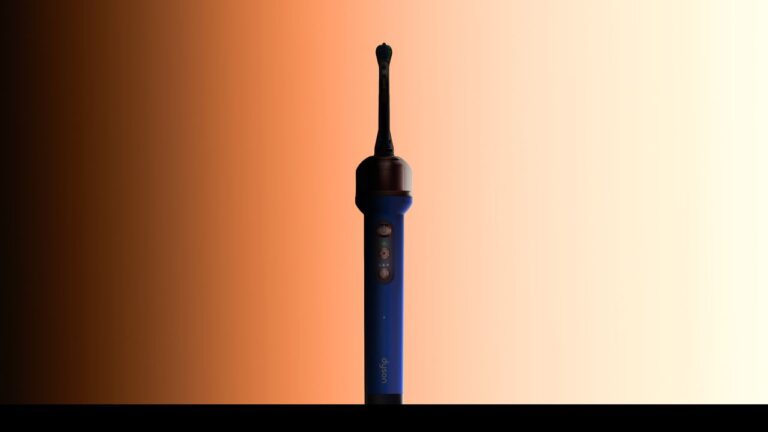
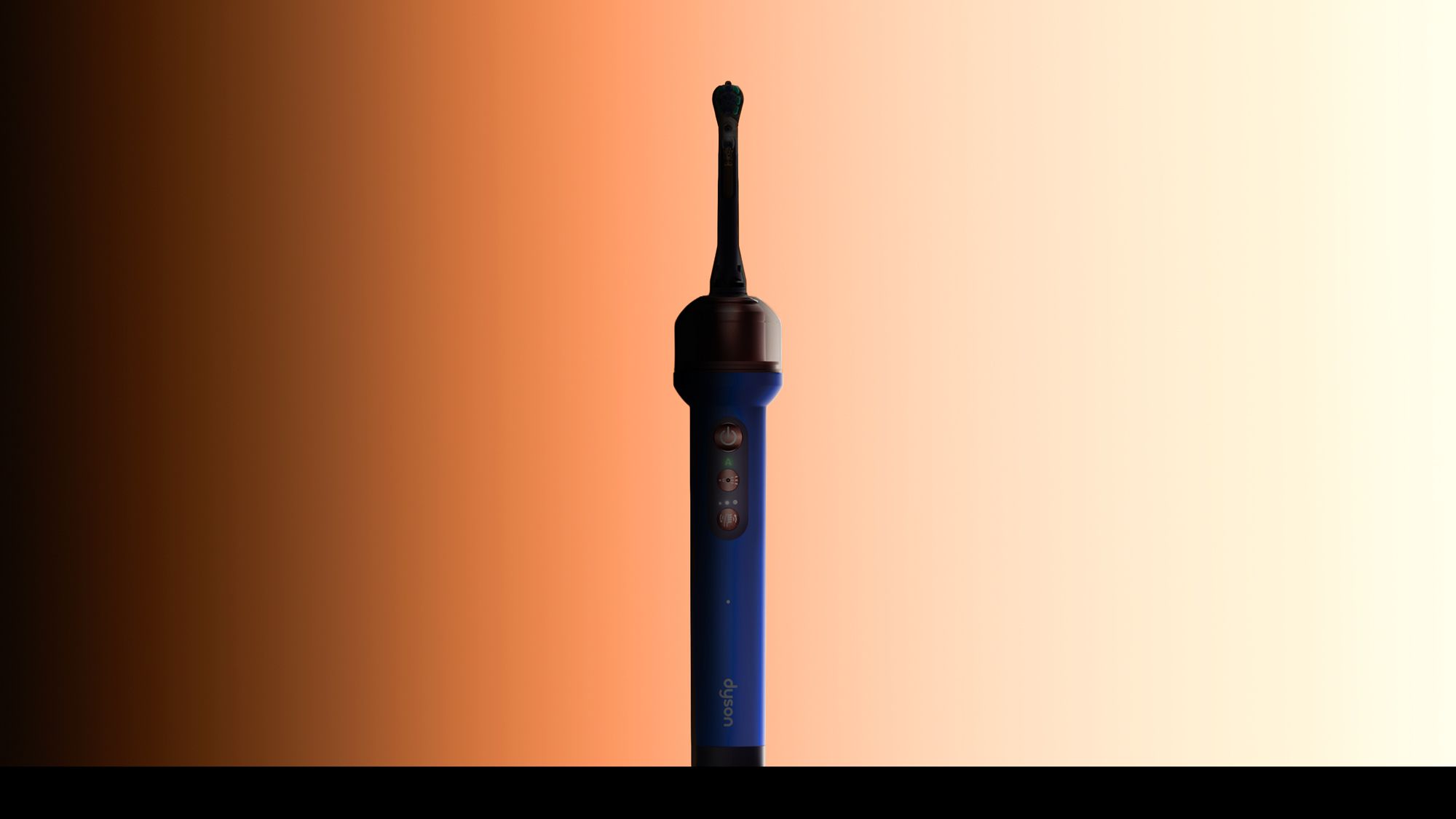
Dyson’s latest oral care device represents a significant departure from traditional electric toothbrushes. The CameraJet, priced at $499, combines three distinct dental hygiene functions—brushing, flossing, and water jet cleaning—into a single handheld tool. At its core sits a camera roughly the size of a pencil tip that visually identifies gaps between teeth and automatically directs a mouthwash jet to those spaces while the brush bristles work simultaneously.
The Innovation Behind the Camera
Engineering at Scale
The CameraJet operates using 16 million lines of code, according to Dyson’s specifications. Its artificial intelligence system, trained on 470,000 dental images, recognizes individual tooth spacing patterns to guide targeting. The diaphragm pump and conical jet mechanism were engineered to deliver consistent water pressure, with the toothbrush vibrating at 245 times per second to agitate debris while the jet fires between teeth.
These technical specifications resulted from extensive development: Dyson spent six years specifically designing the CameraJet after the initial concept emerged nine years earlier. The project timeline exceeded the development cycle for some of Dyson’s most iconic appliances, including the bagless vacuum cleaner that launched in 1983 and the Supersonic hair dryer that debuted in 2016.
The AI and App Integration
The device connects to a companion Dyson app, which displays a live video feed from inside the user’s mouth during brushing sessions. This livestream capability allows users to visualize cleaning performance in real time, particularly useful for assessing whether the jet mechanism is reaching intended target areas. Dyson confirmed that the app does not store video recordings to its servers or cloud services, addressing privacy concerns some consumers raised about continuous mouth monitoring.
The Paris Launch and Hype
The CameraJet arrived with considerable fanfare. Dyson held a launch event in Paris at the beginning of September to introduce what the company framed as the world’s first toothbrush-water-flosser hybrid. Last spring, Allure’s executive beauty director, Jenny Bailly, traveled to Dyson’s UK facilities for an exclusive preview of the innovation. During the visit, Bailly observed the development process firsthand but was not permitted to test the prototype.
In her assessment, the timeline of development was noteworthy: “The idea first arose nine years ago, and they spent six years working on the CameraJet—that’s one more than the bagless vacuum cleaner that debuted in 1983 or the hair-dryer that blew us away in 2016.”
The $499 price tag raised eyebrows. However, the cost became easier to justify upon considering Dyson’s previous luxury hardware launches, particularly the Supersonic hair dryer, which debuted at $400 a decade earlier. That price point had initially seemed unjustifiable for a hair appliance, yet the tool’s performance and reliability ultimately won over consumers. The CameraJet’s sleek design and cobalt blue finish presented a similar value proposition as a premium bathroom fixture rather than a disposable appliance.
Early Testing: Promise and Problems
Allure received a review unit at the launch and began testing immediately. For the first several days, the device performed flawlessly. The jet mechanism fired with precision, the brush vibrated steadily, and the app livestream delivered exactly what it promised—visibility into areas of the mouth difficult to assess manually. The integration of multiple cleaning functions into a single tool was genuinely novel.
The appeal of the device extended to its physical form. The charging dock and refill station, while bulky, fit acceptably under a medicine cabinet. The cobalt monolith looked intentionally designed for bathroom display. Everything suggested that Dyson had created another category-defining appliance, comparable to how the Supersonic reshaped expectations for hair drying technology.
Initial Reliability
Performance over the first three weeks of use was strong enough that Allure’s reviewer stated publicly she would willingly repurchase the device at full price if needed years in the future. The premise was that with proper care, this expensive appliance would deliver years of service, justifying the investment as a durable tool rather than an annual replacement.
The Failures Begin
By week three of use, the deterioration became apparent. The diaphragm pump began to lose pressure. The conical jet that had fired with precision now misfired sporadically. The vibration frequency seemed to have dropped below the specified 245 pulses per second. Then, abruptly, the device simply would not activate.
Widespread Defect Reports
Allure’s experience was not isolated. Social media posts from consumers who had purchased the CameraJet revealed widespread reliability issues. An editor at Consumer Reports reported that her review unit failed “less than 24 hours” after unboxing, before she had the opportunity to test it at all. A colleague of Allure’s reviewer using a different unit observed that while hers still powered on, the automatic jet firing had slowed dramatically, reducing the effectiveness of the tooth-gap targeting that was central to the device’s function.
By late September, both dyson.com and sephora.com listed the CameraJet as out of stock.
Dyson’s Response and Manufacturing Issue
Allure contacted Dyson seeking explanation for the failures, the underlying cause, and whether a formal recall would be issued. Dyson’s response acknowledged a specific manufacturing defect: “Unfortunately, one production batch of jet tubes experienced a process issue, creating a potential for water seepage which affected the performance of a small number of products. We took what we believe to be the right decision to isolate impacted products, which resulted in an out-of-stock position. We are now in full production and shipping product to our partners.”
The statement confirmed that water intrusion, the antithesis of a device marketed for use in the mouth, had compromised the electronics. Dyson did not provide a timeline for when the CameraJet would return to retail availability or clarify the return and replacement policy for customers who had already purchased affected units.
The irony was striking: a device engineered to deliver water precisely where intended suffered catastrophic failure through unintended water exposure. The situation recalled earlier product failures in the technology sector, comparable to Apple’s initial iPhone models that struggled with cellular connectivity despite being marketed as wireless communication devices.
The Clinical Question
Dyson’s marketing materials claimed that the CameraJet removes up to 69 percent more plaque than “market-leading premium electric toothbrushes in hard-to-reach areas.” However, when Allure requested clinical evidence to support this claim, even when the device was known only by its development code name “682,” Dyson provided limited documentation. The only clinical study shared compared the CameraJet to a manual toothbrush, not to other electric devices using similar technology.
This limitation in comparative data leaves a significant gap. If the CameraJet’s advantage exists primarily against non-electric alternatives, the actual benefit over competing premium electric toothbrushes remains unquantified.
The Reliability Reckoning
Within Dyson’s broader product portfolio, the CameraJet represents a departure from the company’s established track record. The Supersonic hair dryer, launched a decade ago at $400, has maintained strong reliability among users who have kept the same device for years. Cordless vacuum models from Dyson have similarly proven durable over extended use cycles of five or more years.
The CameraJet failure pattern involved multiple units experiencing the same specific defect within weeks. This suggests that either the manufacturing issue was more widespread than described, or the design itself has a fundamental vulnerability to moisture despite being marketed as a wet-use device. Neither scenario instills confidence in a product at this price point.
A toothbrush that fails upon contact with water is fundamentally incompatible with its intended function. Dyson built its reputation on appliances that withstand their use environment. The CameraJet, in its current production status, has not achieved that standard.
Source: Allure
Frequently Asked Questions
What is the Dyson CameraJet and what does it do?
The CameraJet is a $499 toothbrush that combines three functions in one device: electric brushing, water jet flossing, and automatic targeting. It uses a camera the size of a pencil tip, trained on 470,000 dental images, to detect tooth gaps and fire mouthwash between teeth while brushing. The device connects to an app that provides a livestream view of the user's mouth during brushing.
Why was the CameraJet pulled from shelves?
Dyson discovered that one production batch of jet tubes experienced a manufacturing defect that created potential for water seepage, compromising device performance. Multiple users reported failures, some within 24 hours of purchase, characterized by slowing pump pressure, misfiring jets, and complete power loss. As of late September, the product was listed as out of stock on dyson.com and sephora.com with no return date announced.
What clinical evidence supports the CameraJet's plaque removal claims?
Dyson claims the CameraJet removes up to 69 percent more plaque than "market-leading premium electric toothbrushes in hard-to-reach areas." However, Allure reports that the only clinical study Dyson shared compared the CameraJet to a manual toothbrush, not to competing electric models. The lack of comparative data against other premium electric toothbrushes leaves the actual advantage unquantified.
