
Key takeaways
- Ericka Hart chose breast reconstruction but declined nipple surgery after her cancer diagnosis, a decision that helped her understand her non-binary identity.
- Hart uses topless activism to challenge the nipple double standard and bring visibility to breast cancer in Black, queer, and trans communities.
- She advocates for sex education centered on pleasure and individual bodily autonomy rather than abstinence and shame.
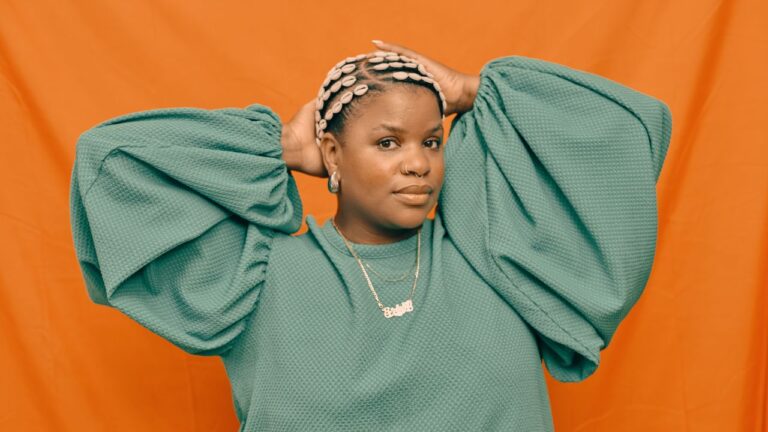
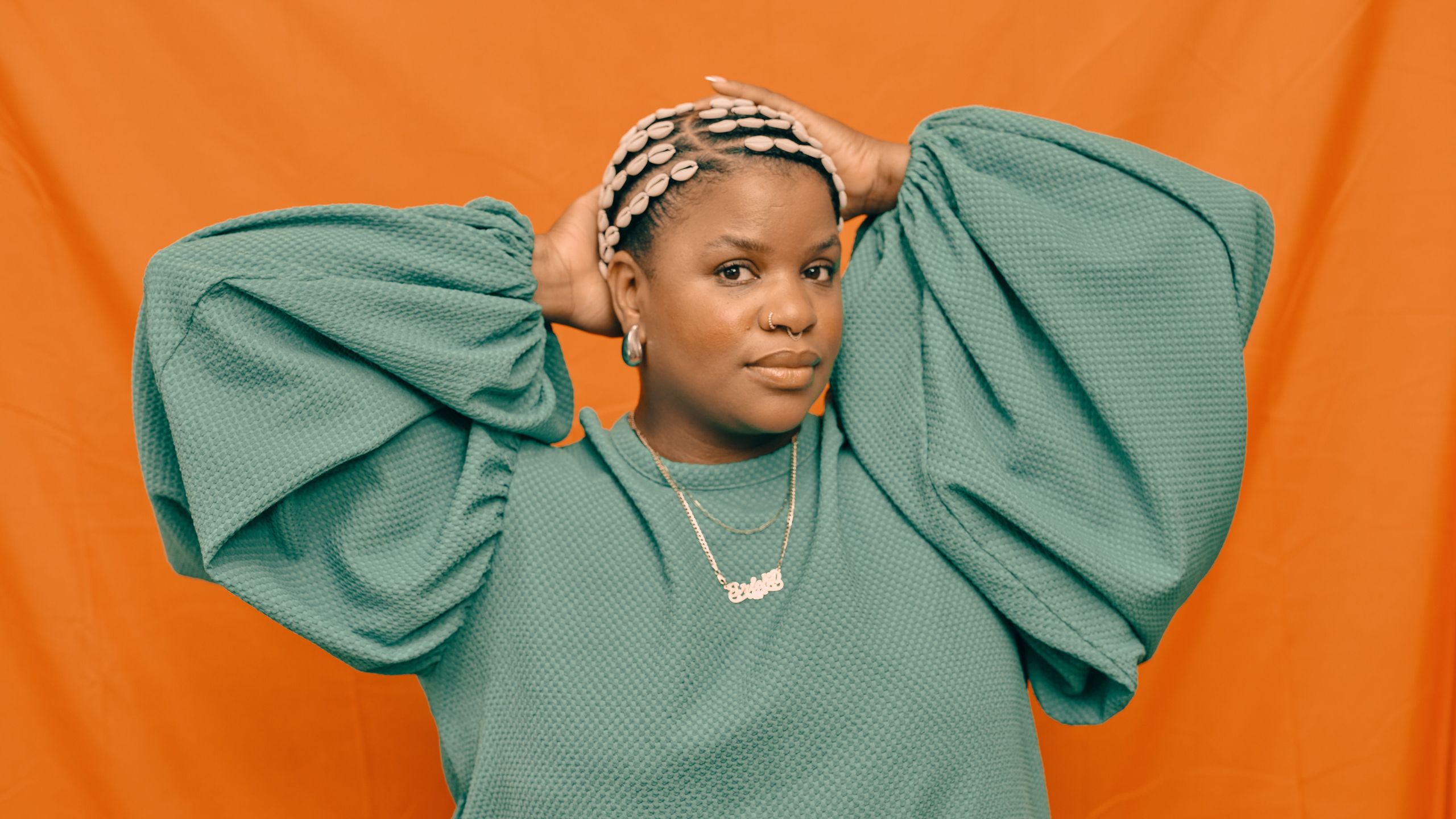
Ericka Hart, a sex educator and author, built her career on conversations the mainstream avoids. After working in teen pregnancy prevention in New York City, she returned to school, frustrated that traditional sex education left students ashamed rather than informed. “This doesn’t feel like we’re actually reaching folks and making them feel good in their bodies. We’re just scaring them,” she recalls. She now teaches at elementary through graduate levels and writes about pleasure, gender identity, disability, and chronic illness. Hart is also a breast cancer survivor who underwent a double mastectomy and advocates fiercely for diverse breast representation. Her story features in the third episode of Allure’s inaugural Perspectives podcast series, hosted by editor in chief Jessica Cruel. The series examines how breasts intersect with beauty, health, identity, sexuality, and culture.
Sex Education That Acknowledges Pleasure
The Flaws of Abstinence-Based Learning
Most sex education curricula fail students in fundamental ways. Many are rooted in abstinence, withholding knowledge while pretending to inform. “A lot of our sex education protocols are rooted in keeping people from information, but making it look like they have it because they’ve attended this class,” Hart tells Cruel. Students graduate knowing reproduction without understanding consent. Breasts, despite being erogenous zones for many, rarely appear in classroom discussion.
Teaching Students to Listen to Their Bodies
When breasts do appear in curricula, the conversation ignores individual variation. “In terms of erogenous zones, I think it’s important to talk about breasts and nipples and also the fact that you might not experience any pleasure there,” Hart says. Her teaching challenges students to examine their own bodies without assumption: “Is this something that actually feels good to you, or do you think it feels good for the other person?” This reframing—from expectation to authentic sensation—differs fundamentally from what most students receive.
The Diagnosis Arrives Without Warning
Hart was walking down a New York City street when she received the call. She sat on a bench, everything going silent, and asked: “Am I gonna die?” In retrospect, the diagnosis felt relieving. The weeks of waiting for results—not knowing whether the lump her ex-wife had discovered was benign—had been worse. Hart had been vigilant about self-examinations since her mother died from breast cancer. But it was her ex-wife who found something amiss. “This happens a lot in queer, lesbian dynamics,” Hart notes. “Another person who may also have breasts finds the lump. They’re like, ‘I touch these all the time. This doesn’t feel right.'”
Timing and the System’s Indifference
The timing was cruel. Hart had just secured a full-time position at a nonprofit that offered health insurance—her path to cancer treatment. But she was still in her probationary period; benefits hadn’t activated. Two days after being hired, she returned to HR with an extraordinary request: she needed immediate access to insurance and would need six weeks away from work for a double mastectomy. “I worked all through chemo, which was hell, but that’s the reality for so many people,” Hart recalls.
Reconstruction and the Absence of Grief
When her surgeon said both breasts would be removed, Hart’s response was immediate: “Get this cancer out of me.” She noticed something unexpected—she felt no sadness about the impending mastectomy. That absence became illuminating. “I think that was the beginning of me realizing that I’m non-binary,” Hart says. “I’ve never had this connection to my breasts in that way.”
The Wedding Dress and the Decision to Reconstruct
Yet the surgery occurred six months before her wedding. She had already chosen her dress, and the idea of being flat-chested underneath it shifted her thinking. Chemotherapy didn’t concern her—”I’ve been bald before”—but a flat chest felt different. She pursued breast reconstruction surgery. The recovery was tender. “I went to dress appointments with surgical drains,” Hart recalls. “The seamstress was an angel and would hold the drains so I could see what I looked like in the dress. It was a really, really tender time.”
Fourteen Years Later: Choosing Against Nipple Reconstruction
She declined nipple reconstruction surgery or tattoos. Now, fourteen years into remission, Hart says she likes her breasts more than ever, though she admits to some nipple envy in an era when visible nipples through fabric are fashionable. “That’s kinda hot, right?” she laughs. “Damn, my scars are never gonna become erect.”
Toplessness as Activism
Making Breast Cancer Visible in Communities Left Behind
Hart’s first widely visible topless moment came at AfroPunk in 2016. “In that moment, I just wanted to make a difference,” she says. “I just wanted people at AfroPunk to see me and my scars and to see what breast cancer looks like, in particular in Black, queer, and trans people, because there’s not a lot of advocacy, still to this day, that’s directed toward us.” People approached to ask what had happened, opening doors to conversation and education.
Hart has continued posting topless photographs, calling attention to the nipple double standard. Male nipples go uncensored; female nipples face constant removal and flagging. “It’s bullshit,” Hart says plainly. Breastfeeding mothers are hit hardest. “Showing that you’re feeding your child is controversial, but cis men who are topless doing pushups or whatever they do online … nobody is having any issues with that,” she notes.
Motherhood Shifts Everything
Hart and her partner have a 3-year-old child, East. When they tried to conceive, Hart mourned what the mastectomy had taken. She could never breastfeed. When East was born, they spent 31 days in the NICU, a period where the infant had to learn to suckle and feed before discharge. Hart felt that loss acutely. “A big part of the NICU is knowing how to suckle and knowing how to feed before you’re able to leave,” she explains. “I wish I was able to have that connection.”
From Public Display to Protective Presence
At 40, three years postpartum, Hart describes feeling differently about her body than she did after cancer. “Pregnancy and childbirth truly rocked me more than anything I’ve ever experienced,” she says. Her body once felt like something to reclaim and display. Now it feels more protective. “I feel much different in my body now as a 40-year-old who’s three years postpartum than I did after breast cancer,” Hart reflects. “I feel more protective of it. And I guess I feel more mindful that my child eventually is gonna find out that I’ve been naked all over the internet.”
Sexuality Survives Cancer
The medical establishment rarely addresses sexuality in the context of cancer treatment. Hart received a thick notebook documenting chemotherapy’s side effects—comprehensive but silent on how the drugs might affect libido or vaginal lubrication. She had to ask her oncologist directly, and the question seemed to surprise him. He promised to research and get back to her, though she was about to marry. Did her sex life change? “No,” Hart says. “I’m still pretty much a freak.”
When Hart posts topless photographs, platforms rarely remove them, yet her scarred body still gets absorbed into inspiration narratives that desexualize it. “I think that comes from the desexualizing of disabled and chronically ill bodies,” Hart observes. She resists the reflexive praise: “People are saying constantly, ‘You’re so inspiring.’ And I’m like, ‘And I’m also pretty hot.'” Cancer, by cultural logic, should diminish desire. Hart rejects that equation.
Frequently Asked Questions
Why did Ericka Hart choose breast reconstruction but not nipple reconstruction?
Hart wanted to feel good in her wedding dress, scheduled six months after her double mastectomy. However, she opted out of nipple reconstruction surgery or tattoos. Now, fourteen years into remission, she says she likes her breasts more than ever.
What is the nipple double standard Hart discusses?
Hart points out that male nipples go largely uncensored online and in public spaces, while female nipples face constant removal and flagging. Breastfeeding mothers are hit hardest, as their posts are flagged while images of men exercising shirtless online face no issues.
How did Hart's experience with motherhood change her relationship with her body?
At 40 and three years postpartum, Hart says pregnancy and childbirth impacted her more profoundly than cancer. While she still loves her body, she now feels more protective of it and more mindful of her online presence, knowing her child will eventually discover her topless activism.
