

Key takeaways
- Identify your undertone with the vein test, metal test, or skin reaction test — undertone stays the same regardless of tanning or sun exposure.
- Different brands use different shade codes, so always check the undertone letter or name on the bottle, not just the number.
- Test foundations on your jawline, neck, and collarbone, then wait 5–15 minutes in natural light before deciding — oxidation shifts color noticeably.
- In Brazilian heat and humidity, silicone-based formulas oxidize less visibly; match your blush and contour undertone to your foundation to avoid a disjointed look.
Many people use shade and undertone as the same thing. They are not. Shade is how light or dark the foundation is — the amount of pigment. Undertone is the color temperature underneath: warm (golden, orange, peachy), cool (pink, red, blue), or neutral (balanced blend). A foundation can be light with a warm undertone, or dark with a cool undertone. You need to match both, not just grab something close to your skin color.
Your undertone does not change with sun exposure. A cool-toned person stays cool after tanning; the shade gets darker, but the temperature underneath stays the same. This is why getting undertone right matters — a wrong undertone looks muddy or ashy even when the shade is perfect.
Identifying Your Undertone — Three Methods That Work
The vein test
Look at the veins on the inside of your wrist under natural light, not artificial light. Warm undertones show veins that look greenish or olive. Cool undertones show veins that look blue or purple. Neutral undertones show both equally, or a mix that does not lean either way. This is the most reliable single test because it does not depend on makeup, tanning, or redness from the moment.
The precious metal test
Hold a piece of gold jewelry and a piece of silver jewelry next to your face — or look at photos of yourself wearing each. If gold looks better and makes your skin glow, you lean warm. If silver looks fresher or more flattering, you lean cool. If both look equally good, you are neutral. You can also do this with gold and silver nail polish or fabric swatches.
The skin reaction test
Look at how your skin responds to cold or heat, or how it tans. People with warm undertones often tan easily and turn golden or olive. People with cool undertones tan slowly and may burn first, or tan toward a more neutral or ashy shade. This method is less precise than veins or metals, but it confirms a pattern.
Understanding Foundation Shade Numbers
Different brands number shades differently, so there is no universal code. MAC uses N (neutral), NC (warm), and NW (warm), with numbers from 5 to 60. NARS uses a two-digit code with letters. Fenty Beauty numbers 1 to 50 and adds undertone letters: N (neutral), P (pink/cool), Y (yellow/warm), R (red), C (cool red). Bobbi Brown uses a wider range with names like Warm Sand or Cool Porcelain — the name tells the undertone.
Always check the undertone code on the bottle, not just the number. A shade 30 from one brand is not a shade 30 from another. Buy samples or test in-store before committing to a full size. Many retailers in Brazil offer samples: Sephora, local MAC stores, and department store counters like Drogaria Catarinense.
Testing Foundations in Practice
The application zones
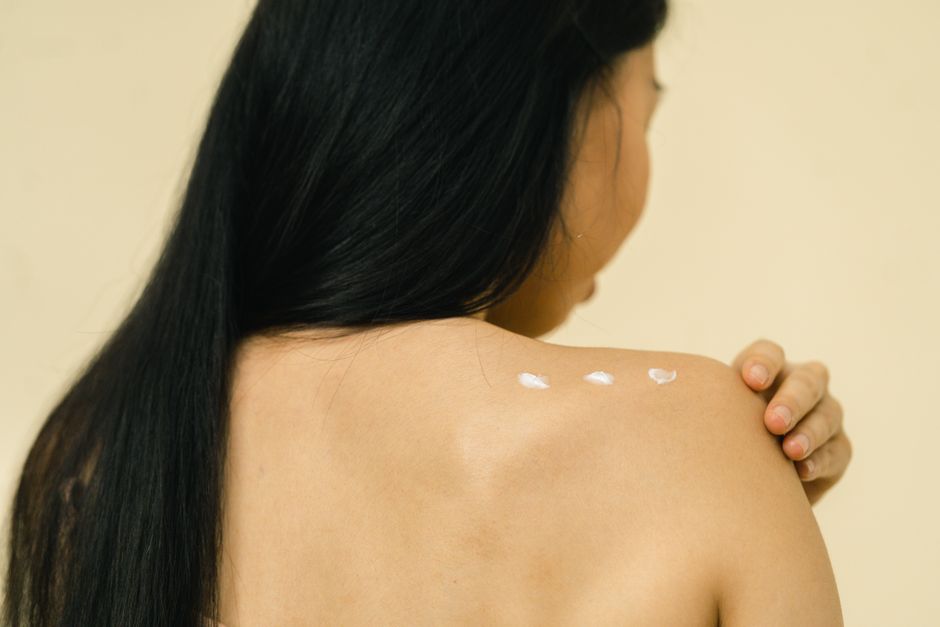
Apply foundation in three places: your jawline, your neck, and your collarbone. The jawline shows how it blends with your face. The neck shows if there is a line between face and neck — if there is, the shade is wrong, not just the undertone. The collarbone shows how it matches the color down the body, where undertone differences show most clearly. Let it set for five minutes. Undertone mismatch looks obvious after the foundation dries and oxidizes slightly.
The wait time rule
Never decide on a foundation match in the store immediately. Foundation oxidizes — it gets slightly darker and shifts in color tone — within 5 to 15 minutes. A warm undertone foundation may look better in the moment but turn orange or peachy when it oxidizes. A cool undertone may shift pink. Always apply, wait, and then check in natural light. Most stores let you take a sample or return within days, so use that to test at home under your real lighting.
Foundation Lines That Match Undertones Well
MAC Face and Body is available at Sephora and MAC stores in Brazil. It comes in 60 shades across three undertone families (N, NC, NW). Price ranges from approximately R$ 150 to R$ 170 for 30 ml. The formula is sheer, so undertone shows clearly — useful when you are narrowing down between two options.
NARS All Day Luminous Weightless Foundation has 45 shades. Cool undertones cluster in shades like Siberia and Mont-Blanc. Warm undertones are Syracuse, Barcelona, and Stromboli. Price is approximately R$ 250–280 in Brazilian retailers. The finish is natural and does not oxidize as much as some formulas.
Fenty Beauty Pro Filt’r is in 45 shades with undertone codes (N, P, Y, R, C). A warm-undertone person would look for codes ending in Y; cool would be P. Available at Sephora Brazil and Natura & Co stores. Price range is R$ 240–270. The undertone coding makes it straightforward to navigate if you already know your temperature.
Bobbi Brown Skin Long-Wear Foundation comes in 24 shades with warm and cool options named directly: Warm Honey, Cool Porcelain, Warm Ivory. Price is approximately R$ 280–320 in department stores. Less range than competitors, but the naming system is clearer for beginners.
Adjusting for Brazilian Heat and Humidity
Brazil’s heat and humidity affect how foundation sets and oxidizes. Warm, humid climates speed up oxidation and can make foundations shift more noticeably. If you have a warm undertone, test your foundation in summer conditions, not in air-conditioning. A foundation that looks right in a cool store may turn orange within an hour outside.
Foundations with silicone bases (common in MAC, Bobbi Brown, and NARS) tend to oxidize less in heat. Water-based or natural foundations may shift more. If you are prone to heavy sweating or live in a very humid region, lean toward silicone-based formulas even if the undertone match is slightly harder to find. Check the ingredient list or ask a sales associate which bases the brand offers.
Primer choice also matters. A green or yellow primer can shift undertone visibly. Stick with a neutral or colorless primer to avoid masking your undertone match. The primer should be invisible, not a color corrector.
When a Match Still Feels Wrong
If a foundation matches your shade and undertone in the store but feels off at home, check three things: lighting (the store has different lights than your bathroom), time (has it oxidized fully?), and contrast with your other makeup. Do not assume your undertone assessment was wrong. Instead, verify that your blush, contour, bronzer, and foundation are all the same temperature. A warm-undertone foundation looks off if your contour is cool-gray or your blush is berry. Mismatched undertones across products show more obviously than a single wrong shade, especially in natural light.
If you have oily skin, the foundation may separate and show undertone unevenly over the day. Test the formula type (powder, liquid, stick) as well as the shade. Some undertones show better in certain formulas depending on how they interact with oils.
Frequently Asked Questions
Can my undertone change if I tan or have a skin tone shift?
No. Your undertone is determined by the color underneath your skin and stays consistent. When you tan, your shade (how dark you are) changes, but the underlying warm, cool, or neutral temperature does not shift. This is why matching undertone correctly is so important — it stays true across seasons and sun exposure.
Why does my foundation look different in the store than at home?
Stores use artificial lighting that does not match home or daylight. Fluorescent lights can make cool undertones look better; incandescent light favors warm undertones. Always test in natural light or take a sample home to check under your real bathroom lighting. Also allow 5–15 minutes for the foundation to oxidize, as the color shifts slightly as it sets.
What if I cannot decide between warm and neutral undertone?
You likely have a neutral undertone, which means both warm and cool look reasonably good on you. Neutral foundations are safer, but you can also lean slightly warm or cool depending on what makes your skin look fresher. Test both at home in natural light to see which one makes you feel more like yourself — that is often the answer.
