
Key takeaways
- Luxury perfume searches are up 123.7% year-over-year, but 62% of shoppers prioritize quality over visible logos.
- Winter fragrances emphasize natural forest notes like cedar, pine, and fir, using sharp citrus and herbs instead of holiday sweetness.
- Gourmands shift from sugary to textured, replacing heavy buttercream with toasted accords, almond milk, and mochi.
- Incense fragrances now whisper rather than shout, pairing resins with citrus, florals, and pale woods for intimate rather than overwhelming presence.
The fragrance industry in 2026 is undergoing a fundamental shift in what luxury means. According to Spate, luxury perfume searches have surged 123.7% year-over-year, yet the equation has transformed: while 62% of consumers prioritize quality, only 26% seek visible logo presence. The American Psychiatric Association’s recent mental health poll identified financial stress, current events, and loneliness as top stressors, spurring demand for fragrance as personal ritual. “There is a real desire for sophisticated simplicity,” says Delphine Jelk, perfumer and creative director of fragrance for Guerlain. “Fragrance reflects the same desire: creations that feel more essential and immediately understandable, but still have sophistication, depth, and emotion.” This philosophy anchors four dominant fragrance trends for the coming season.
Winter Forest Fragrances
Woody and forest-inspired scents are booming. Spate reports woody perfume searches up 243.8% year-over-year, while petrichor searches increased 94.4%. Chicago-based perfumer Alie Kiral of Pearfat Parfum attributes this to digital fatigue: “People are worn out by the digital world, surveillance, and chaos of the present day. These kinds of smells are a reminder that ultimately, we’re just floating on a big rock in space.” Research supports the appeal—exposure to forest fir and mushroom scents correlates with increased mental relaxation, lower cortisol, and reduced blood pressure.
Winter Greens and Sharp Accords
Winter forests present a different profile than spring. Cedar, pine, fir, cypress, eucalyptus, rosemary, juniper, and moss form the foundation. According to Jon Bresler, founder of LAFCO, winter greens require sharp notes like lemon and peppermint to prevent holiday sweetness. Guerlain’s L’Heure Bleue and Liis’s Forest Sounds employ ozonic accords to create the sensation of cold air. FFern Winter 26 demonstrates the approach, combining eucalyptus, basil, fir, moss, cedar, vetiver, lemon, and peppermint to create, as Bresler describes, “a sense of a cold landscape rather than a traditional holiday fragrance.”
Aged Woods for Depth
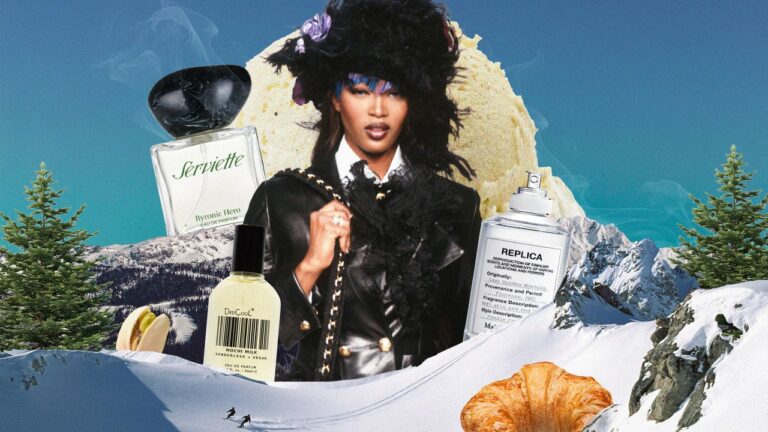
Depth comes from aged woods—sandalwood, oud, and patchouli—layered beneath greens. Serviette’s Byronic Hero features fir balsam deepened by oud and patchouli. LAFCO’s Fireside Light opens with fir balsam before transitioning to patchouli and guaiacwood. Heretic’s Dirty Hinoki leads with pine, thyme, and nutmeg, settling into cedar and frankincense. Nassomato’s Micodeliro grounds the experience in forest soil through a strong mushroom accord with spearmint.
Bakery Gourmands with New Sophistication
Gourmands have shifted from sugary sweetness toward textural richness. “This is the season’s most literal comfort language: bready, buttery, faintly toasted accords,” says Arnaud Guggenbuhl, global head of marketing, insights, and image for Givaudan. “Gourmands aren’t sugary sweet this season; they’re rich. Winter turns a dial back toward warmth, but a smarter warmth.”
Toasted and Honeyed Elements
Toasted and honeyed components elevate the formula. Sol de Janeiro’s Cheirosa 62 Intense incorporates roasted macadamia, while Clean Reserve’s Pistachio Addiction layers honeyed orange flower beneath pistachio, cardamom, and praline.
Milky and Creamy Bases
Rather than heavy buttercream, modern gourmands employ chewy, milky components. DedCool’s Mochi Milk and Nette’s Mochi Banane anchor compositions with mochi, while Anti Kleopatra opens with smooth almond milk accented by cinnamon and jasmine. According to Jeniece Trizzino, vice president of innovation and product at Scentbird and Drift, nuttier milks replace traditional vanilla bases. Oscar de la Renta’s New York Rendezvous substitutes airy chantilly and almond flower for heavy buttercream, evoking a fresh financier.
Incense Transformed for Intimacy
Traditional incense fragrances announce themselves through dark, smoky density. Winter 2026 strips away projection while preserving contemplative mood. A 2025 McKinsey report found that 42% of Gen Z and millennial respondents prioritize mindfulness, while scientific evidence documents steady growth in meditation practice. This moment supports lighter interpretations of incense.
Shifting from Projection to Presence
“The mood has shifted from ‘notice me across the room’ to ‘recognize me up close,’” says Guggenbuhl. Zurich-based perfumer Andreas Wilhelm agrees: “After years of powerful projection that could sometimes feel almost intrusive, people seem to be rediscovering the appeal of a more personal scent.” Richard Saint-Ford adds, “Incense is moving somewhere interesting. We’ve traditionally made incense fragrances very dark, smoky, and ceremonial. I’m more interested in incense being used almost transparently—frankincense, elemi and resins with air, citrus, florals or pale woods around them. For winter, that’s really compelling because it feels intimate rather than oppressive.”
Transparent Resin Formulas
Modern compositions position resins as one voice within a broader palette. Fulton & Roark’s Cathedral of Ruins opens with floral rose and fresh cypress before settling into frankincense. Amouage’s Overture 41 softens frankincense, benzoin, and patchouli with geranium, cinnamon, rose, and sandalwood. Maya Njie’s Aethi Opum uses thiouraye, a sweeter resin, with vanilla, coffee, and papyrus. Perfumehead’s 1360 layers grapefruit, pepper, and vetiver atop gurjum. Victoria Beckham’s Hotel Portofino buries its incense base beneath basil, bergamot, and fig. Ormonde Jayne’s Tolu lifts frankincense and amber with juniper berry, orange blossom, and tonka.
Fabric-Inspired Musks and Tactile Luxury
Quiet luxury means recreating textile sensation. “Cashmere, suede, velvet, cotton, and skin musks are increasingly shaping fragrance language, mirroring the broader fashion shift toward tactility and second-skin textures,” Guggenbuhl says. Pinterest searches for “skin scent” have increased 287% this year. According to Guggenbuhl, “Winter 2026 reframes luxury as emotional precision. This year, warmth is built through intimacy instead—not logos and couture runways, just the pleasures of real quality linen sheets, a sleek leather tote, or high-end woolen gloves.”
Cashmere Through Molecular Reconstruction
Perfumers translate fabric into scent using specific molecules. Cashmeran, developed in the 1970s by International Flavors and Fragrance, mimics cashmere sensation. “It does not smell like cashmere so much as it smells like the feeling of cashmere, which is a strange and useful thing for a material to do,” says Trizzino. Surrounding notes determine context. Almond, cream, and vanilla in Phlur’s Cashmere Skin evoke cashmere worn while baking. Bath & Body Works’ Cashmere Amber pairs the musk with amber for fire-side warmth. Memo Paris’s Odeon Rosebud tinges its cashmeran base with fresh rose, peony, and freesia.
Linen and Textile Fantasy Accords
Linen requires different construction. “Perfumers call it a fantasy accord because there is no linen extract,” Trizzino explains. “You build it from white musks for the softness, light aldehydes for the air-dried brightness, and a transparent ozonic note for the sense of outdoors.” Maison Margiela’s Replica Lazy Sunday Morning uses clean aldehydes as linen approximation, settling into white musk and iris—”which is itself the most textile-like natural in perfumery, powdery and dry, like fabric.” Carolina Herrera’s Cedar Chic follows a similar top profile with creamy cedarwood. L’Epoque Parfums’ Inner Child and Baruti’s Hot Cotton open with literal textile interpretations before transitioning into deeper compositions.
Source: Allure
Frequently Asked Questions
What are the biggest fragrance trends for winter 2026?
The four dominant trends are winter forest notes (woody scents with sharp greens like pine and eucalyptus), bakery gourmands with textural richness instead of pure sweetness, transparent incense that pairs resins with citrus and florals for an intimate feel, and fabric-inspired musks like cashmere and linen that evoke luxury textiles.
Why are consumers choosing these types of fragrances right now?
According to the American Psychiatric Association's mental health poll, financial stress, current events, and loneliness are top stressors. Consumers are seeking fragrances as personal rituals that deliver comfort and self-soothing. Luxury in 2026 means emotional precision and intimacy, not visible logos or brand signals—what's called quiet luxury.
How do perfumers create fragrances that smell like fabric or linen?
Molecules like cashmeran, developed in the 1970s by International Flavors and Fragrance, mimic the feeling of cashmere. For linen, perfumers build a 'fantasy accord' using white musks for softness, light aldehydes for air-dried brightness, and transparent ozonic notes for the sense of outdoors. There is no linen extract—perfumers reconstruct the sensation using specific chemical components and natural materials like iris.
