
Key takeaways
- Jeff Pink created the French manicure in 1976 to solve a Hollywood problem: film directors wasted time changing actresses' nail colors to match costumes.
- The style dominated from the 1970s through 1990s, worn by Princess Diana, Jennifer Aniston, and countless celebrities seeking elegant, neutral glamour.
- By the 2000s-2010s, thick acrylic French tips were dismissed as cheap and tacky, with Allure magazine publishing scathing critiques comparing them to mustard.
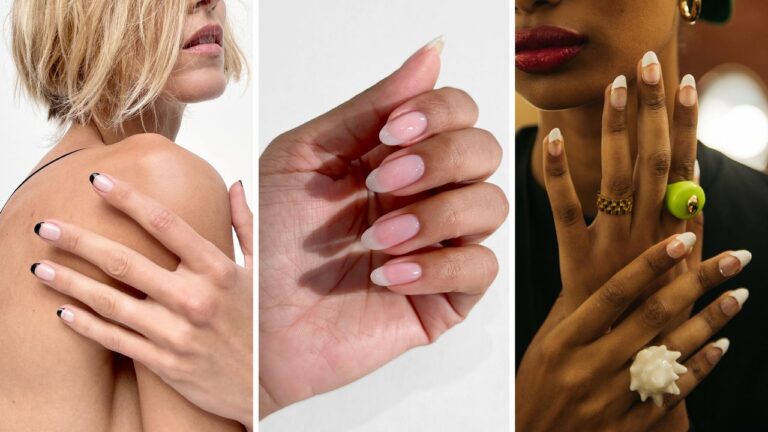
- Modern nail artists have reclaimed the French manicure as a versatile framework rather than a fixed look, enabling infinite artistic reinterpretation.
The French manicure has spent the last 50 years oscillating between cultural icon and cultural embarrassment. What began as a practical solution to a Hollywood scheduling problem in 1976 would go on to define femininity for generations, only to be dismissed as dated in the early 2010s, before being reclaimed by nail artists who saw its true potential: not as a fixed aesthetic, but as a framework for endless interpretation.
How a Director’s Complaint Changed Nails Forever
In the mid-1970s, Jeff Pink, founder of the Orly nail polish company, owned a beauty supply store that serviced Hollywood studios. One day, a film director complained that changing every actress’s nail polish to match their costumes was consuming production time and budgets. Pink needed a manicure style that would work across multiple outfits.
The Pencil That Started It All
The inspiration came from an unlikely source. “In the office, I had a white pencil that women used to use to clean underneath the nail, so that gave me the idea to come up with a white nail polish [tip],” Pink explained. White nail polish didn’t exist in 1976. Pink had to negotiate with a manufacturer to produce just one gallon of the product. His solution was an opaque pink base with a bright white tip, mimicking an exaggerated natural nail. The director was so impressed he suggested Pink deserved an Oscar for the money and time saved. The manicure debuted as the “Natural Nail Look” kit in 1976, manufactured by Orly.
From Studio Solution to Global Standard
The name changed in 1978 after Pink demonstrated the technique at Paris Fashion Week. “On the way back from Paris to L.A., I said to myself, Jeff, you know what? Natural Nail Look is really kind of cheesy,” he recalled. “Let’s call it French manicure.” Pink attempted to trademark the phrase in 1980 but was blocked for being too generic, so he trademarked “Original French Manicure” instead—a phrase Orly uses today.
From Paris to Cultural Icon
The 1970s and 1980s solidified the French manicure’s association with glamour. Cher and Barbra Streisand both showcased their manicures on The Tonight Show with Johnny Carson. Nail artist Jin Soon Choi remembers the look as “glamorous” during this period. By the 1990s, the style saturated popular culture. Jennifer Aniston wore French tips as Rachel Green in Friends. Elizabeth James in The Parent Trap sported the look. Princess Diana wore it regularly, both at formal royal events and privately. Jennifer Lopez became synonymous with the style, and fictional characters like Elle Woods in Clueless reinforced French manicures in the cultural imagination.
Tom Bachik, who has created French manicures for celebrities including Jennifer Lopez and Selena Gomez, said: “The bright white tip paired with a pink base was everywhere. It appealed to so many different people because it felt polished and glamorous while still functioning as a neutral.” By the late 1990s, the style had become ubiquitous.
The Acrylic Revolution
The introduction of acrylic nails in the 1990s fundamentally altered the French manicure’s aesthetic. Acrylics allowed tips to extend much further and create sharper lines. “French manicures had originally been about enhancing the natural nail, but as acrylic nails became more popular, the white tip started becoming wider, brighter, and more of a statement,” Choi observed. By the early 2000s, thick, squared-off tips with stark white smile lines became dominant. Characters like Jennifer Coolidge in American Pie and Carmela Soprano exemplified this maximalist approach.
Bernadette Thompson, a celebrity nail artist, used the French manicure as a starting point for innovation. In the mid-1990s, she designed a French manicure for rapper Lil’ Kim that incorporated a real $100 bill across the tips—a look so iconic that a reproduction now hangs in the Museum of Modern Art. Thompson’s work with Mary J. Blige showed that Black women artists were at the forefront of pushing the style creatively. “Listen, you ladies are hip-hop artists and you called me. I’m not doing your typical French manicures,” she told them.
The Decade of Dismissal
As the 2000s progressed, the French manicure shifted from fashionable to infamous. Allure magazine published blistering critiques. A January 2004 sidebar compared it to “French’s mustard” in style credentials. In April 2005, former Allure beauty editor Amy Keller called them simply “cheap,” noting she and “most beauty editors” preferred short nails in pale nude or dark red. The backlash carried undertones of classism—long acrylic nails, particularly bold designs pioneered by Black women, carried cultural stigma when worn by women of color.
Nail historian Suzanne E. Shapiro explained the generational divide: “There’s always a major faction that clings to the style of their youth, and so it starts looking dated. If women of a certain generation are still wearing long, squared-off French manicures, that’s probably not going to excite the younger generation.” The Real Housewives of Orange County, which premiered in 2006, became a flashpoint—cast members wearing thick-lined acrylics reinforced the association between the style and excessiveness.
By the 2010s, featuring nail art in Allure’s print pages was difficult, according to Sophia Panych. “The 2010s were a time when you had to fight to get nail art into the magazine,” she reflected. The French manicure had become toxic to certain perceptions of good taste.
The Return as Framework
The turning point came with the explosion of nail art as legitimate creative medium. Nail artists began treating the French manicure not as a finished look, but as a framework—a concept that could accommodate infinite variations in color, proportion, finish, and texture. “Nail art helped people see the French manicure as a framework rather than one fixed look,” Bachik explained. “Once artists began changing the colors, proportions, finishes, and textures, it became clear how versatile the style could be. That versatility is ultimately what brought it back.”
Bernadette Thompson echoed this perspective: “It’s a blank canvas for you to be as creative as you want with a clean baseline. It doesn’t have to be clean. It doesn’t have to be pure. It could be wild, but it’s still the same concept.”
Contemporary interpretations bear little resemblance to 2000s thick-tipped acrylics. Jin Soon Choi created an “invisible French” for Zoë Kravitz, applying JinSoon Dew as a subtle base coat followed by JinSoon Pixie on top—so minimal it nearly disappears, yet carrying the conceptual DNA of Pink’s original invention. The style works because the core idea remains intact: a framework that adapts to the wearer’s aesthetic.
Allure’s current stance reflects the broader cultural shift. The magazine that once dismissed French manicures now celebrates their resurgence. Celebrities actively seek out the style, and nail artists view it not as a dated relic but as a fundamental creative tool.
Fifty Years and Beyond
As the French manicure marks its 50th anniversary, Pink remains optimistic: “The French manicure is not just a fashion. It’s a style, and style lasts forever. The French manicure is going to last forever.” His prediction may hold if nail artists continue reimagining it. What once seemed fixed—pink base, white tips—has proven infinitely malleable, a quality that may ensure another 50 years of reinvention.
Frequently Asked Questions
Who invented the French manicure?
Jeff Pink, founder of Orly nail polish company, created the French manicure in 1976 to solve a Hollywood problem. A director requested a single nail style that would match any costume. Pink's inspiration came from a white pencil used to clean under nails, and he had to negotiate with a manufacturer to produce white nail polish, which didn't exist at the time.
Why was it renamed from 'Natural Nail Look' to 'French manicure'?
After demonstrating the technique at Paris Fashion Week in 1978, Pink decided the original name sounded cheesy and renamed it the French manicure after the city he had just visited. He tried to trademark the phrase in 1980 but was blocked for being too generic, so he trademarked 'Original French Manicure' instead, which Orly still uses today.
How did acrylic nails change the French manicure?
Acrylic technology in the 1990s allowed nail artists to extend tips much further and create wider, bolder white smile lines. This transformed the style from subtle and natural-looking to exaggerated and statement-making, eventually contributing to its dismissal as cheap and tacky by the early 2000s.
