
Key takeaways
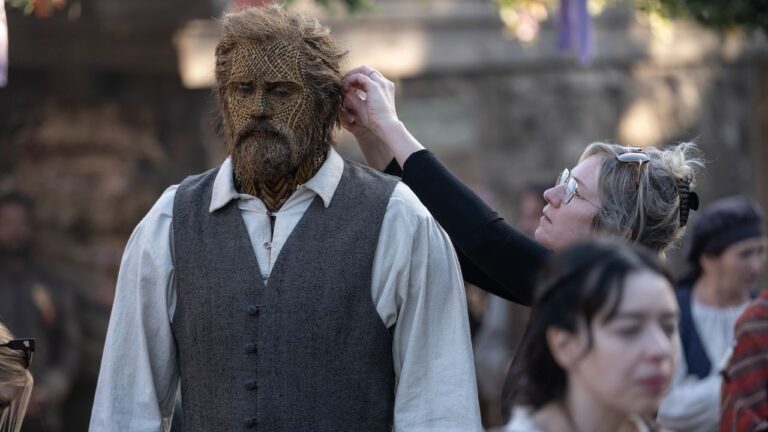
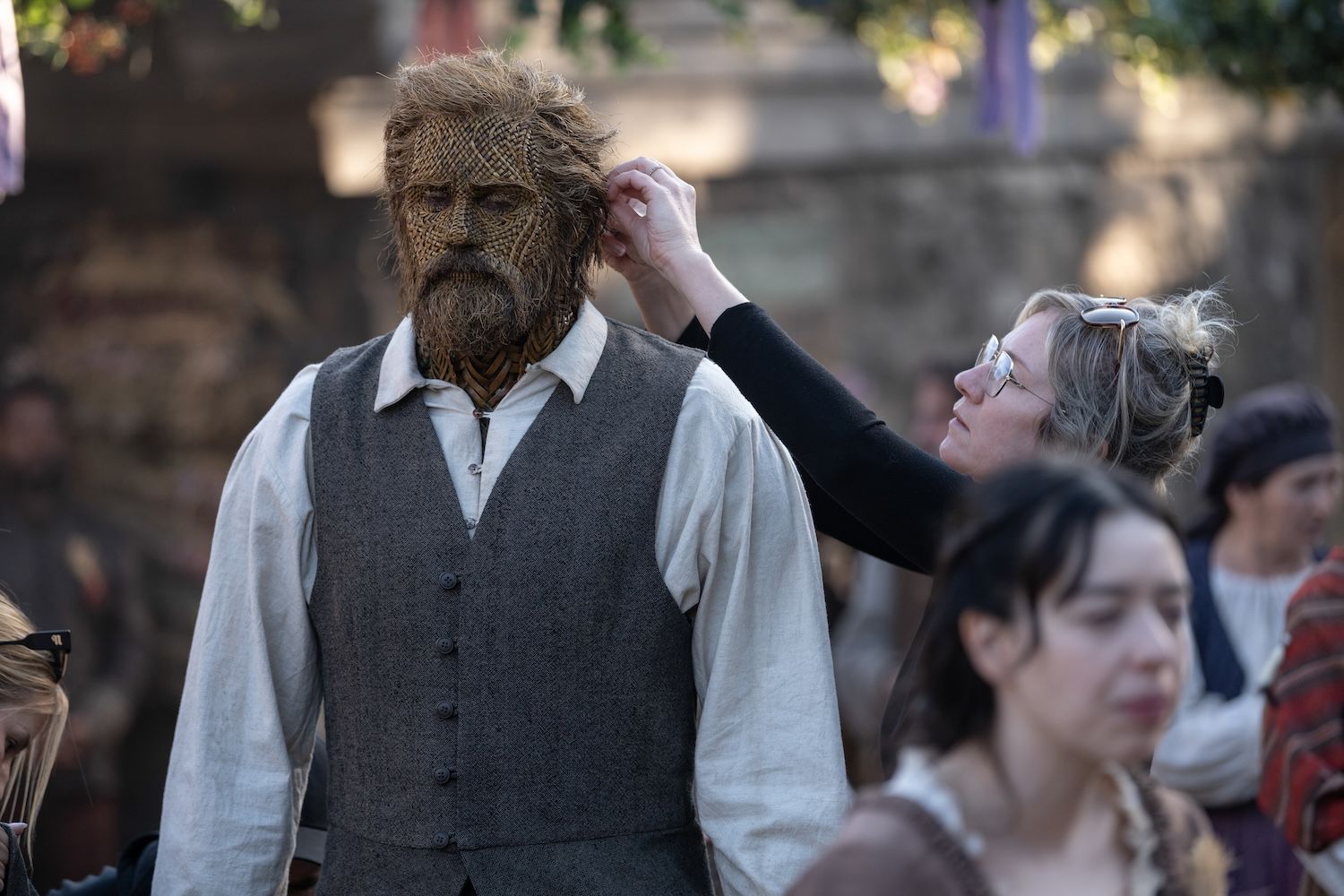
- Wicker Husband required 10 facial and 50 body prosthetic pieces stitched onto power mesh, with application refined to 90 minutes by filming.
- Muka fiber from New Zealand flax created texture for hair, beard, and eyelashes, knotted onto prosthetic lace using the same technique as human wigs.
- The team used 3D animation software to measure precise facial movements (20 millimeters for a smile) and adjust weave patterns accordingly.
- Skarsgård's eyes remained visible behind muka lashes after the team rejected basketweave-printed contact lenses that made him too alien.
The central challenge of bringing Wicker Husband to life was straightforward in concept but complex in execution: create a character entirely constructed from interlocking fibers who would still read as genuinely sexy and deeply desirable. Casting Alexander Skarsgård solved part of the equation. The actor’s face carries inherent appeal—calm confidence, expressive eyes, a certain magnetism—but none of it would translate through a full-body prosthetic covering. The makeup team had to preserve what made him recognizable and magnetic while rendering him entirely woven.
To accomplish this transformation, filmmakers Alex Houston Fischer and Eleanor Wilson engaged Wētā Workshop, the New Zealand-based design and visual effects studio. Prosthetic makeup designer Joe Dunckley and lead makeup-effects artist Sarah Rubano led the effort, partnering with textile artist Jasmin Van Lith, who had previously hand-crafted physical garments for the Avatar franchise.
Eighteen Months of Research and Design
The design phase began 18 months before principal photography. The team started by creating 2D concept art to map out the shapes required for construction. From there, Dunckley brought in Van Lith to create physical weaving samples using realistic basketweave patterns for every region of the body requiring texture. These served not as artworks but as functional design tools.
From Concept Art to Weaving Samples
Van Lith’s samples guided how the final prosthetics could flex and move. The challenge wasn’t just making something that looked woven; it was making something that allowed an actor to function. Each sample represented a region of the face or body and showed how much pliability the team could build into the pattern while maintaining visual consistency.
Mapping Movement for Expression
Using 3D animation software, Dunckley and his team measured precisely how much movement different facial features required. When you smile, the corners of your mouth lift approximately 20 millimeters. That measurement became engineering data. Van Lith would receive the specifications and create a physical weaving sample that allowed exactly that much movement in that specific direction. Precise measurement informed design, which informed samples, which informed sculpture. This iterative process transformed abstract goals into wearable reality.
Wētā’s sculptors then took the weave samples and recreated them digitally across a 3D scan of Skarsgård’s face and body. These digital designs became the basis for 3D-printed prosthetic appliances. Physical tests followed, with each piece refined until it achieved exact specifications. Dunckley highlighted that these 3D-printed prosthetic appliances might be among the first of their kind, a significant shift from the sculpted and molded prosthetics that had dominated the industry.
The Suit: 10 Facial and 50 Body Pieces
The final result consisted of 10 separate facial appliances and 50 interlocking body pieces, each stitched onto power mesh or spandex. By the time filming began, the team had optimized application to 90 minutes—a considerable achievement given the complexity and precision involved. The facial prosthetics included pieces for the ears, lips, under-lips, eye bags, and a large “Batman mask” covering the forehead, nose, and cheekbones, plus a jaw piece. The wig, made from muka fiber, completed the face.
Muka Fiber and Weaving Techniques
The visual depth and tactile quality came from muka, a fiber extracted from New Zealand flax and traditionally used in Māori textiles. Rather than applying uniform wicker texture across the entire body, the team employed varied weaving techniques to create visual complexity and sophistication. The muka strands were knotted onto the prosthetic lace the way hair is secured in a human wig, then applied identically to create a full beard. This handcrafted approach gave Wicker Husband an elegant, considered appearance rather than a utilitarian basket look.
Eyes, Lashes, and Handsomeness
The eyes and surrounding details emerged as the most critical design elements. Rubano emphasized that lashes proved essential to selling the character’s humanity. By the Friday before Monday filming, the team was still finalizing the complete look.
The Eyelash Solution
Those eyelashes, crafted from muka fiber, pulled the entire design into a new register. Rubano described their function in precise terms: the lashes moved the character away from “human” into a beautiful wicker creation. Without them, the prosthetics risked reading as cold, uncanny, or off-putting. With them, the character registered as textured but lovely.
Why Contact Lenses Didn’t Work
The team had considered sclera lenses, contact lenses covering most of the eye and paintable with custom designs. During testing with basketweave-printed lenses, the effect was immediate and negative: Skarsgård vanished. “He’s gone, he’s no longer the romantic lead. He’s too alien,” Dunckley recalled. The window to his soul had closed. By rejecting the sclera lenses and keeping Skarsgård’s actual eyes visible behind the muka lashes, the makeup artists preserved access to his expression and magnetism.
Beyond the eyes, Rubano made deliberate choices to enhance Skarsgård’s inherent handsomeness. She added extra material to create higher, more defined cheekbones and a stronger jawline. She knotted the eyebrows into a robust shape. The wig underwent several iterations. Initially longer, it was eventually shortened and swept back into what Rubano called a “Harlequin romance” style, the visual shorthand for a desirable leading man.
The River Scene and Nipple Debate
One of the film’s most widely discussed moments features Wicker Husband wading naked in a river, and yes, the prosthetic genitalia maintain the basketweave pattern visible across his entire body. Dunckley, however, clarified he had no role in that particular element. Costume designers Tóth András Dániel and Godena-Juhász Attila created the construction separately. While the makeup team built up through the hips and torso, the costume team fabricated the padded genital piece using the same basketweave shapes, achieving the weave effect through puff paint printed on spandex with matching coloring.
The nipples sparked genuine debate during design. Should a sentient wicker being possess nipples? The team held differing views, recognizing there was no objectively correct answer. They ultimately chose to include them, constructing the fiber nipples using traditional hat-making techniques before weaving them onto the suit as a final detail. Skarsgård later gifted one of his wicker nipples to British talk show host Graham Norton during his press rounds, cementing the detail in popular memory.
Throughout this process, Skarsgård proved an exemplary collaborator. Rubano described him as resilient, zen in the makeup chair, and possessed of genuine humor. He would sit quietly like a statue during application, then come alive on set. The team managed small comforts: peeling away his lips and eyelashes during meal breaks so he could eat. Skarsgård reciprocated by actively protecting the prosthetics throughout long shoot days. His respect for the craftsmanship was evident, ensuring the fibers survived intact.
Source: Allure
Frequently Asked Questions
Why didn't the makeup team use sclera lenses on Skarsgård's eyes?
During testing, basketweave-printed sclera lenses made Skarsgård's character "too alien" and eliminated his romantic appeal. The team kept his actual eyes visible behind muka fiber lashes instead, preserving what Dunckley called "the window to the soul."
How long did the prosthetic suit take to design?
Wētā Workshop spent 18 months in the research and design phase before filming began, using 2D concept art, 3D animation software, and physical weaving samples created by textile artist Jasmin Van Lith to ensure the prosthetics allowed proper facial movement.
What was muka fiber and why was it used for the hair and lashes?
Muka fiber comes from New Zealand flax and is traditionally used in Māori textiles. The team knotted the strands onto prosthetic lace like hair in a human wig, using the same technique for the beard and prominent eyelashes to create an elegant, handcrafted appearance.
