
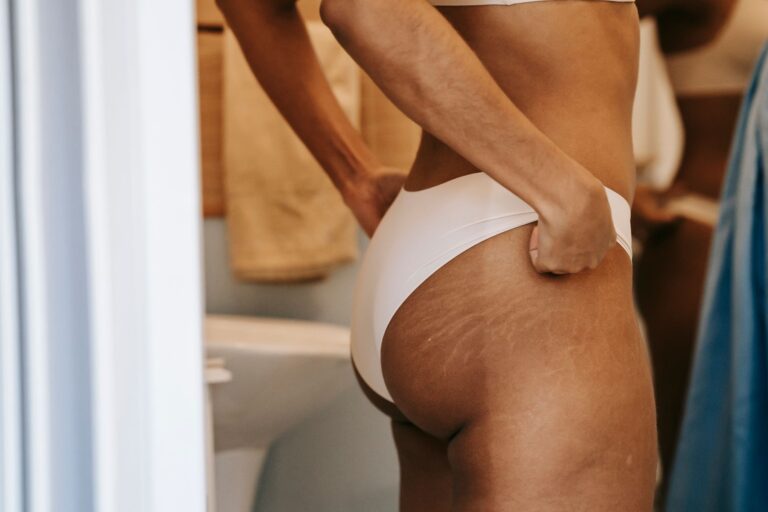
Key takeaways
- Stretch marks are a form of scarring that develops when skin stretches beyond its elastic limit during pregnancy.
- While you cannot completely prevent stretch marks, maintaining skin hydration and elasticity during pregnancy reduces their severity.
- Once stretch marks develop, several topical treatments can reduce their appearance by stimulating collagen production and improving skin texture.
- Professional dermatological treatments have evolved significantly over the past two decades, offering mothers more options than ever before.
Stretch marks appear on nearly 90 percent of pregnant women, making them one of the most common physical changes after childbirth. These marks develop when your skin stretches rapidly during pregnancy, causing the collagen and elastin fibers beneath the surface to break and create visible lines. Understanding how to care for stretch marks gives you practical tools to fade their appearance and feel more confident in your postpartum body.
Understanding What Stretch Marks Are and Why They Form
Stretch marks are a form of scarring that develops when skin stretches beyond its elastic limit during pregnancy. Your skin contains collagen and elastin, which are protein fibers that provide structure and flexibility. When pregnancy hormones soften these fibers and your belly expands rapidly to accommodate your growing baby, these fibers tear microscopically beneath the skin’s surface. The resulting damage appears as red, purple, or pink lines that may later fade to white or silver.
Research published in the American Journal of Clinical Dermatology found that stretch mark formation peaks during the second and third trimesters, when weight gain accelerates. Women who gain more than the recommended amount of weight during pregnancy, carry multiple babies, or have a family history of stretch marks face higher risk. Your genetics play a significant role—if your mother developed stretch marks during her pregnancies, you have a higher likelihood of developing them as well.
Early Prevention and Moisture Management Strategies
While you cannot completely prevent stretch marks, maintaining skin hydration and elasticity during pregnancy reduces their severity. Moisturizing your skin twice daily with products containing glycerin, hyaluronic acid, or Natural oils helps maintain the skin barrier and supports collagen function. Drinking adequate water—typically eight to ten glasses daily—hydrates skin from within and supports the skin’s natural repair processes. These preventive measures work best when started early in pregnancy and continued through the postpartum period.
A landmark study conducted at the University of Bari in Italy followed pregnant women who used cocoa butter and other emollient creams daily. The women who applied moisturizers consistently from the first trimester showed 20 percent fewer stretch marks than the control group. This research demonstrates that consistent moisture management, though not a complete solution, meaningfully reduces stretch mark visibility when applied as a daily habit.
Topical Treatments for Fading Existing Stretch Marks
Once stretch marks develop, several topical treatments can reduce their appearance by stimulating collagen production and improving skin texture. Retinol and retinoids—derivatives of vitamin A—increase cell turnover and boost collagen synthesis, making them among the most researched options for postpartum stretch mark care. Vitamin C serums brighten discolored marks and support collagen formation, while niacinamide strengthens the skin barrier and reduces inflammation. Most topical treatments require consistent application over three to six months to show visible results.
Centella asiatica, also known as gotu kola, has been used in traditional Asian Skincare for centuries and appears in modern stretch mark treatments. This plant extract contains compounds that stimulate collagen production and improve skin elasticity. Many dermatologists recommend combining multiple ingredients—such as retinol with vitamin C—to address stretch marks from different angles and achieve faster fading.
Professional Treatments and Their Evolution
Professional dermatological treatments have evolved significantly over the past two decades, offering mothers more options than ever before. Microdermabrasion uses tiny crystals or a diamond-tipped wand to exfoliate the skin’s surface, encouraging new skin growth and reducing stretch mark visibility. Laser therapy targets the discolored appearance of newer marks by stimulating collagen remodeling beneath the skin. Radiofrequency treatments use heat energy to tighten skin and improve texture, while microneedling creates controlled micro-injuries that trigger the body’s natural healing response and collagen production.
The first laser treatment specifically designed for stretch marks, the Pulsed Dye Laser, became widely available in the 1990s and transformed postpartum skincare options. Today, fractional lasers—which treat only a fraction of the skin at a time—offer faster recovery and more targeted results. A study in the journal Dermatologic Surgery found that women who received four to six laser treatments spaced six weeks apart saw a 50 to 75 percent improvement in stretch mark appearance. Most professional treatments require multiple sessions and represent a more significant investment than topical options, but deliver more dramatic results for women seeking faster improvement.
Frequently Asked Questions
When should I start treating stretch marks after pregnancy?
Begin treatment as soon as you feel ready during the postpartum period, ideally within the first few months when marks are still red or purple and more responsive to treatment. Newer marks respond faster to both topical treatments and professional procedures than older, white marks. However, even established stretch marks can fade with consistent care over time.
Are stretch marks permanent?
Stretch marks are a form of scarring and do not completely disappear, but they fade significantly with proper care. Red or purple marks fade naturally over time as inflammation decreases and collagen remodels, typically becoming lighter within six to twelve months postpartum. With treatment, you can accelerate this fading process and reduce their visibility to minimal levels.
Can I use stretch mark treatments while breastfeeding?
Most topical treatments are safe during breastfeeding when applied to areas away from your breast and nipple, though you should verify with your healthcare provider. Professional treatments like laser therapy and microneedling are also compatible with breastfeeding. Always inform your dermatologist that you are breastfeeding so they can recommend the safest options for your situation.
Caring for stretch marks after pregnancy combines patience with practical action, recognizing that your skin undergoes significant transformation during this chapter of your life. Whether you choose consistent topical treatments, professional procedures, or a combination approach, you have evidence-based options available to fade these marks and restore your confidence in your postpartum body.
