
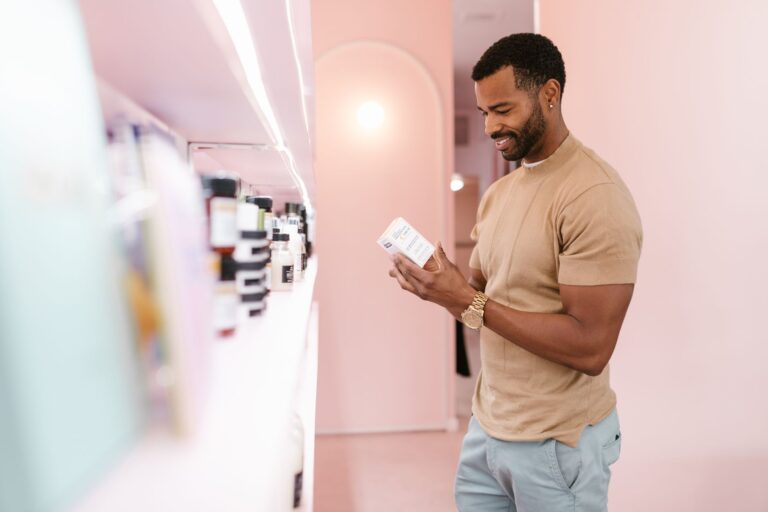
Skincare labels contain a wealth of information that directly affects your skin’s health and your beauty routine’s effectiveness, yet most busy mothers skim past them without understanding what they actually say. Learning to decode these labels takes only a few minutes but transforms your ability to choose products that truly work for your skin type and concerns. This skill becomes especially valuable when you’re juggling multiple family members’ needs and your own self-care on a tight budget.
Understanding the Ingredient List and INCI Nomenclature
Every Skincare product sold in regulated markets displays ingredients in descending order by weight, meaning the first ingredient makes up the largest percentage of the product and each subsequent ingredient comprises progressively smaller amounts. This system, called INCI nomenclature (International Nomenclature of Cosmetic Ingredients), uses standardized scientific names for every substance, from water listed as “Aqua” to glycerin listed as “Glycerin.” When you understand this ordering principle, you immediately know whether a product truly delivers what it promises on the front label or simply contains a tiny amount of an expensive-sounding ingredient for marketing purposes.
The FDA established modern ingredient labeling requirements in the United States during the 1970s, requiring manufacturers to list all ingredients in descending order of concentration. Before this regulation, companies could hide ingredient information entirely, making it impossible for consumers to know what they applied to their skin. Today, this transparency allows you to cross-reference ingredients against your known sensitivities and identify whether a product suits your skin type before spending money on it.
Identifying Active Versus Inactive Ingredients
Active ingredients are the components scientifically proven to produce a specific effect on your skin, such as retinol reducing fine lines or salicylic acid unclogging pores, while inactive ingredients serve as carriers, preservatives, or texture enhancers that support the active ingredient’s delivery. Manufacturers must declare active ingredients separately, often in a “Drug Facts” box or highlighted section, making them easy to spot once you know what to look for. The remaining ingredients in the list are considered inactive, though some—like hyaluronic acid or niacinamide—provide substantial skincare benefits without being classified as drug actives.
The distinction matters because active ingredients undergo rigorous testing to prove efficacy, whereas inactive ingredients simply need to be safe at their usage levels. For example, a moisturizer might list “retinol” as an active ingredient at a specific concentration proven to reduce wrinkles, while the other 90 percent of the product consists of inactive ingredients like cetyl alcohol, glycerin, and preservatives that make the retinol stable and pleasant to use. Understanding this hierarchy helps you evaluate whether you’re paying premium prices for genuine efficacy or clever marketing.
Decoding Percentage Claims and Concentration Levels
When a label claims a product contains a certain percentage of an ingredient—such as “10% vitamin C” or “2% salicylic acid”—this refers to the concentration of that specific ingredient in the finished product, a detail that dramatically affects whether the product will deliver results. Different active ingredients require different concentrations to be effective; salicylic acid typically needs at least 0.5 to 2 percent concentration to exfoliate effectively, while vitamin C serums require minimum concentrations around 8 to 10 percent to provide antioxidant benefits. A product claiming to contain vitamin C but listing it near the end of the ingredient list likely contains far less than the effective threshold, making it essentially decorative rather than functional.
The stability and formulation method also affect whether stated concentrations actually reach your skin in active form. L-ascorbic acid, the most effective form of vitamin C, degrades quickly when exposed to air and light, which is why legitimate vitamin C serums come in opaque, airtight packaging and cost significantly more than cheaper alternatives. Brands like Skinceuticals built their reputation partly on transparent communication about their 15% L-ascorbic acid concentration and specific stabilization methods, allowing consumers to understand exactly what they were purchasing.
The Evolution of Skincare Label Standards and Transparency
Skincare labeling has transformed dramatically over the past century as scientific understanding advanced and consumer protection laws strengthened. In the early 1900s, skincare products made wild, unsubstantiated claims with no requirement to list ingredients or prove safety, allowing snake oil salesmen to market mercury-containing creams as anti-aging solutions. The Food, Drug, and Cosmetic Act of 1938 established the first federal framework requiring ingredient disclosure, though enforcement remained loose until the Fair Packaging and Labeling Act of 1966 mandated clear, standardized ingredient lists on all products.
The introduction of INCI nomenclature in 1973 created a universal language for ingredients across all brands and countries, finally allowing consumers and dermatologists to compare products accurately. Before this system, manufacturers could use different names for identical ingredients, making it impossible to identify allergens or duplicates across products. Today’s labels reflect decades of consumer advocacy and scientific advancement, giving mothers access to information that previous generations could never obtain, enabling genuinely informed skincare choices.
Frequently Asked Questions
Why do some ingredients appear at the end of the list even though they’re advertised prominently on the front?
Ingredients listed near the end make up less than 1 percent of the product’s total weight, meaning they provide marketing appeal rather than meaningful skincare benefit. Manufacturers can legally highlight these trace ingredients on packaging because they are genuinely present, but their concentration is too low to produce the advertised effect. This practice, called “ingredient spotlighting,” is why you should always check the full ingredient list rather than trusting front-label claims alone.
What does “preservative-free” or “paraben-free” actually mean on a label?
These claims indicate the product does not contain specific preservative types, but all preserved products contain some form of preservation system to prevent bacterial growth and extend shelf life. A “paraben-free” moisturizer likely uses alternative preservatives like phenoxyethanol or methylisothiazolinone instead, which serve the identical function. The term reflects marketing strategy more than superior safety, as parabens have been used safely in cosmetics for over 80 years despite persistent consumer concerns based on misinterpreted research.
How can I tell if a product is actually suitable for sensitive skin?
Look for a short ingredient list with recognizable, simple ingredients and the absence of common irritants like fragrance, essential oils, alcohol, and high concentrations of actives. Products marketed specifically for sensitive skin should avoid strong actives like retinol, acids, or vitamin C at high concentrations, instead featuring soothing ingredients like centella asiatica, allantoin, or colloidal oatmeal. Check whether the product has undergone dermatological testing and carries certification from organizations like the Dermatological Society, which indicates third-party validation of gentleness claims.
Reading skincare labels transforms from an overwhelming task into a quick, practical skill that saves you money and delivers better skin results. By understanding ingredient ordering, identifying active ingredients, recognizing concentration levels, and knowing the history behind labeling standards, you make purchasing decisions based on facts rather than marketing promises. This knowledge becomes your superpower as a busy mother, allowing you to confidently choose products that work for your specific skin needs without wasting time or money on empty claims.
