
Key takeaways
- Heavy Instagram users are more likely to confuse their own face with a stranger's, according to a VR study of 95 participants with eight years of average use.
- Algorithms and filters have created "Instagram face"—a homogenized aesthetic so dominant that brains register it as the default human appearance.
- Plastic surgeons report rising demand for procedures from people in their 20s seeking to match AI-generated or heavily filtered faces that may not be biologically achievable.
- Reconnecting with your body through phone-free activities and building a more diverse social feed can help break the cycle of facial comparison.
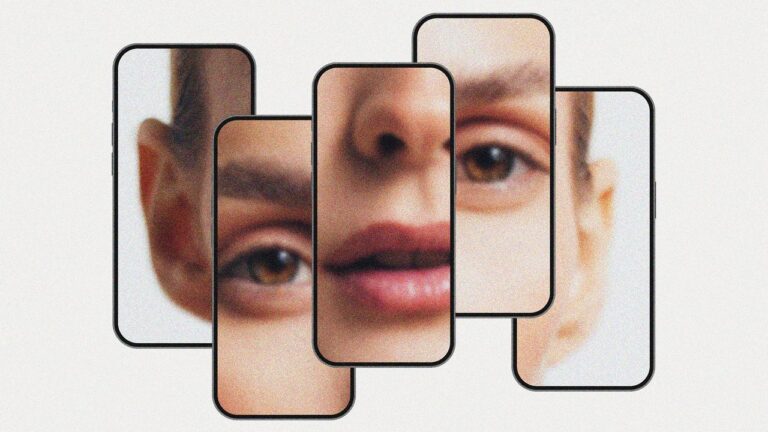
A new study published in Computers in Human Behavior reveals something unsettling: years of scrolling through Instagram may literally be making us forget what our own faces look like. Researchers found that prolonged exposure to filtered, homogenized beauty content doesn’t just affect how we feel about our appearance—it changes how our brains recognize our own faces.
The VR Experiment That Changed How We Think About Instagram
Ninety-five participants, all Millennials and Gen Z with an average of eight years of Instagram use, underwent a virtual reality body illusion experiment designed to test their sense of self. The setup was straightforward: wearing a VR headset, each person watched a stranger’s face being gently brushed on the cheek while feeling an identical stroke on their own cheek for 120 seconds. The stranger’s face bore no resemblance to the participant—the only connection was gender.
After the experience, researchers asked participants to rate their agreement with statements like “Sometimes, I felt like the virtual face was my face” and “Sometimes, I was not aware that my physical face was different from the virtual face.” The results were striking: the more years someone reported spending on Instagram, the more likely they were to perceive the stranger’s face as their own.
“When you’re online for so long, when you’re exposed to these beauty standards so much, you don’t feel this sense of uniqueness that’s your own characteristic,” explains Maria Sansoni, PhD, lead author of the study and postdoctoral research fellow at Catholic University of the Sacred Heart in Milan, Italy. The boundary between your face and someone else’s face was literally blurring in their minds.
When Filters Become the Baseline for Beauty
The Conformity We Don’t See Happening
What makes this study particularly relevant to beauty is a secondary finding: participants who had used beauty filters for years showed an even stronger effect. They were more likely to feel a sense of agency—a sense of control—over a stranger’s entire body in another part of the experiment. This suggests that filter use creates a measurable psychological shift in how we perceive the boundary between self and other.
95 Million Faces a Day
The sheer volume of filtered imagery we encounter is unprecedented. Research from a decade ago estimated 95 million photos and videos were posted to Instagram daily. Since posts featuring faces receive significantly more engagement, and Americans spend an average of four hours and 30 minutes on their phones each day, the cumulative exposure to similar-looking faces is staggering. Before social media existed, people saw approximately 100 faces in a full day—usually the same neighbors and community members, and critically, without any beauty filters at all.
Instagram Face as the New Normal
The homogeneity is striking: smooth foreheads, glass-like skin, thick eyebrows, fuller lips. This aesthetic has calcified into what’s now called “Instagram face,” and for heavy users, it has become the visual baseline their brains expect. “Your mind is saying, ‘This is what the world looks like,’” says Sera Lavelle, PhD, a clinical psychologist in New York City. “We almost start to tune out the people around us, and we start to feel like the whole world looks like these people on social media.”
How Your Brain Registers the “Default” Face
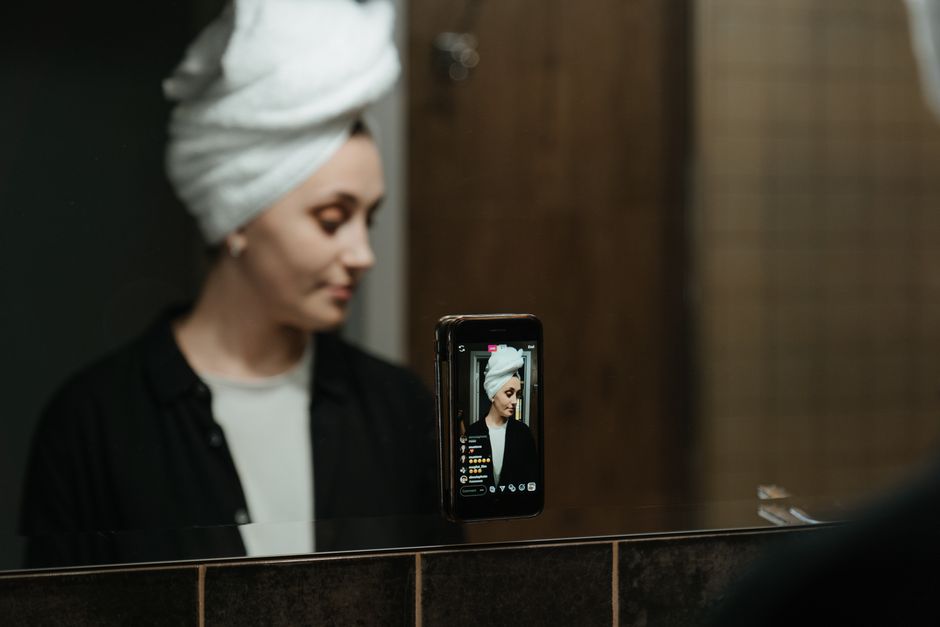
Francesca Emma, LMHC, a psychotherapist in New York, explains the psychological mechanism at work. “The more frequently someone is exposed to the same body type, facial features, skin texture, or overall appearance ideal, the more the brain can begin to register that image as the ‘default’ way someone is supposed to look.” When you see the same curated features repeated thousands of times across your feed, your brain begins to treat that aesthetic not as one option among many, but as the standard.
The danger emerges when reality doesn’t match this learned standard. “Over time, anything outside of that can feel abnormal and unfamiliar,” Emma notes. When you don’t look like the filtered, edited faces dominating your feed, feelings of being “different” or “not enough” intensify. But the real issue isn’t encountering attractive people—it’s the meaning your brain attaches to the comparison. Emma articulates the destructive thought pattern clearly: “It becomes the belief that ‘if I do not look like this, something is wrong with me.’”
The problem is compounded by the artificiality of what we’re seeing. Because filters, AI editing, and photo manipulation have become invisible to many users, the line between achievable and impossible beauty standards has completely dissolved. What your brain registers as “the default” may literally not be replicable in real life.
The Procedural Consequence: Chasing an Impossible Standard
The research has real-world implications beyond self-perception. Plastic surgeons are increasingly reporting demand for facelifts from patients in their 20s—an age group that would have been virtually absent from cosmetic surgery offices a generation ago. Even more striking, some surgeons report patients asking them to recreate AI-generated faces, requesting procedures to match computer-generated ideals that have no basis in natural human anatomy.
Yet even cosmetic procedures fail to satisfy this distorted sense of self. “The standard continues to shift because the image they are chasing may have never been fully attainable in the first place,” Emma explains. “For many people, there is no finish line because the target itself is constantly changing.” The filtered photo from last month gets replaced by a more extreme version this month, the AI-edited face evolves, and the goal post moves further away.
The Historical Shift: From Television to Instagram
This isn’t the first time technology has reshaped beauty standards, but Instagram represents a qualitative leap. When television arrived, it brought beautiful strangers into living rooms, but viewers retained a separation between celebrity culture and everyday beauty. Reality television eroded that boundary, making celebrity beauty more accessible and achievable—or so it seemed. But social media eliminated the boundary entirely.
Lavelle notes the scale of the shift: “Before social media, and even television, people saw maybe 100 faces in a day—usually the same ones in their neighborhood and all without any sort of beauty filter.” Today, that number is incomprehensibly higher. The faces you see aren’t from your neighborhood; they’re from everywhere, and nearly all of them have been professionally edited or filtered.
Reconnecting With Your Actual Face and Body
The study’s findings aren’t meant as a reason to abandon social media entirely. Instead, Emma recommends a more nuanced approach: question the images you consume, intentionally diversify your feed, and—critically—reduce the time you spend in isolated scrolling.
“Reducing time spent in isolation while increasing connection, and reconnecting with our bodies can all be protective factors for mental health,” Emma says. This can mean physical changes: put your phone in another room during meals, call a friend instead of scrolling, or take a walk without your device. When you do use your phone, Emma suggests apps like Brick that help manage usage time.
Equally important is reconnecting with your physical body itself. Take a shower and deliberately notice the sensation of water on your skin. Take a phone-free walk and use all five senses to engage with your surroundings. Practice box breathing—inhale for four seconds, hold for four seconds, exhale for four seconds, hold for four seconds, then repeat—to anchor yourself in physical sensation.
Sansoni, the lead researcher, emphasizes that sharpening what she calls your “inner body signals”—the physical feedback from within your body like your heartbeat that helps your brain construct your sense of self—is essential. When you’re constantly looking outward at filtered faces, you lose touch with the internal signals that tell you who you actually are.
Building a More Realistic Beauty Feed
Moving forward means being intentional about what you’re exposing your brain to. Follow accounts that show real skin texture, diverse age ranges, and unfiltered faces. Unfollow accounts that consistently make you feel inadequate. Engage with beauty content that celebrates variation rather than homogeneity. The goal isn’t to eliminate social media—it’s to stop letting it become the sole voice defining what a face should look like.
Frequently Asked Questions
What exactly did the VR experiment test?
Ninety-five participants with an average of eight years of Instagram use wore VR headsets and watched a stranger's face being brushed while feeling the same stroke on their own cheek for 120 seconds. Researchers found that the more years participants had spent on Instagram, the more likely they were to perceive the stranger's face as their own.
Why is "Instagram face" a problem?
Research estimates 95 million photos and videos are posted to Instagram daily, and Americans spend an average of four hours and 30 minutes on their phones daily. Because nearly all these faces are filtered or edited, the homogenized aesthetic becomes what people's brains register as the "default" way someone should look, leading to body dysmorphia when real faces don't match.
What can people do to reclaim their sense of self?
Experts recommend reducing isolation by using tools like the Brick app to manage screen time, taking phone-free walks, calling friends instead of scrolling, eating meals without phones, and reconnecting with physical sensations. Practicing box breathing and following more diverse, unfiltered accounts can also help restore your brain's accurate sense of self.
