
Key takeaways
- Current AI video generators struggle to recreate detailed tattoos consistently across frames, but researchers say this protection will fade as technology improves.
- Only 22% of Americans have more than one tattoo, meaning AI has less training data on tattooed people—but experts expect this advantage to disappear.
- Experts warn that confidence in tattoo protection distracts from real solutions: better detection tools and policy changes to combat non-consensual deepfakes.
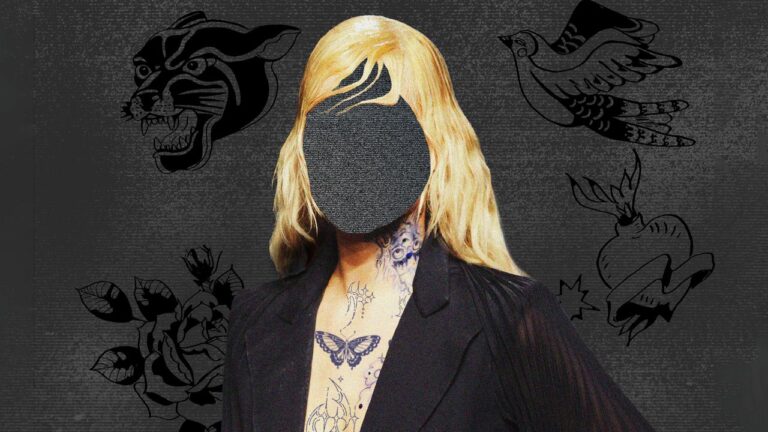
A popular claim has recently circulated online: getting tattooed could shield your image from being captured in deepfake videos created by generative AI. The theory sounds almost elegant—because current AI video generators struggle to replicate intricate details consistently across moving frames, visible tattoos supposedly create inconsistencies that expose the manipulation. Creator Ren articulated this in a viral video, proposing that the more ink someone carries, the less convincing an AI-generated deepfake becomes.
For tattoo enthusiasts—a demographic that research suggests skews more skeptical of AI than average—this resonates as vindication. Tattoos have symbolized personal autonomy across cultures for millennia, as tattoo artist Jaylind emphasized in a response video, even offering protection against physical and spiritual threats in historical contexts. Today’s claim suggests they offer defense against a modern violation of bodily autonomy: having your likeness stolen and manipulated by algorithms.
But what do the actual researchers say? The answer is far more complicated than viral videos suggest.
The Real Technical Challenge AI Faces
Hany Farid, a computer science professor at Dartmouth College in New Hampshire specializing in digital forensics and deepfake detection, offers a crucial correction: “There’s a little bit of truth to it, but it’s not quite right.” The issue isn’t that generative AI specifically struggles with tattoos. Rather, it stumbles with fine detail across the board.
“It’s not that it struggles with tattoos, per se,” Farid explains. “It’s that it struggles with details.” Someone wearing an elaborate wardrobe of intricately patterned shirts would theoretically receive the same protection as a heavily tattooed person.
Why Training Data Matters
A secondary advantage compounds this temporary edge: the statistical rarity of heavy tattooing in the broader population. Only 22 percent of people in the United States have more than one tattoo, according to demographic data. This means that training datasets for generative AI models contain far fewer examples of heavily tattooed individuals compared to those without significant ink.
Saetbyeol Leeyouk, a critical technologist and graduate student at MIT Media Lab whose research focuses on ethics and AI, explains how this skews the algorithms. “The model training data set of people with tattoos is much smaller than the set of people without them,” she says. Smaller datasets naturally produce less reliable outputs when generating minority characteristics.
The 10-to-15-Second Bottleneck
Current video-generation technology operates under a significant constraint: it renders short video segments all at once rather than frame by frame. This approach improves what researchers call temporal coherence—maintaining visual consistency from one frame to the next. However, these individual segments max out at approximately 10 to 15 seconds. To create longer videos, the system simply concatenates multiple clips back-to-back.
This is where tattoos reveal a vulnerability in the pipeline. When AI stitches clips together, visual elements like tattoos can shift slightly between segments. “If you have a fair number of [tattoos] and I made a video of you, they’d probably move a little bit from clip to clip,” Farid notes. For now, these inconsistencies create a detectable flaw.
Measuring the Speed of AI Progress
The researchers emphasize a critical qualifier: any statement about tattoos providing protection must come with a timestamp. “If you’re going to say ‘tattoos make it harder for generative AI to recreate your likeness,’ you have to end that sentence with ‘today,’” Farid insists. “Tomorrow, next week, next month, it’s going to get better. We know this.”
To illustrate the acceleration, Farid references a striking before-and-after. In 2023, a Reddit user created a deepfake showing Will Smith eating spaghetti. The result was nightmarish: vaguely humanoid figures shoveling pasta-like blobs into mouths that barely registered as functional anatomy. The output was unmistakably artificial.
Less than three years later, another Reddit user generated an updated version using current technology. While imperfect under close inspection, the 2026 iteration could credibly pass as an actual commercial. The quality leap in under 36 months is striking. Leeyouk shares Farid’s assessment: “Eventually, [the tattoo issue] will be solved.”
Why This Protection Won’t Survive
The temporary barrier that tattoos create will erode as AI improves its capacity to handle fine details and maintain consistency across frames. The algorithms are advancing precisely in these weak areas. As they do, the scarcity of tattooed training examples will become irrelevant—models will simply improve at generating any kind of intricate surface detail on skin, tattooed or otherwise.
Yet the real danger isn’t that your elaborate back tattoo might twitch unnaturally in a synthetic video. The actual crisis centers on non-consensual abuse, particularly sexual deepfakes weaponized to humiliate targets. Whether an AI accurately rendered the shading on your neotraditional snake becomes pointless when your image is being manipulated for harassment.
The Non-Consensual Deepfake Reality
Leeyouk’s research specifically addresses non-consensual sexual deepfakes, and she articulates an uncomfortable truth: “The purpose of that is not just the itself, but to humiliate the victim.” The technical accuracy of your tattoos becomes irrelevant in the context of exploitation.
The exposure window has also expanded dramatically. “Five years ago, it was the Scarlett Johanssons of the world who were vulnerable to deepfakes because you needed thousands of images and hours of voice recordings,” Farid explains. “Today, a single image of you, 10 seconds of your voice, it’s over.” Even careful social-media abstainers face risk—someone wearing Meta Glasses and casually filming you on the street could capture enough material for AI manipulation.
What Actually Defends You
When asked what defensive measures genuinely work, Farid’s answer is darkly humorous: “Build a bunker and go off the grid.” He himself resides on 100 acres of forest in rural Vermont, though he’s not presenting this as a realistic solution for most people.
Leeyouk worries that viral claims about tattoos offering protection will lull people into dangerous false confidence. “I know that people are actively seeking [ways] to protect themselves from being deepfaked,” she says. “But we really should push politicians or technicians to take charge on this, not be searching for ways that individuals can protect themselves.”
The real work requires systemic intervention: stronger regulation, better industry standards, and detection technology that can identify AI-generated content at scale.
The Path Forward: Better Detection
One genuinely optimistic development exists. As AI systems become more sophisticated, so do the tools designed to detect their output. “If those types of detection techniques are getting better, it means that, from the monitoring side, we can easily sort out which ones are AI-generated and which ones contain real victims,” Leeyouk explains.
This ongoing arms race between generation and detection capability offers a realistic path forward—not through individual protective measures, but through collective defense via advancing technology and policy change.
So no, you don’t need to rush out and add tattoos purely for AI protection. “There are plenty of good reasons to get tattoos,” Farid concludes. “But tattoos are not going to save you from the AI overlords.” Those already carrying significant ink, at minimum, will look cool through whatever emerges next.
Frequently Asked Questions
Can tattoos really protect you from AI deepfakes?
Temporarily, yes. Current AI video generators struggle with intricate details across frames, so visible tattoos can appear inconsistent between clips. But researchers emphasize this advantage will disappear as AI technology improves.
Why does AI have trouble with tattoos?
AI doesn't specifically struggle with tattoos—it struggles with fine details in general. Additionally, the smaller training dataset of heavily tattooed people plays a role, but experts expect both issues to resolve as models advance.
How soon will AI overcome the tattoo problem?
Researchers won't specify a timeline, but advancement is rapid. The 2023 Will Smith spaghetti deepfake looked visibly artificial; the 2026 version appears credible. As AI improves temporal coherence between frames, tattoo consistency will improve with it.
