
Key takeaways
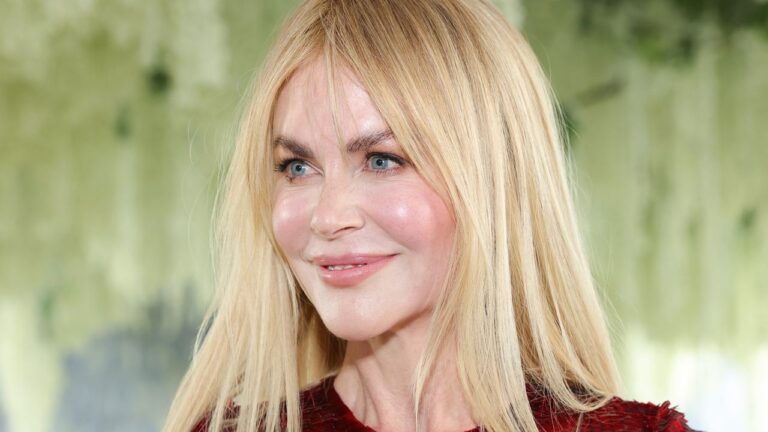
- Nicole Kidman's British Vogue September cover features brows matched almost exactly to her strawberry blonde hair, creating a nearly invisible effect that challenges contemporary brow-focused beauty culture.
- Hairstylist Adir Abergel and makeup artist Fulvia Farolfi collaborated to make voluminous hair the primary focal point, inverting the typical emphasis on brow definition and structure.
- Kidman credits her formative years in trans clubs with teaching her that beauty is about temporary, reversible transformation rather than permanent changes or corrections.
- The editorial suggests that restraint and subtlety—near-invisible brows and monochromatic matching—can be more striking than bold emphasis and architectural precision in beauty editorials.
British Vogue’s September 2026 cover presents one of the year’s defining beauty moments, with Nicole Kidman positioned as the focal point of a shoot that fundamentally questions conventional ideas about brow prominence. Photographed by Venetia Scott, the editorial offers a beauty look that rewards close examination—not because of dramatic gestures, but because its most striking element has been rendered nearly invisible. The September issue itself carries particular weight within the fashion and beauty calendar, functioning as what is often described as the glossy, grown-up equivalent of a first-day-of-school outfit. Yet what British Vogue chose to lead with—a beauty aesthetic centered on subtlety and near-invisibility—speaks volumes about shifting conversations within the industry.
The Almost-Invisible Brow as Aesthetic Statement
Kidman’s brows remain technically present on the cover, yet they engage in what might be described as a refined game of hide-and-seek. Her naturally darker brows, typically several shades deeper than her strawberry blonde hair, have been matched almost exactly to her current hair color through makeup application. The result is so monochromatic that the brows dissolve into her skin rather than defining the face through traditional architectural lines. Where brows typically create structure and anchor facial proportions, these nearly-vanish into the surrounding complexion, present but practically invisible.
A Reversal of Current Brow Culture
This approach stands in sharp contrast to years of brow-focused beauty messaging and treatment. Contemporary beauty culture has increasingly emphasized brow definition, lifting, and darkening as essential components of a polished appearance. Microblading, tinting, lamination, and semi-permanent procedures have made prominent, architecturally shaped brows a dominant aesthetic choice across editorial and mainstream beauty. The Vogue shoot instead moves deliberately in the opposite direction: toward erasure, subtlety, and what appears to be the dissolution of brow definition entirely. For Kidman, whose brows have long been a recognizable feature distinct from her blonde hair, this represents a significant visual departure from her typical presentation.
The Collaboration Behind the Look
Hairstylist Adir Abergel and makeup artist Fulvia Farolfi engineered this aesthetic as an intentional partnership, with both professionals contributing equally to the cover’s visual impact. The nearly-invisible brows might read as a singular makeup choice in description, yet their execution required precision and strategic understanding of how the surrounding elements—particularly the voluminous hair—would either anchor or elevate the overall composition. This collaborative approach ensured that the subtle brow treatment didn’t cause the face to feel incomplete or under-defined, but rather created a cohesive vision where each element served a specific purpose.
Escalation Across the Editorial
The partnership between Abergel and Farolfi becomes even more apparent when examining the additional photographs from the shoot beyond the cover image. In these complementary shots, the hair and makeup intensify substantially, suggesting that both professionals explored multiple interpretations of the core concept. This escalation indicates both Abergel and Farolfi pushing further into their respective territories while maintaining visual coherence across the entire editorial spread. What begins as subtle restraint on the cover becomes progressively more dramatic in the accompanying images, demonstrating the flexibility of the foundational aesthetic.

Hair as the Visual Anchor
With brows rendered nearly imperceptible, the voluminous hair becomes the face’s primary focal point and the element that carries the visual weight traditionally distributed across multiple facial features. The full-bodied, commanding hair absorbs much of the architectural emphasis that brows normally provide in beauty composition. This shift inverts the typical relationship between hair and brow: most contemporary editorials emphasize brow structure and placement as essential to facial definition, using hair as a supporting or framing element. Here, the hierarchy reverses completely. Hair takes the leading role while brows retreat nearly to the point of invisibility, creating the shoot’s conceptual tension and primary visual interest.
Kidman’s Philosophy on Beauty as Transformation
In her interview with British Vogue executive editor Giles Hattersley, Kidman articulated a transformative approach to makeup and hair that contextualizes her willingness to embrace such an experimental aesthetic. She credits a formative experience from her youth with teaching her that beauty fundamentally enables personal transformation and that this capacity for change is among makeup and hair’s most valuable functions.
“I’ve said it before, but I used to go to trans clubs,” Kidman explained. “That’s where I learnt to do my hair and make-up. I would sit down as a little freckled-faced red-headed girl, and they would make me beautiful. They would do my lashes and straighten my hair and put hairpieces on me and makeup. I would walk out of there, and I would feel pretty. I would feel like I was transformed.”
Beauty as Temporary, Reversible Acts
This early exposure shaped Kidman’s fundamental understanding that hair and makeup are tools for temporary, reversible transformation rather than permanent identity markers or corrections. The nearly-invisible brows in the Vogue shoot echo this philosophy precisely: they represent not a dramatic overhaul or a permanent statement, but a subtle recalibration undertaken specifically for a particular shoot. Makeup functions here as an afternoon experiment, a playful act rather than a declaration or permanent commitment. Kidman’s own framing of the concept captures this spirit with particular clarity: the nearly-invisible brows exist “just for the afternoon? As a treat.” This language reframes makeup application not as corrective or essential, but as optional play.
The Significance of September Vogue
The September issue of Vogue has long functioned as fashion and beauty’s most significant editorial moment of the year—what the publication itself describes as the glossy, grown-up equivalent of a first-day-of-school outfit. For British Vogue to lead that issue with a beauty look centered on near-invisibility rather than definition marks a notable shift in what the industry considers a major beauty moment worth celebrating. For years, editorial beauty has consistently celebrated drama, definition, strong color, and statement-making as the hallmarks of significant beauty editorials. The Kidman cover instead asks a fundamentally different question: what if the statement is restraint? What if the beauty moment features brows dissolving into skin, hair carrying the primary visual narrative, and makeup serving as temporary play rather than permanent enhancement? This particular Vogue moment will likely influence how beauty editors and makeup artists approach brow treatment in coming months, offering permission to embrace subtlety and the counterintuitive idea that minimal definition and near-invisibility can be more striking than bold emphasis and architectural precision.
Frequently Asked Questions
How did they make Nicole Kidman's brows nearly invisible for the Vogue cover?
Her naturally darker brows were matched almost exactly to her strawberry blonde hair color through makeup, creating a monochromatic effect that caused the brows to dissolve into her skin rather than defining the face.
Who created Nicole Kidman's hair and makeup look for the September Vogue cover?
Hairstylist Adir Abergel and makeup artist Fulvia Farolfi collaborated on the look, which was photographed by Venetia Scott for British Vogue's September 2026 issue.
What does Nicole Kidman say inspired her approach to beauty and transformation?
She credits learning in trans clubs as a young girl, where she was taught to do her hair and makeup. She recalls sitting down as a freckled red-headed girl and being transformed through makeup and hair, learning that these tools enable temporary, reversible changes that make her feel pretty and transformed.
