
Key takeaways
- Soft-matte and natural finishes work better than ultra-matte for oily skin, since extremely mattifying formulas flatten the complexion and trigger more oil production.
- Liquid foundations deliver the most natural results while controlling shine, though powders excel for very oily skin and quick touch-ups.
- Prep your skin with hydration first—oily skin is often dehydrated underneath—then choose the foundation for your desired finish, not based on oil production alone.
- Eight tested formulas span drugstore to luxury with options in liquid, powder, and serum formats, from Estée Lauder and Chanel to MAC and L'Oréal.
The prevailing wisdom that oily skin requires a punishing layer of matte foundation misses the mark. Los Angeles–based makeup artist Alexandra McCormick points out that stripping away all glow can flatten the complexion and paradoxically trigger the oil glands to work harder throughout the day. “Extremely mattifying formulas can sometimes make the skin look flat or even encourage the skin to produce more oil,” she explains. Instead, she gravitates toward long-wearing liquid foundations with a natural or soft-matte finish, which manage shine without announcing the presence of makeup.
The key distinction: seek out oil-free or oil-controlling formulas that offer long wear and buildable coverage. Liquids typically deliver the most natural appearance while controlling excess shine, though powder foundations earn their place for very oily complexions and quick touch-ups. Even a luminous finish remains within reach—the trick is finding lightweight formulas that provide a soft, skin-like radiance rather than a slick or dewy appearance.
Building a Foundation Strategy
What the formula should do
Paint with broad strokes, oil-controlling foundations fall into patterns. A highly pigmented formula provides substantial coverage from a thin layer, reducing the temptation to stack multiple applications that might separate as oil surfaces. Staying power matters as much as the coverage level itself. The foundation should cling to skin with enough flexibility to avoid the rigid or flat appearance that happens when breathability gets sacrificed. Lauren D’Amelio Ventre, a New Jersey–based makeup artist, considers natural-matte, soft-matte, and satin finishes the most forgiving starting points for oily skin.
Preparation changes everything
The skin underneath the foundation sets the entire equation. Oily skin frequently masks dehydration; aggressive cleansing, skipped moisturizers, or a mattifying routine stacked on top can leave the surface slick while the deeper layers are parched and textured. Ventre’s principle: “Prep for the skin condition and choose the foundation for the finish.” This means hydrating with the same intention as you would for dry skin, then selecting a foundation matched to the finish you want, not to the oil production alone.
Liquid Formulas: The Gold Standard
Estée Lauder Double Wear Stay-in-Place Foundation
When Estée Lauder released Double Wear in the 1990s, it established the template for long-wear foundations that still holds nearly 30 years later. The brand has now updated the classic with a reformulation that maintains the 36-hour longevity promise while delivering a lighter, more fluid texture than its predecessor. The new version ships in 70 shades and incorporates a proprietary Polymer Mesh Matrix Technology—a breathable polymer system that flexes with skin while color-treated micro-pigments resist shifting even as oil accumulates.
Glycerin and hyaluronic acid support moisture throughout the day. The proprietary AlgaNiacin blend (niacinamide combined with brown algae extract) addresses oil regulation over time. Ventre recommends it specifically for clients who need their skin to “remain polished for hours without constant maintenance,” and cautions that a thin layer suffices—adding coverage only where the complexion actually needs it.
The catch: the reformulation required shade rematch. Editor Jessica Cruel, who had matched to 6W1 Sandalwood in the original, found herself selecting from 6C1 in the new formula and notes a roughly 50% chance that longtime users will need to adjust their shade selection.
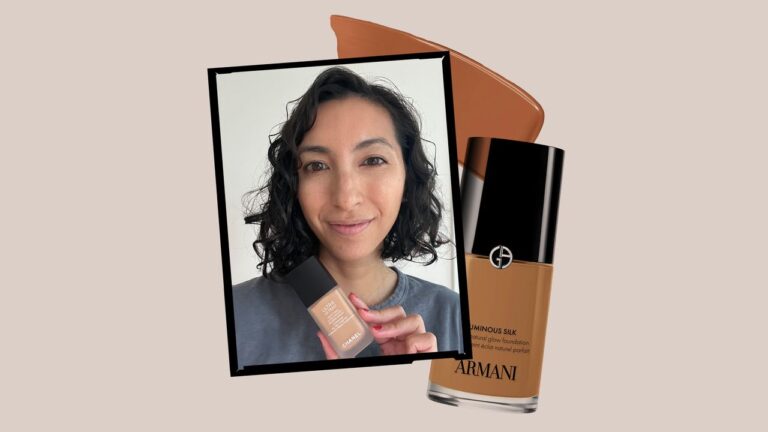
Chanel Ultra Le Teint
Chanel’s Ultra Le Teint pursues the paradoxical goal of full coverage without the appearance of makeup. Soft-focus powders blur pores, uneven texture, and dark spots while the formula melds into the skin. Glycerin keeps the complexion hydrated, and silicones provide the slip that makes the application feel skin-like. The staying power reaches 24 hours and resists sweat, heat, humidity, and color transfer.
Commerce editor Deanna Pai tested it on naturally large pores and breakout-prone skin that turns oily quickly. She went in expecting to layer concealer but found the foundation’s coverage sufficient on its own. The finish delivered dimension and a hint of dewiness without requiring midday touch-ups.
Armani Beauty Luminous Silk Foundation
Allure editors have reached for Armani’s Luminous Silk since 2002, so the brand’s recent reformulation sparked anxiety in the office. The updated version retains what made the original beloved while adding upgrades: it now offers 44 shades, incorporates hydrating glycerin and oil-regulating niacinamide, and features oil-absorbing aluminum starch, silica, and kaolin. The result is a weightless formula that delivers that signature radiance without intimidating oily skin types.
Commerce editor Sarah Han found the consistency reminiscent of skin tint—super spreadable and effortless to blend. One pump gave a sheer base layer; layering on areas prone to discoloration added medium coverage. The foundation blurs oily sections, especially around the nose and cheeks, without looking built-up. Han located her shade (4, a light golden neutral) on the first try, a rarity she attributes to the accuracy of the color representation in the bottle.
Deanna Pai, who used samples of the original in college, notes that the updated formula is as strong as its predecessor while being slightly lighter in coverage—a change she welcomed. It continues to endure through hot, humid summer days while keeping the complexion looking radiant in a natural way.
Powder and Serum Options
Tarte Face Tape Full Coverage Foundation
Tarte’s Face Tape Foundation brought the same high-performance approach of its bestselling Shape Tape Concealer to the full face. The formula combines matte finish with waterproof staying power, yet manages to hydrate: hyaluronic acid draws in moisture, while snow mushroom extract (rich in antioxidants) delivers an additional hydration layer. The result smooths the appearance of texture and minimizes pores without landing in flat, dry, or cakey territory.
Makeup artist Gregory Arlt notes that “modern formula gives the coverage and long-wear that one would need without looking or feeling like you have a mask on”—a crucial distinction for anyone who associates full coverage with heaviness. Beauty director Sarah Kinonen has worn the foundation for years and praises its transfer-proof formula that evens out underlying redness without disrupting oily skin.
MAC Studio Fix Powder Plus Foundation
MAC’s Studio Fix Powder Plus Foundation ships in 78 shades, the broadest range on this list. The talc-free powder delivers medium-to-full coverage with a blur-matte finish. Aluminum starch, silica, kaolin, and illite clay absorb excess oil, while boron nitride and silicones smooth the feel and blur pores. Rose and algae extracts provide antioxidant and conditioning benefits; milk thistle seed oil, bisabolol, and vitamin E keep skin feeling soft. McCormick singles it out for “nice oil control and smooths the complexion beautifully,” plus the compact design makes touch-ups throughout the day convenient.
m.ph Le Skin Weightless Serum Foundation
Mary Phillips, the makeup artist behind looks for clients including Kendall Jenner and Hailey Bieber, created the m.ph Le Skin Weightless Serum Foundation to capture the serum’s silky slip in a true medium-coverage formula. Lightweight silicones deliver the spreadable texture while 2% niacinamide evens tone and can regulate sebum, making the luminous finish approachable for oilier complexions. Glycerin, sodium hyaluronate, and panthenol introduce hydration without turning the formula into a rich moisture bomb. The payoff is the glow Phillips is known for: fresh and dimensional, with coverage that doesn’t announce its presence.
Drugstore and Designer Alternatives
L’Oréal Paris Infallible Fresh Wear Foundation performs like a luxury product at drugstore pricing. The ultra-thin liquid offers buildable medium-to-full coverage “without feeling like a mask,” according to McCormick. Perlite and silica absorb excess oil while film-forming polymers lock pigment in place. Despite the 32-hour longevity, the formula feels lightweight and breathable. Vitamin C brightens, vitamin E provides antioxidant defense, and SPF 25 adds an extra layer of sun protection.
Dior’s Forever Skin Wear Foundation manages excess shine without eliminating skin’s natural dimension—those subtle shifts in light and texture that prevent a flat appearance. The soft-matte formula uses silicone-based powders to absorb oil and scatter light, blurring enlarged pores and uneven texture. Niacinamide supports the skin barrier and balances oil; hyaluronic acid maintains hydration. Ventre reaches for it “when I want longevity with a polished finish that still allows the complexion to have dimension.”
The Foundation for Your Finish
The assumption that oily skin demands matte makeup forever fails to account for the nuance available in modern formulas. Control and dimension can coexist when you prioritize adhesion and longevity without sacrificing the flexibility that keeps skin from looking rigid. The coverage level also influences how the formula behaves: a highly pigmented option can achieve ample coverage with a single thin layer, avoiding the multiple applications that separate as oil emerges.
What lies beneath the foundation matters equally. Dehydrated oily skin—a common situation—responds better to hydration than to additional mattifying products. Once the complexion has been prepped with the appropriate cleanser and moisturizer for the skin condition, the foundation choice becomes about the finish you want, not the oil production alone.
Frequently Asked Questions
Do I have to wear matte foundation if I have oily skin?
No. While ultra-matte finishes control shine, they can flatten the complexion and sometimes trigger more oil production. Soft-matte, natural, and satin finishes work better, and even luminous formulas are possible with lightweight formulas that deliver a soft glow rather than a slick finish.
Is liquid or powder foundation better for oily skin?
Liquids typically offer the most natural-looking results while controlling shine. Powders are particularly useful for very oily skin and midday touch-ups, as they absorb excess oil quickly and conveniently.
Do I need to change my skincare routine if I use foundation for oily skin?
Yes. Oily skin is often dehydrated underneath, so avoid aggressive cleansing or skipping moisturizer. The principle is to prep the skin for its actual condition with hydration, then choose the foundation for the finish you want, not based on oil production alone.
