
Key takeaways
- Modern floral fragrances now pair traditional blooms with unexpected ingredients like fig, pistachio, leather, and incense to create more sophisticated compositions.
- Vanilla and creamy notes can make floral perfumes feel wearable and elegant rather than cloying or overly sweet, broadening their appeal.
- Contemporary fragrances draw inspiration from diverse sources—Japanese aesthetics, Korean concepts, Omani traditions—creating distinctive aromas that transcend typical floral clichés.
- Complementary notes like woods, spices, and aquatic accords determine whether a floral fragrance feels calming, edgy, or indulgent for different occasions.
Floral fragrances have shed their one-dimensional reputation. Today’s blooming scents pair classic petals with fig, pistachio, leather, sea salt, and incense—ingredients that would have seemed unthinkable in florals just a decade ago. Whether you’re seeking a barely-detectable skin scent, a juicy floral with gourmand undertones, or a moody rose with an edgy attitude, the modern fragrance landscape offers something for everyone who appreciates blooms beyond the basic.
The shift reflects how contemporary perfumers are approaching florals. Rather than relying on a single dominant flower, houses from established brands like Gucci and Dior to niche labels including D.S. & Durga and Elorea are layering unexpected accords, drawing inspiration from culture, memory, and unconventional ingredients to redefine what a floral fragrance can be. Testing the newest releases and established favorites reveals which fragrances break the mold while remaining wearable, recognizable, and genuinely distinctive.
Creamy Florals That Don’t Feel Sugary
Gucci’s Vanilla-Orchid Breakthrough
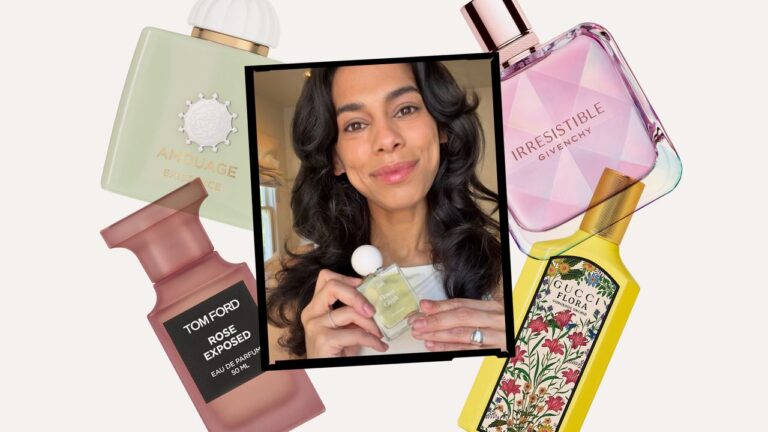
Gucci Flora Gorgeous Orchid Eau de Parfum represents the house’s first venture into floral gourmands—a move that could easily backfire if executed poorly. Here, a vanilla duo and vanilla orchid form the fragrance’s beating heart, paired with an ocean-inspired accord that tempers any risk of the scent becoming cloying. Contributing commerce writer Christa Joanna Lee notes that this oceanic element “is what helps keep the scent from feeling too rich or overly sugary.” The result wears warm yet airy, a balance that eludes many gourmand florals. For those who want more intensity, the Flora Gorgeous Orchid Eau de Parfum Intense amplifies the vanilla with richer depth, adding salty ozonic notes and cocoa for a deeper, more ambery character.
Lee describes her experience with the standard version: “The vanilla is noticeable from the very first spritz, but it never feels overly gourmand. Instead, it comes across as creamy rather than sweet.” She particularly appreciated it as an evening fragrance, noting its cozy, calming nature—qualities rarely associated with traditional florals that tend toward brightness or powdery delicacy.
Givenchy’s Pastry-Chef Collaboration
Few fragrance collaborations pair a storied fashion house with an acclaimed pastry chef, yet Givenchy tapped pâtissier François Daubinet for Irresistible Nectar Eau de Parfum. Inspired by the artistry of French pâtisseries, the fragrance wraps a rose floral heart in pistachio cream and vanilla wood while neroli provides enough brightness to prevent the composition from tilting too dessert-forward. Jeniece Trizzino, VP of innovation and product at Scentbird and Drift based in New York City, observes that the pistachio cream “creates something creamy and indulgent” while allowing “the rose the kind of dimension I always look for.”
The fragrance reads as sophisticated rather than novelty, appropriate enough for special occasions without sacrificing its gourmand charm. Testers found one subtle spritz sufficient, with the fragrance lingering through the day when applied to pulse points—a trait that distinguishes it from lighter florals that demand frequent reapplication.
Florals for the Artistic and Unconventional
D.S. & Durga’s Cinematic Fig
D.S. & Durga is renowned for fragrances with cinematic backstories, and Debaser In Bloom draws its narrative from the Pixies’ 1989 song “Debaser.” The fragrance translates the track’s carefree, rebellious energy into a composition that evokes a lazy summer sprawled beneath a fig tree. Creamy fig and fresh fig leaf intertwine with coconut milk, powdery iris, blonde woods, and tonka bean. Unconventionally, a “cassette tape” accord—a perfumer’s creative interpretation rather than an actual ingredient—recreates the subtly fruity, plasticky scent of cracking open a brand-new tape, adding nostalgic depth.
Content business operations associate Edward Horgan found the fragrance particularly effective for those skeptical of florals: “This fragrance is the perfect floral for people who don’t typically reach for florals. Debaser In Bloom is a flexible light floral with an almost herbaceous undertone that provides more depth than your typical rosy floral fragrance.” He praised its delicate balance on warm days, offering a fresh-floral aura without overwhelming a room.
Liis’ Flower Glyph Garden
Liis approaches Flower Glyph Eau de Parfum with studied minimalism. Rather than featuring a single standout flower, the fragrance composes layers of juicy mirabelle plum, jasmine sambac, honeysuckle, and golden pollen—as if capturing an entire garden at bloom. An iridescent ink accord (a perfumer’s rendering of shimmer rather than a naturally extracted scent) adds a clean edge that prevents the composition from veering sweet or predictable.
Senior commerce director Shanna Shipin describes it as “a comforting floral,” praising its modern sensibility and artistic restraint. She notes the fragrance requires a double application to extend wear through the day—a worthwhile trade-off for its distinctive composition: “There are notes of honeysuckle, plum, jasmine, blueberry, and ‘iridescent ink’ that my untrained nose can’t even detect, but perhaps it’s the je ne sais quoi that makes this the most interesting scent in my arsenal.”
Rose Perfumes That Refuse Tradition
Rose has undergone a transformation from delicate bloom to bold statement. Contemporary perfumers are treating it as a starting point rather than a final destination, pairing it with leather, pepper, spice, and resinous elements to create compositions with genuine attitude.
Tom Ford’s Spiced Rose with Leather
Tom Ford Rose Exposed captures the fleeting perfection of a freshly picked rose through an exclusive rose-on-rose co-distillation—a technique that extracts rose absolute and rose water simultaneously to maximize authenticity. Then the house pivots: white pepper delivers a crisp kick while a black leather accord introduces sultry edge. This is rose elevated beyond nostalgia, a fragrance for those who love classical notes with contemporary attitude.
Associate social media manager Katie Gunderman emphasizes its crossover appeal: “Rose Exposed is perfect if you like an edgy, unconventional floral. While it has rose base notes, what gives it dimension is its leathery, peppery layers. If you love musk and leather scents but are looking to try a floral, you need to get your hands on this one! It is also very strong and lasts all day on my skin.”
Dior’s Japanese-Inspired Rose
Dior Rose Kabuki centers on a rose-forward composition—fitting, given that Christian Dior famously grew roses in the gardens of his childhood home in Normandy. Centifolia rose and rose oil mingle with clean white musks and cedarwood to create a soft, powdery fragrance that hovers near the skin. The composition pays homage to Dior’s lifelong admiration for Japanese art and craftsmanship. Named after Japan’s iconic Kabuki theater, it references the elegance and refinement of a silk kimono.
Beauty director Sarah Kinonen applies the fragrance generously—misting it into her hair, onto clothing, and even her purse—noting that one or two applications typically sustain throughout the day. She appreciates its softer approach to rose, describing added notes of “warm musk and fresh dew drops” that distinguish it from traditional rose perfumes.
Florals Rooted in Cultural and Botanical Heritage
Elorea’s Korean Sunset Moment
Elorea, a portmanteau of “Elements” and “Korea,” was founded by a Korean-American couple living in New York City. Hazy Blue Extrait de Parfum draws inspiration from ēnae, a Korean word describing the fleeting bluish haze that settles over the landscape at sunset—a concept without direct English equivalent. The fragrance translates this moment through crisp upcycled bergamot, sea salt, and cool ozone accord before unfolding into airy white flowers including lily of the valley. Sandalwood and amber provide a soft, skin-like dry-down that remains warm without heaviness.
Commerce editor Sarah Han praises its dual emotional register: “It manages to invoke both calming yet uplifting vibes, just what I need as an afternoon pick-me-up—and, thanks to the longer-lasting extrait version, it smells just as good and potent as it did upon first spritz.” She describes the fragrance as evoking “a leisurely stroll,” embodying the peaceful energy the Korean concept of ēnae conveys.
Amouage’s Omani Frankincense
Amouage, founded in Oman during the 1980s to celebrate the country’s centuries-old perfume-making traditions, has become synonymous with resinous ingredients native to the region: Omani frankincense, oud, myrrh, and incense. Existence Eau de Parfum reveals a gentler side of frankincense, pairing its gently smoky warmth with a delicate lily-of-the-valley accord (a perfumer’s recreation, since the actual flower’s scent cannot be naturally extracted). Fresh rose adds brightness while benzoin, white musk, and ambergris contribute coziness to a composition that feels inherently mysterious.
Contributor Kara Nesvig found it transformative: “Amouage’s Existence isn’t what you think of when you think about a floral fragrance, and that’s why I love it. I’m a huge floral fragrance fan, but this spicy, incense-y fragrance filled a void in my collection, and I truly cannot get enough of it. Existence doesn’t sound like a summer scent on paper, but it radiates in the heat so beautifully that I never want to stop wearing it.” She notes the composition balances spice through aldehydes for lift and sparkle, supported by its base of ambergris and benzoin.
Layering Fragrances: Pairing Complementary Notes
According to Jeniece Trizzino, VP at Scentbird and Drift, floral fragrances pair beautifully with specific categories of complementary notes. Understanding these pairings helps identify which fragrance aligns with your preferences:
- Woods such as sandalwood and cedar ground florals and add sophistication and depth
- Musk, amber, and vanilla contribute warmth and sensuality, tempering brightness
- Fruity notes including peach, apricot, plum, and citrus elevate florals with luminosity and modern appeal
- Spices like cardamom, saffron, and black pepper impart a darker, more genderless edge
- Green elements—green tea, basil, mint, and aquatic notes—deliver freshness and calm
- Gourmand notes like honey, cocoa, and caramel establish comfort and indulgence
Trizzino emphasizes: “The most compelling fragrances are those where the floral remains recognizable and another note gives it tension or dimension.” This principle distinguishes fragrances that feel sophisticated from those that veer into gimmick or novelty.
Why These Fragrances Command Investment
Beyond marketing and packaging, each fragrance in this collection stands out for distinctive composition or execution. Whether through innovative extraction techniques like Tom Ford’s rose co-distillation, unexpected cultural inspiration such as Elorea’s Korean sunset or Amouage’s Omani heritage, or artistic collaboration like Givenchy’s pastry-chef partnership, these fragrances offer something beyond mass-market templates. They respect the wearer’s intelligence, avoiding gimmick while delivering genuine sensory experience. Longevity varies—some require strategic reapplication while others sustain through the day—but each justifies its presence in a collection through distinctive character and quality composition.
Frequently Asked Questions
What makes modern floral fragrances different from traditional florals?
Today's florals pair classic blooms with unexpected ingredients like fig, pistachio, leather, sea salt, and incense. They also draw from diverse cultural inspirations, incorporate artist collaborations, and use innovative extraction techniques to create more complex, sophisticated compositions that avoid the one-dimensional sweetness associated with vintage florals.
Which floral fragrance is best for someone who usually finds florals too sweet?
D.S. & Durga Debaser In Bloom works well for floral skeptics—it's a light, herbaceous floral with depth that avoids powdery or overly sweet profiles. Alternatively, Elorea Hazy Blue offers a fresh, aquatic approach with sea salt and ozone that feels calming rather than cloying, and Tom Ford Rose Exposed adds leather and pepper for an edgy take.
What notes should I look for in a floral fragrance if I want it to last longer?
Woods like sandalwood and cedarwood, along with musk, amber, and vanilla, add depth and longevity to floral fragrances. Amouage Existence and Tom Ford Rose Exposed both feature base notes ensuring all-day wear. Givenchy Irresistible Nectar also sustains well on skin, requiring only one subtle application to linger through the day.
