
Key takeaways
- Keratosis pilaris appears as clusters of bumps around hair follicles on upper arms and thighs, while dryness shows as widespread scaling and flaking—identifying which you have determines treatment.
- Effective body lotions combine barrier repair (ceramides, cholesterol), hydration (glycerin, hyaluronic acid), and gentle exfoliation (lactic or salicylic acid) depending on the underlying cause.
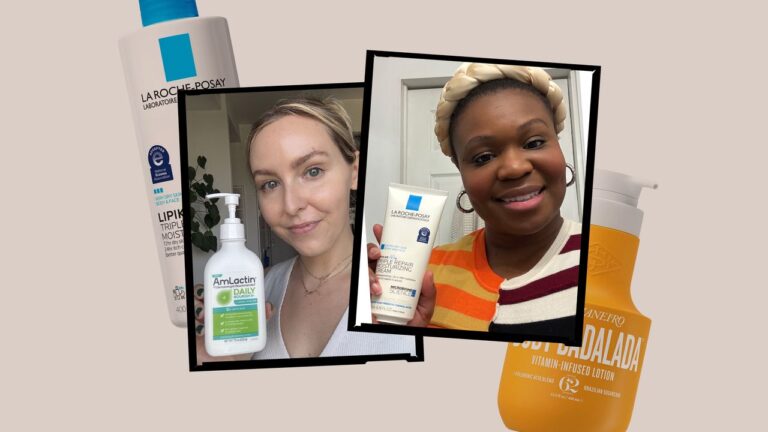
- AmLactin Daily Nourish's 12% lactic acid won the 2024 Allure Best of Beauty Award for treating KP, while La Roche-Posay Lipikar AP+Max and Vanicream excel for sensitive, reactive skin.
- When dryness becomes severe and cracked, step up to an occlusive ointment like CeraVe Healing Ointment (46.5% petrolatum) to create a stronger moisture barrier.
Rough, textured skin can stem from several causes, and identifying the culprit is the first step toward finding an effective treatment. Sumeet Thareja, MD, a board-certified dermatologist based in Tampa, explains that the source of bumpy skin varies: “Sometimes, the culprit is a buildup of keratin around the hair follicles, as with keratosis pilaris (KP); other times, a compromised moisture barrier leaves skin dry, flaky, and rough to the touch.” Clogged or inflamed pores can also create bumps, particularly in areas like the chest and back. To complicate matters further, multiple texture issues can appear simultaneously on the same person.
Distinguishing between texture conditions
Keratosis pilaris and follicular buildup
Keratosis pilaris typically manifests as clusters of small, rough bumps centered directly on hair follicles, earning it the nickname “chicken skin.” This condition is most common on the upper arms and thighs. Rachel Day, MD, a board-certified dermatologist based in Washington, DC, notes that “rough, bumpy skin on the body is often caused by an abnormal buildup of dead skin cells that don’t shed as efficiently as they should. On areas like the upper arms and thighs, those cells can collect around hair follicles and create the small, rough bumps we commonly see with keratosis pilaris.”
Widespread dryness versus follicle-specific texture
Plain dryness presents differently than KP. Rather than discrete bumps around individual hair follicles, dry skin appears as flaking, scaling, tightness, or a uniform sandpapery texture across broader areas. Dr. Day explains that “body skin tends to have fewer oil glands than facial skin in many areas,” making it more prone to dehydration. Dryness can also amplify the appearance of existing texture issues, making rough spots feel even more pronounced.
Inflamed pores and blemishes
Clogged pores may create additional bumps, especially in acne-prone zones. These bumps differ from KP because they’re tied to pore congestion rather than keratin buildup around follicles. The distinction matters because treatment approaches differ based on the underlying cause.
Choosing a lotion strategy
Repairing and supporting the skin barrier
Dr. Thareja emphasizes the importance of a two-part approach: “I like to think about two things: repairing the skin barrier and addressing the buildup that’s creating the texture.” For barrier support, ceramides and cholesterol are essential—they replenish the lipids that form the skin’s protective layer. These ingredients work best when paired with occlusive agents that slow moisture loss.
Using humectants for hydration
Ingredients like glycerin, hyaluronic acid, and urea pull water into the skin and help retain it. These humectants are particularly useful for dehydrated, rough-textured skin because they plump the surface and make texture feel less pronounced.
Gentle exfoliation for keratin and dead skin
When plugged pores or excess keratin is the primary concern, gentle exfoliators work to loosen buildup. Dr. Day explains that “alpha hydroxy acids like lactic acid and glycolic acid exfoliate the skin’s surface, while beta hydroxy acids like salicylic acid help clear the keratin buildup around hair follicles.” Leave-on treatments are preferable to scrubs because they eliminate the temptation to over-exfoliate, which can damage the skin barrier.
Ceramide-rich lotions for barrier repair
La Roche-Posay Lipikar AP+Max Triple Repair Moisturizing Body Cream targets atopic-prone and extremely dry skin. The formula includes ceramides to replenish barrier lipids, shea butter and glycerin for sustained hydration, and niacinamide for soothing benefits. The brand’s postbiotic Aqua Posae Filiformis supports skin microbiome balance, which is critical for barrier health. According to Jessica Cruel, Allure editor in chief, who tested the product: “Just like Goldilocks: too thick and it’s greasy, too thin and it’s useless. This La Roche-Posay formula is just right. I find that it is moisturizing enough to quench my dry elbows and knees. Yet, it doesn’t leave me feeling like I am going to slip and slide all over every surface I touch.” The cream holds the National Eczema Association seal of approval and is fragrance-free, making it suitable for reactive skin.
Vanicream Moisturizing Cream takes a minimalist approach, relying on petrolatum as a protective seal and sorbitol as a humectant. The formula excludes lanolin, botanical extracts, and essential oils—a strategic choice for skin that stings or becomes irritated. Because it’s noncomedogenic, it can be used from face to feet. Melanie Curry, who tested it, noted: “I have uber sensitive skin, so I need a moisturizer that 1) won’t break me out and 2) keeps my skin hydrated all day, which is why I love this Vanicream moisturizing cream. It feels amazing, and just a dab of it keeps my skin fresh all day, without any touch-ups.”
CeraVe Healing Ointment steps up the occlusion when lotions alone fall short. According to Dr. Day, “When skin is severely dry, cracked, or chapped, a lotion may simply not be enough.” This ointment is 46.5% petrolatum and includes three ceramides and cholesterol for barrier support, plus hydrolyzed hyaluronic acid and panthenol for additional hydration. The thicker formula creates a more substantial seal, making it ideal for severely rough spots on hands, elbows, knees, and feet.
Gentle exfoliating body treatments
AmLactin Daily Nourish Therapeutic Body Lotion won the 2024 Allure Best of Beauty Award for its gentle approach to textured skin. The formula contains 12% lactic acid, an alpha hydroxy acid that performs dual duty: it loosens excess keratin and dead skin while functioning as a humectant. Dr. Thareja explains the appeal: “The 12% alpha hydroxy acid concentration gradually exfoliates the buildup behind that telltale texture while attracting water into the skin. Regularly using a lotion like this is generally a better strategy than relying on occasional, aggressive physical exfoliation.” The fragrance-free formula is gentle enough for daily use. Sarah Kinonen, Allure beauty director, shared: “This is the easiest and gentlest exfoliator I’ve ever used. I just slather the lightweight cream onto the backs of my arms where my keratosis pilaris is more prominent and patiently wait for the smoothing magic to happen in the days after application.”
Paula’s Choice Weightless Body Treatment uses salicylic acid, a beta hydroxy acid that penetrates pores rather than working only on the surface. At 2% BHA concentration, it loosens dead skin and oil buildup contributing to bumps and blemishes. The leave-on formula includes allantoin and bisabolol for soothing and vitamin E for antioxidant protection. Dr. Thareja notes the formula’s appeal for acne-prone areas: “I like a leave-on BHA body treatment because it eliminates the temptation to aggressively scrub acne-prone areas, which can make inflammation worse.” The lotion has a light texture, making it welcome on the chest and back where heavier creams feel uncomfortable.
Hydration-forward formulas
Sol de Janeiro Body Badalada prioritizes moisture without exfoliating ingredients. The formula combines Brazilian sugarcane extract and glycerin as humectants with an unusually extensive blend of seven molecular weights of hyaluronic acid. This layered approach means larger HA molecules hold surface moisture while smaller ones work within deeper layers, keeping skin plump and supple. Brazil nut oil adds vitamin E and fatty acids including omegas 3 and 6, while rice bran oil and dimethicone seal in hydration. The formula contains fragrance, which may be a concern for extra-sensitive skin. Christa Joanna Lee, who tested it, observed: “Sol de Janeiro’s Body Badalada smells subtly tropical, thanks in part to Brazil nut oil, without feeling overpowering. But what really wins me over is how quickly it sinks in: It takes all of three seconds to rub into my skin, which makes a huge difference when I’m trying to stay consistent with moisturizing my KP-prone arms.”
Expert guidance for lasting results
The key to managing rough, bumpy skin is consistency and choosing the right formulation for the specific texture concern. Those with sensitive skin should prioritize barrier support and simplicity over aggressive exfoliation, while those with stubborn KP may benefit from gentle leave-on exfoliants applied daily. For skin dealing with multiple issues—dryness compounded by KP, for example—starting with a hydrating base lotion and adding an exfoliating treatment two to three times weekly can prevent over-stripping while still addressing buildup. Allow several weeks of regular use before assessing results, as keratin redistribution and barrier repair take time.
Frequently Asked Questions
How is keratosis pilaris different from regular dry skin?
Keratosis pilaris appears as small, uniform bumps concentrated around individual hair follicles, usually on the upper arms, thighs, and buttocks. Dry skin tends to be more diffuse, showing broader areas of roughness, flaking, or scaling without bumps around follicles. The two can occur simultaneously, with dryness making KP feel more pronounced.
What ingredient should I look for if I have bumpy skin from keratin buildup?
Look for gentle exfoliants: alpha hydroxy acids like lactic acid work on the skin surface and also attract water, while beta hydroxy acids like salicylic acid penetrate pores to clear keratin buildup. Leave-on treatments are preferable to scrubs because they prevent over-exfoliation.
Which lotion won the 2024 Allure Best of Beauty Award for treating rough skin?
AmLactin Daily Nourish Therapeutic Body Lotion, which contains 12% lactic acid and is formulated as a gentle, fragrance-free leave-on treatment suitable for daily use on keratosis pilaris.
