
Key takeaways
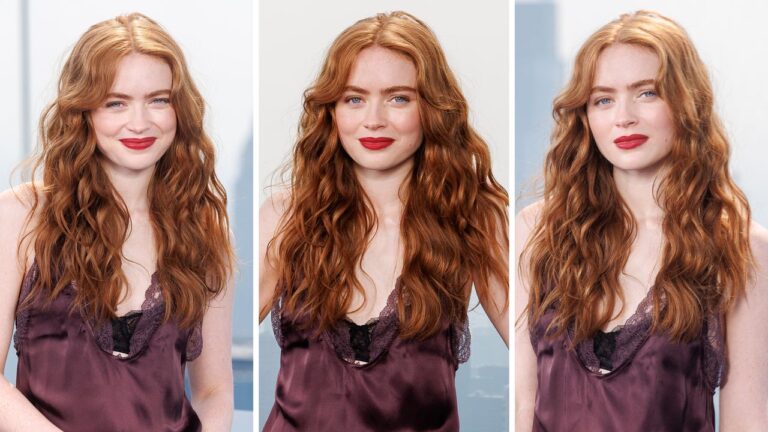
- Sadie Sink's natural red hair inspired a 5000% surge in Google searches, signaling Gen-Z's wholesale rejection of blonde as a default beauty standard.
- Red hair requires just one salon session compared to blonde's two-session minimum, and costs significantly less to maintain—factors crucial for financially conscious young women.
- Tommy Buckett, Sink's longtime stylist, credits her hair's dimensional, light-reactive quality for its appeal—a living, human authenticity that cannot be replicated digitally.
Sadie Sink didn’t invent red hair, but she has positioned it as the defining aesthetic choice for an entire generation of young women rebelling against colorlessness. Since the natural redhead gained widespread recognition through her role in Stranger Things beginning in 2017, and later appeared as Taylor Swift’s younger self in the 2022 “All Too Well” music video—a production that has accumulated 112 million YouTube views—Gen-Z beauty enthusiasts have pursued her specific shade with unprecedented intensity. The cultural pivot is unmistakable: away from the omnipresent blonde that saturated previous fashion cycles, toward deliberate selections of copper, cherry red, and warm auburn tones that communicate distinctiveness and intentionality rather than passive conformity to existing standards.
The Quantifiable Surge in Red-Hair Demand
The appetite for Sadie Sink-inspired red hair has transcended anecdotal observation and entered the realm of measurable data. Google Trends documented a stunning 5000% increase in searches for “Sadie Sink Hair Color” since 2025. Across the TikTok platform, Arizona colorist Chrissy Rasmussen’s instructional video “I want Sadie Sink red hair” has surpassed 1 million views, with viewers actively deconstructing Sink’s precise shade, dimensional placement, and texture composition in comment sections and across Reddit discussion boards. The surge has reached professional stylists directly. Tommy Buckett, the New York-based hair artist responsible for maintaining Sink’s signature appearance since she was 15 years old, operates from Marie Robinson Salon and reports being “flooded” with direct messages and incoming salon telephone calls requesting specific information about her coloration. “What’s genuinely compelling,” Buckett reflects, “is witnessing so many young women approach this as an intentional personal declaration. They’re not seeking a generic red—they want to understand the specific elements that transform it into something unmistakably distinctive.”
The Strategic Advantages of Red Over Blonde
Accelerated Timeline and Professional Efficiency
A primary driver of Gen-Z’s pivot toward red involves straightforward practical advantages. Cass Kaeding, who co-founded Crane Los Angeles salon and serves as brand ambassador for Glaze Hair, observes that his younger clientele increasingly request reds, coppers, and warm auburns as alternatives to platinum blonde. The distinction in execution is critical: achieving a vibrant red shade ordinarily necessitates a single salon appointment, whereas platinum blonde transitions typically demand minimum two separate sessions interspersed with intensive deep conditioning treatments and meticulous color management protocols. For a demographic accustomed to immediacy, red represents instantaneous visible transformation without prolonged professional engagement.
Digital Identity and Platform Differentiation
Tommy Buckett has documented a consistent pattern among his Gen-Z clientele: anxiety about aesthetic replication and visual indistinguishability. “I observe a recurring theme,” he explains. “Young women arrive describing a shade they call ‘nudie blonde’—a wheaty, more subdued blonde tone—expressing genuine concern that their appearance duplicates thousands of other users visible on TikTok and dating applications. Red hair functions as their digital point of difference, a mechanism through which they establish individual visual identity when the surrounding landscape feels increasingly templated and standardized.”
Fiscal Pragmatism in an Inflationary Environment
Beyond aesthetic reasoning and psychological self-expression, economic realities substantially influence color selection. Annie Cho, a 17-year-old student positioned in Harvard Square near Boston, currently wears a single-process auburn shade and directly articulates the financial equation: “Blonde maintenance has become economically unsustainable,” she states plainly. “The appointment cycles are relentless, the product costs mount, and frankly, the financial burden is unjustifiable in the current economic climate.” Tommy Buckett corroborates this observation from his professional vantage point: “Inflation has meaningfully altered how young people approach hair investment decisions. When maintaining blonde demands continuous professional attention and expensive color correction, red becomes a pragmatic substitute that delivers comparable visual impact while reducing overall expenditure.”
Industry Response and Professional Expertise
The transformation reverberating through salons nationwide reflects a genuine departure from established patterns. Tommy Buckett’s experience at Marie Robinson Salon exemplifies a broader sectoral shift, with salons nationally reporting unprecedented consultation requests from younger demographics seeking red-hair transformations. This marks a striking reversal from the blonde-centric requests characterizing the 2010s salon landscape. Buckett’s analysis of Sadie Sink’s particular appeal illuminates precisely why she has achieved aspirational reference-point status: “Her hair color contains a dynamic, living quality. Sunlight produces entirely different visual results than artificial flash photography. It refuses reduction to a single, unchanging chromatic value—it maintains authentic dimension and visual movement. Algorithms and digital filters simply cannot capture that organic complexity. That fundamental authenticity is exactly what attracts Gen-Z and younger audiences. It registers as genuinely human.”
Cass Kaeding’s client observations further validate the trend’s authenticity. “Young people want to communicate something specific through their aesthetic choices,” he observes. “Red conveys intelligence, independence, and deliberate refusal to follow mainstream direction—messaging that extends significantly beyond surface-level visual appeal.”
Historical and Cultural Resonance of Red Hair
The symbolic and cultural weight attached to red hair extends through centuries of artistic and literary tradition. Ancient historical sources, including the accounts of historian Dares the Phrygian documenting the Troy narrative, described the prophetic oracle Cassandra with red hair, explicitly linking the color to prophecy, resistance, and vocalization of uncomfortable truths. Within Judaic cultural tradition, Lilith—frequently depicted as the embodiment of rebellion and autonomous power—appears with red hair described in mythological terms as literal flame manifesting her defiant nature. Renaissance painters, most notably Sandro Botticelli, rendered Venus and her attending nymphs with strawberry-blonde coloring. William Shakespeare selected red hair for Perdita in A Winter’s Tale, employing the color as visual metaphor for magical transformation and destiny.
The nineteenth and twentieth centuries deepened this cultural encoding. L.M. Montgomery’s Anne of Green Gables (1908) anchored red hair permanently to vivacious charm, youthful mischief, and unconventional thinking. Ludwig Bemelmans’ Madeline (1939) extended the association toward adventurousness and spirited independence. Disney’s 1992 animated Ariel, later embodied by Chloe Bailey with braided red hair, crystallized the color as emblematic for young women perceiving themselves as protagonists willing to transgress boundaries and demand transformation on their own terms.
Contemporary Celebrity Adoption and Commercial Access
Sadie Sink operates within a broader ecosystem of celebrity figures amplifying red-hair visibility. Joey King, currently 26, recently transitioned toward strawberry blonde coloring throughout her promotional tour for Practical Magic, signaling that the phenomenon extends beyond pure Gen-Z demographics into millennial cultural spaces. Charly Barby, a 25-year-old performing member of the Dallas Cowboys Cheerleaders, maintains a striking flame-red appearance, further legitimizing the color selection within youth-oriented cultural contexts.
For consumers seeking to approach these aesthetics independently, L’Oreal True Red provides accessible entry into red-hair territory without premium salon expenditure, allowing experimental engagement with the color. Nevertheless, professionally executed results—the dimensional depth, longevity, and the “living” quality Buckett describes—remain the aspirational standard that salon work consistently delivers.
What Gen-Z’s Color Evolution Communicates
The transition from blonde dominance toward red signals something fundamentally more significant than seasonal trend cycling. It reflects a generation actively rejecting default aesthetic conventions, increasingly skeptical of homogenized social-media beauty standards, and acutely pragmatic regarding the financial realities embedded within color maintenance. Red hair, within this generational context, functions as subtle but unmistakable rebellion—a deliberate statement communicating intentionality, distinctiveness, and conscious refusal to passively accept prescribed beauty paradigms. That Sadie Sink embodies these qualities both through her on-screen character selections and her personal styling choices has crystallized her position as the unlikely but undeniable architect of a significant generational beauty transformation.
Frequently Asked Questions
What made Sadie Sink's red hair such a significant beauty reference point for Gen-Z?
Sadie Sink has maintained red hair since rising to prominence in Stranger Things (2017) and later starred in Taylor Swift's 'All Too Well' music video (112 million YouTube views, released 2022). Her association with intelligent, unconventional characters, combined with her striking appearance, made her red hair aspirational across social media.
How much more popular did 'Sadie Sink hair color' searches become?
Google Trends recorded a 5000% increase in searches for 'Sadie Sink Hair Color' since 2025. A single TikTok video by colorist Chrissy Rasmussen titled 'I want Sadie Sink red hair' exceeded 1 million views.
Why do stylists say red is more practical than blonde for young women right now?
Red can be achieved in a single salon session, while blonde requires at least two visits with deep conditioning treatments between them. Red also costs significantly less to maintain, a crucial factor during inflation when young women describe blonde upkeep as economically unmanageable.
