
Key takeaways
- Witchy fragrances prioritize earthy, mysterious notes—oakmoss, patchouli, dark fruits, incense, and smoke—that evoke forest floors and apothecary spaces rather than conventional floral sweetness.
- Cultural momentum extends beyond fall season: Practical Magic 2, American Horror Story Coven, and fashion brands embracing gothic aesthetics have aligned with broader data showing significant growth in mystical interests (Pinterest searches for herbalism up 595%, astrology up 733%).
- Successful witchy fragrances balance dark, heavy notes with unexpected brightness—juicy fruits, unusual florals, clean musks—to prevent suffocation and maintain wearability, with mystery requiring space around it.
Fall marks the season when witchcraft aesthetics flourish across entertainment, fashion, and culture. Practical Magic 2’s return to apothecary culture, American Horror Story’s Coven revival, and films including Yaga and Coven Academy have all contributed to this convergence. Flamingo Estate capitalized on the moment by releasing a monthly subscription box tied to Practical Magic 2’s “Everyday Alchemy” theme, which includes oracle cards, oversized matches for altars, and herbal elixirs.
This cultural shift extends beyond seasonal entertainment. Gabriela Hearst’s spring-summer collection drew from tarot’s Major Arcana, Elie Saab embraced gothic romanticism, and “goth bride” emerged as the aesthetic of choice for celebrities including Gabriette, Tish Weinstock, and Emma Roberts. The momentum reflects a broader pivot in interests. According to Pinterest’s 2026 Hobbies and Trend report, searches for “herbal apothecary” rose 595% year-over-year, while “learn astrology” climbed 733%. Related searches for “moon water ritual,” “witchcraft crystals,” and “foraging basket” also showed substantial gains. Pew Research Center data reinforces the shift: 30% of Americans consult tarot cards, and 43% of women report belief in astrology.
The Historical Thread Connecting Scent and Ritual
The relationship between fragrance and witchcraft reaches back millennia. The etymology of “perfume” originates from “per fumum”—meaning “from smoke”—evoking scent as a medium for carrying prayers and intention. Ancient Greece and Rome embedded fragrance into ceremonial practice and herbal remedy-making. Within American spiritual traditions, Florida Water, a citrus-based eau de cologne formulated in 1808, has retained ceremonial significance in Southern folk practices and remains widely available through mainstream retailers like Amazon and Walgreens.
Los Angeles-based perfumer Douglas Little, founder of Heretic Parfum, articulates why this resonates now: “There is an almost instinctual desire to slow down, touch the earth, grow something, burn something, make something with our hands, listen to our intuition, and create rituals that belong to us. I don’t think people are suddenly deciding that witches are cool. I think people are recognizing something within that archetype that modern life has starved them of.”
Why Fragrance Fulfills the Witchy Appeal
Fragrance bottles themselves evoke potion-holders—vessels for transformation. Beyond appearance, perfumes now serve consumers who seek more than pleasant smell. Paris-based perfumer Mathilde Bijaoui notes that modern fragrance enthusiasts crave “connection, resonance, and escape.” The surge in petrichor fragrance searches—capturing the scent of rain-dampened earth—reflects demand for authentic, grounded experiences. UK-based perfumer Alina Gliwinska, who works for Lush Cosmetics, identifies an emerging appetite for “individuality in fragrance,” with consumers rejecting conventionally pretty scents in favor of compositions that express mood, personality, or identity.
What defines a witchy fragrance? Richard Saint-Ford, founder of Los Angeles-based Iggywoo, describes it not as a category but as a feeling: “It’s something earthy, mysterious, slightly strange, and seductive. Think crushed herbs, incense burning, damp forest floors, smoke, dark fruits, and old woods. It should feel like you’ve stepped into a world, rather than simply sprayed on a perfume.”
Herbal Notes and Apothecary Scents
Tea, Coffee, and Ritualistic Foundations
Herbaceous fragrances offer an accessible entry point. Black Karak by Borntostandout opens with milky karak, cardamom, and coffee before resolving into earthy black tea and saffron—tea historically tied to divination, coffee to spell-work and ritual. Penhaligon’s The Bewitching Yasmine similarly centers on a ritualistic coffee note.
Syd Botanica’s Earth Star provides a comprehensive herbal experience, according to perfumer Molly Brennan, founder of House of Sacred Scents. Its notes of nutmeg, elderflower, and osmanthus tea anchor to porcini and moss. Brennan describes the sensation as “earthing”—a felt experience of “rooting and connecting down into the soil.” Atelier Des Ors Lune Feline layers witchy herbs with cinnamon and cardamom (seasonally appropriate for fall), while Alloy Studio Hypnotic Nectar features rosemary (traditionally planted at garden gates for protection in folk practice) and basil at the finish.
Building Complexity Through Layered Spice
Spiced herbals derive their depth from strategic layering. Cardamom, clove, ginger, and black and pink pepper work alongside juicy fruits and sensuous florals like jasmine, tuberose, and ylang-ylang, according to Brennan. This interplay prevents single-note predictability and invites repeated wearings that reveal new dimensions.
Woodland, Moss, and Forest Floor Compositions
The Oakmoss Heart
Woody fragrances transport wearers to imagined forest scenes. Earthy, nearly decaying materials—patchouli, vetiver, and oakmoss—naturally add depth and mystery while evoking forest floor sensations, according to Gliwinska. These ingredients possess inherent character that requires minimal embellishment.
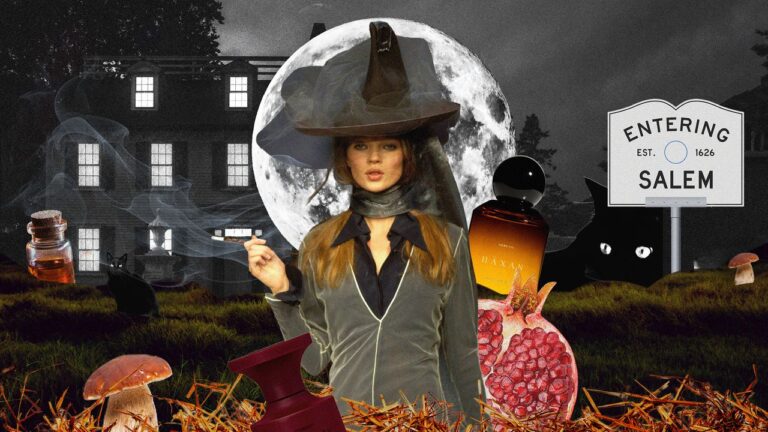
Heretic’s Häxan (Swedish for “the witch”) opens with osmanthus before revealing an oakmoss heart. The brand developed this signature into Nocturnal Rituals, a body-care line calibrated to lunar-cycle guidance for ritual use. Andrea Maack’s Coven similarly centers on oakmoss, grounded by resinous galbanum and rich clove. Pearfat Only a Witch Cat charts a different forest path through shiso leaf and climbing vines before reaching coriander and a distinctive “creepy eyeball accord.” Perfumer Alie Kiral explains the unusual effect: “This is very much a ‘fantasy’ accord where I’ve used texture and vibe to create a slimy, cold, bodily effect”—achieved through layered musks including calone (cold-wet character), cosmone (oily, skin-like qualities), and ethylene brassylate (clean, glassy impression).
Patchouli’s Grounding Effect
Patchouli, a deep earth-scent herb commonly found on forest floors, adds weight and maturity to compositions. Vyrao Witchy Woo and Lush Lord of Misrule both ground themselves in patchouli with ground pepper notes, introducing contrast and preventing the fragrance from becoming heavy-handed.
Dark Fruits and Spiced Warmth
Witchy fragrances gravitate toward darker fruit choices rather than bright citrus—plum, pomegranate, and black cherry anchoring the palette. Zoologist Bat draws inspiration from a “tropical, loamy cave” aesthetic, layering nectarous pink guava and passion fruit at the top before transitioning to hay, mossy stone, leather, and teak. Iggywoo Cherry Love Extreme and Nest Indigo each feature dark fruit—cherry and fig respectively—deepened through clove or tea notes. Ex Nihilo’s Demon Dancer pairs black currant and rhubarb with fresh peppermint and a spicy, woody base, applying fruit to a forest forage effect rather than a dessert interpretation.
Incense, Resin, and Smoke
Frankincense and Myrrh Centered Compositions
Ceremonial resins—frankincense, myrrh, and other dried saps—anchor witchy fragrances through thousands of years of ritual and spiritual cleansing use. House of Sacred Scents Liquid Altar, designed as an intention oil or calming scent, layers frankincense and myrrh with brighter notes of lavender and blue lotus to ensure wearability. Reine de Saba Myrrhe Delicieuse opens with apothecary feeling via pink pepper, cardamom, and saffron before settling into resinous myrrh, verdant pimento pepper, and vanilla. Bijaoui describes the effect: myrrh becomes “warm, luminous, and ceremonial.” Amouage Decision 42 layers frankincense and myrrh with rectified pine tar, sandalwood, and patchouli, balanced by bergamot, cinnamon, and vanilla for accessibility.
Smoke and Incense Notes
Smoke and incense require careful balance to remain wearable. Richard Saint-Ford cautions: “If you put smoke, oud, patchouli, incense, and heavy resins together without any light, it can become suffocating quite quickly. I’d rather take something dark and disrupt it with something unexpected—a juicy fruit, an unusual floral, brightness, or a skin-like musk. Mystery needs space around it.”
Mathilde Bijaoui’s Free Yourself Numinous opens with bergamot and coffee “to introduce tension” before moving to incense, patchouli, cocoa, and tonka “to create warmth and sensuality.” Sage and Salt’s Sacred Ember channels smoke’s spiritual significance across cultures through incense, patchouli, and tobacco flower, finishing with warm palo santo. Diptique Lunamaris balances deep incense with pink peppercorn and rockrose for a lighter, more radiant interpretation.
The Art of Balancing Dark and Light
A successful witchy fragrance rarely exists in total darkness. Brighter ingredients—juicy fruits, unusual florals, skin-like musks—create necessary counterpoint. Molly Brennan advises layering warm spices like clove and ginger with sensuous florals like jasmine and tuberose, preventing compositions from becoming cloying or one-dimensional. This principle holds whether a fragrance emphasizes forest, smoke, or herbal identity. The best witchy scents invite wearers into a world, as Saint-Ford noted, rather than overwhelming them with a single dominant voice. Mystery, paradoxically, flourishes when surrounded by breathing room.
Frequently Asked Questions
What makes a fragrance 'witchy' rather than just dark or earthy?
A witchy fragrance combines earthy, mysterious, and slightly strange notes—crushed herbs, incense, damp forest floors, smoke, dark fruits, and old woods—that transport the wearer into a specific world or narrative rather than simply smelling good. It prioritizes evoking emotion and identity over conventional prettiness.
Which ingredients are most common in witchy fragrances?
Common witchy ingredients include oakmoss and patchouli for forest floors, frankincense and myrrh for ceremonial warmth, smoke and incense for spiritual depth, dark fruits like plum and pomegranate, warm spices such as cardamom, clove, and pepper, and herbal notes like rosemary and basil for apothecary character.
Why do witchy fragrances include bright notes if they're supposed to be dark?
Perfumers intentionally balance dark, heavy notes like smoke, oud, and patchouli with lighter elements—juicy fruits, unusual florals, or clean musks—to prevent the fragrance from becoming suffocating and to ensure it remains wearable. According to perfumers, mystery requires space around it to feel inviting rather than overwhelming.
