
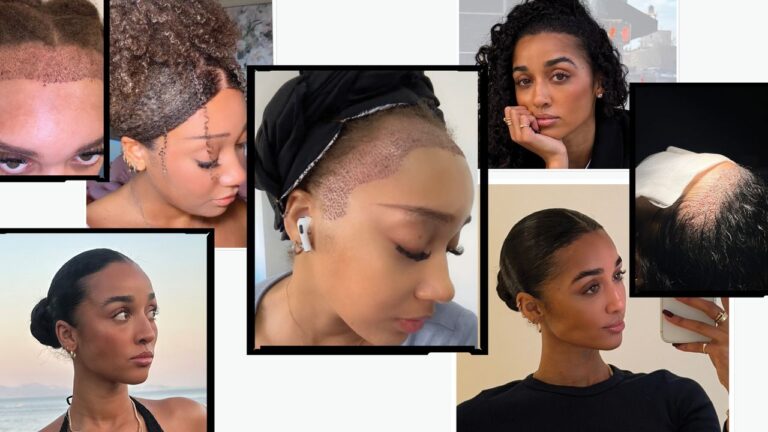
Key takeaways
- Women, especially Black women, increasingly travel to Turkey for hair transplants due to traction alopecia from tight hairstyles and the procedure's high cost in the US.
- Hair transplants in Turkey cost $2,600 to $3,600 compared to $20,000-plus in the United States, driven by lower labor costs and decades of medical tourism investment.
- Social media significantly influences demand, with women discovering influencer testimonials and patient results that inspire their own treatment decisions.
- Dermatologists warn patients to research surgeon credentials and performance rather than relying on price and marketing alone when choosing a clinic.
Nearly one million people annually travel to Istanbul with one specific goal: to receive a hair transplant. While the trend of men seeking transplants in “Hairstanbul” has dominated social media for years, a significant shift is underway among women. According to the International Society of Hair Restoration Surgery, the number of women receiving hair transplants across the globe rose 16.5 percent between 2021 and 2024. This statistic points to a broader reality: women are increasingly confronting hair loss, and many are choosing to address it overseas.
Why Women Are Traveling Overseas
From Tight Hairstyles to Unexpected Loss
Eloise Dufka, a 25-year-old fashion and lifestyle content creator based in New York City, adopted the sleek, pulled-back bun as her signature style around 2022. By her own count, she styled her hair this way roughly six times weekly. “I feel so much more confident when my hair is slicked back,” Dufka explains. “I love the way it looks. I love how my jawline is accentuated.” After nearly four years of this routine—approximately 1,300 slicked-back styles—she noticed hair around her temples and hairline beginning to thin. She suspected traction alopecia, a condition caused by repetitive tension on hair follicles, though she did not pursue a formal diagnosis. Instead of exploring restoration options closer to home, Dufka booked a flight to Turkey.
Years of Thinning Edges
Tia, a 34-year-old nonprofit director in Atlanta, has battled hairline thinning since age 15. For nearly two decades, self-consciousness about her edges kept her from wearing her hair in ponytails or any pulled-back style. Two years ago, during her first platelet-rich plasma treatment, the technician suggested she might be experiencing traction alopecia, though no formal diagnosis was made. When she investigated hair transplant options in the United States, she received a quote exceeding $7,000—a sum that felt prohibitive at the time.
Chizi Duru, a 30-year-old beauty influencer known for styling her natural 4C hair, spent years confused about her own hair loss. Beginning around 2016, she noticed progressive thinning paired with scalp soreness. It wasn’t until 2024, after undergoing a scalp biopsy, that she received an answer: androgenetic alopecia, a genetically driven condition that shrinks hair follicles. By then, she had already tried numerous interventions prescribed by New York City dermatologist Michelle Henry, including minoxidil (the active ingredient in Rogaine), ketoconazole shampoo, hair serums, vitamin supplements, scalp massages, and dermaroller treatments. Yet the results remained modest. “Although I was seeing a little bit of improvement with hair growth, it wasn’t drastic enough for me to be okay with that for the rest of my life,” she says.
Beyond Hair Restoration
Not every woman boarding planes to Turkey is addressing medical hair loss. Nychy Eyanna, 26, from Virginia, traveled to reduce her forehead size. After discovering a TikTok video about the procedure while studying abroad in Italy, she booked an appointment within two weeks. “I always just told myself if the chance ever came to make [my forehead] smaller, I would do it,” she says. “The opportunity came, I had the money, I was already living in Europe, and I decided to do it before I came back to the U.S.” She underwent the surgery in 2023, though the hair growth results disappointed her to the point where she is considering returning for a second procedure.
The Procedure and the Investment
Consultation to Operating Room
Eloise Dufka’s journey illustrates the streamlined process many clinics offer. After discovering HairNeva through TikTok testimonials, she sent photos of her hairline and spoke with a concierge who outlined the procedure. Within days, she received a text message summarizing the call, including projected results photos, a graft estimate, and pricing. She booked roundtrip flights from Paris to Istanbul for mid-November. On November 13, 2025, she arrived and was transported to a Marriott hotel connected to the clinic. The following morning brought her consultation: blood work, an EKG, and the doctor marking her new hairline for approval.
Inside the Surgery
The procedure began with a small section of scalp at the back of Dufka’s head shaved to expose donor follicles. Once numbed with local anesthesia, she was positioned face-down for extraction. “You’re face down, you’re not asleep,” she recalls. “And then after that, they flip you from face down to face up and they go straight into implanting.” The extraction of 1,850 grafts took approximately four hours. After a break, the implantation phase followed, with Dufka remaining awake throughout. In total, she spent eight to nine hours in the operating room.
What’s Included in the Package
Dufka’s all-inclusive package cost $2,900, a reduction from the original $3,300 quote thanks to a winter promotional discount. This covered the transplant, a platelet-rich plasma treatment (PRP), one month of medicated shampoo and conditioner, post-operative medications, local transportation, and two nights of hotel accommodation. Her flights from Paris were not included, nor were meals. Chizi Duru paid $3,600 for a comparable package plus $1,300 for roundtrip flights. Tia’s package totaled $2,600, with flights from Atlanta adding another $700. In the United States, equivalent procedures cost $20,000 or more.
Understanding Hair Loss in Women
The Traction Alopecia Epidemic
Dr. Crystal Agbuh, a board-certified dermatologist and director of the Ethnic Skin Program at Johns Hopkins School of Medicine, describes a troubling trend. “It’s an epidemic, and that’s because of traction alopecia,” she states. While GLP-1 medications, elevated stress, and the COVID-19 pandemic have been linked to increased hair loss in women, Dr. Agbuh identifies traction alopecia as the primary driver. The condition disproportionately affects women of color because they are statistically more likely to wear tight buns, braids, weaves, and locs that place sustained pressure on hair follicles. Curly hair types are also more delicate and prone to breakage. The trend is expanding beyond Black women. Dr. Agbuh notes that traction alopecia now occurs at significantly higher rates in women with straight hair due to the rising popularity of hair extensions and slicked-back hairstyles, precisely the look that triggered Dufka’s own hair loss.
When Hair Loss Runs Deeper
Androgenetic alopecia, also known as female-pattern hair loss, remains more common overall and affects women equally across all racial and ethnic groups. This form of loss stems from genetics and hormonal fluctuations that cause follicles to shrink. Chizi Duru’s diagnosis falls into this category. Even under dermatologist Michelle Henry’s care, a regimen of prescription minoxidil combined with ketoconazole shampoo, serums, and other interventions could not produce results substantial enough to satisfy her. A year after diagnosis, a single TikTok video showing someone’s successful transplant experience in Turkey became her turning point. “I saw the video probably in April, and I went for the treatment in May,” she says. “It was very fast.”
Seeking Professional Guidance
Dr. Oma Agbai, a board-certified dermatologist in Northern California specializing in hair and scalp disorders, has witnessed a surge in patient inquiries. “I am getting more and more women coming in asking not only for hair transplantation, but also for just hair restoration in general,” she observes. Patients now explore multiple pathways: surgical transplants, non-surgical PRP treatments, topical applications like minoxidil, and oral medications. This expanded awareness, driven partly by social media exposure, has made women more likely to pursue treatment rather than accept thinning as inevitable.
Why Turkey: Social Media and Affordability
The Influencer Effect
HairNeva, the clinic where Dufka had her procedure, deliberately partners with content creators from the United States and United Kingdom, offering free or discounted treatments in exchange for social media documentation. “Right now we are living in a world where people keep browsing social media,” explains Fateh Bey, a communications professional at HairNeva. “People are on Instagram, TikTok, and social media all the time, so when they see one of the influencers they follow or they trust and they see that they went to a clinic and did a treatment, they are more intrigued to research this clinic.” Every woman interviewed for this story attributed her decision to book a procedure to firsthand testimonials seen on social media. Dr. Oma Agbai confirms this pattern from her clinical experience: “Sharing an intimate experience like a hair transplant online is a surefire way to go viral, and seeing someone’s first-hand review can encourage others to follow in the creator’s footsteps or at least take the first step in seeking out treatment.”
The Price Difference That Matters
The financial contrast between Turkey and the United States is stark. While transplants domestically cost $20,000 or more, the four women profiled for this article all paid under $4,000 for comprehensive packages including surgery, medications, accommodations, and transportation. Turkey’s decades-long investment in medical tourism, combined with lower labor costs and reduced equipment expenses, makes this pricing possible. For many patients, this affordability difference becomes the deciding factor.
Expert Guidance Before You Decide
Choosing the Right Procedure
Dr. Jason Champagne, a double board-certified plastic surgeon and hair restoration specialist based in Beverly Hills, often recommends an alternative when patients seek to reduce forehead size. A hairline lowering procedure involves physically pulling the hairline down through a surgical incision, achieving forehead reduction without transplants. For those who pursue transplants for this goal, Dr. Champagne cautions that achieving uniform density across the hairline is technically challenging, as grafts cannot be placed too densely without compromising viability. Nychy Eyanna’s experience with underwhelming hair growth following her 2023 transplant may reflect this limitation.
Evaluating Clinics Carefully
While Dr. Champagne acknowledges that many Turkish surgeons are highly qualified and procedures are properly researched, he urges patients to look beyond marketing and pricing. “People going to some high-volume or destination clinics, whether in Turkey or somewhere else, should pay attention not only to price and marketing but also to the actual performance of their surgeons,” he advises. An informed decision means researching surgeon credentials, reviewing actual patient outcomes, and understanding the recovery process and realistic expectations before committing to international travel for any surgical procedure.
Frequently Asked Questions
What is traction alopecia?
Traction alopecia is hair loss caused by continuous tension on hair follicles, often from wearing tight hairstyles like buns, braids, weaves, and locs. It disproportionately affects women of color and is increasingly common in women with straight hair who wear slicked-back styles or hair extensions.
How much does a hair transplant cost in Turkey versus the United States?
Hair transplants in Turkey range from $2,600 to $3,600 for comprehensive packages including surgery, medications, and accommodations, while the same procedures in the United States typically cost $20,000 or more.
What should someone consider before traveling to Turkey for a hair transplant?
Research surgeon credentials and review actual patient outcomes beyond testimonials, understand the recovery process and realistic expectations, and consider alternative procedures like hairline lowering for specific goals. Prioritize surgeon performance over price and marketing alone.
