
Key takeaways
- Beauty professionals report a sharp increase in clients bringing AI-generated images as inspiration, but experts across disciplines agree these create unrealistic expectations.
- Plastic surgeons warn that AI photos ignore anatomical constraints like skin thickness and cartilage structure, and optimize for narrow beauty ideals that erase individual features.
- While colorists find some utility in AI images for communicating overall vibe, hairstylists and tattoo artists strongly reject them for lacking understanding of hair patterns, skin aging, and design flow.
- Professionals recommend using older photos of yourself, images of real people with authentic features, and portfolio photos from your chosen artist instead of AI-generated references.
The Growing AI Inspiration Problem
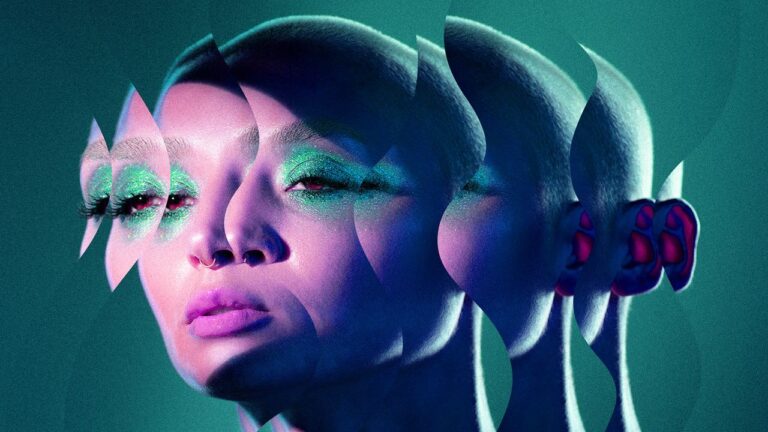
Clients are arriving at beauty consultations with images that seem too good to be true—and that’s because they are. Poreless skin with an otherworldly luminosity, blonde highlights that blend seamlessly without a visible strand in sight, noses that appear surgically perfected, and manicures featuring intricate textures and designs that would take hours to execute by hand. These images aren’t from celebrity red carpets or high-end editorial shoots; they’re generated by artificial intelligence. Beauty professionals across multiple disciplines are reporting a sharp increase in clients bringing these AI-created visuals as blueprints for the work they want done.
“Bringing AI-generated images has become a normal part of the consultation,” says Melissa Doft, MD, a board-certified plastic surgeon based in New York. The trend has penetrated every corner of the industry. July, a Leicester, England-based tattoo artist known online as @inkedbyjuls, observes that “nearly 30% of my clients have reached out to me with AI-generated images as a reference for their tattoo ideas in recent months.” While some practitioners acknowledge that AI can serve as a starting point for clients who struggle to articulate their vision verbally, there’s a near-unanimous conclusion among experts: these artificially generated visuals are largely setting clients up for frustration.
Many clients don’t even realize the images they’re sharing are AI-generated, since inspiration platforms have become flooded with synthetic content of varying quality. Anna Miles, a nail artist based in New York City, notes the challenge: “When I clock the AI, I’m super upfront with them about a realistic result.” This honesty has become standard practice across all beauty disciplines.
Why Plastic Surgeons Are Concerned
The role of reference photos in cosmetic surgery consultations is evolving in unexpected ways. Historically, plastic surgeons cautioned patients against bringing photos of celebrities, emphasizing that one person’s facial structure cannot be surgically replicated on another body. Dr. Doft notes the ironic shift: “Years ago, I was the one holding the pencil, sketching a new profile onto a photo of your nose while you watched. Now, patients arrive having already generated a version of themselves through a beauty app or ChatGPT, and they hand me the picture and say, ‘This. Make me look like this.’” Some patients even arrive with fully formed AI-generated surgical plans, complete with proposed procedures and aftercare instructions.
The Anatomical Reality AI Misses
The fundamental problem lies in what AI cannot understand about human anatomy. Dr. Steven Pearlman, MD, a dual board-certified facial and reconstructive plastic surgeon in New York City, explains the core issue: “AI generated photos do not take into account anatomic constraints on potential surgical results such as skin thickness, skeletal anatomy for the face and underlying cartilage shape and strength for rhinoplasty. AI does not understand what can and cannot realistically be accomplished in facial plastic surgery.”
Beyond technical limitations, generative AI models are trained on a narrow conception of beauty that prioritizes uniformity. “A generated face optimizes for one thing: so-called ideal proportions like wide-set eyes, a small straight nose with a delicate tip, full lips, high cheekbones, and perfect symmetry,” Dr. Doft explains. This standardization erases individuality. “Plenty of patients love the nose they inherited from their father or the eyes that run in their family, and a generated photo erases all of that in favor of a sameness I see over and over. You lose the individual.”
What Actually Works for Surgical Planning
Both Dr. Doft and Dr. Pearlman advocate for individualized surgical plans created by qualified, experienced surgeons. Dr. Pearlman uses computer imaging to show rhinoplasty and revision rhinoplasty patients potential results, but only after carefully examining each patient to determine what’s anatomically achievable. This represents a critical difference from AI images: professional surgical simulation is based on a comprehensive analysis of the patient’s unique anatomy.
Dr. Doft recommends that clients bring older photographs of themselves or “images of real people whose features feel authentic to them,” explaining that “these give me far more to work with than a filtered ideal.” Such references allow surgeons to understand what clients find appealing while maintaining a realistic assessment of what surgery can achieve.
Nail Artists Navigate Unrealistic Expectations
Nail artists occupy a unique position in this trend, occupying the space between understanding AI’s potential and resisting its limitations. Anna Miles understands the appeal: “AI can be helpful for the client if they can’t explain their concept in full.” She even concedes that AI occasionally generates genuinely interesting ideas: “Sometimes the computer hits shuffle and makes some valid points, like throwing digital spaghetti at a proverbial wall.”
However, Miles prefers drafting designs with pen and paper, and she’s candid about her concerns regarding the technology’s broader impact: “My imagination is usually better than the logarithmic output. I personally love using my brain for creative tasks, but those who aren’t naturally inclined to flex that muscle have now replaced trying with a machine. I’m broadly concerned about the atrophy of imagination.”
Sigourney Nuñez, a nail artist based in Los Angeles, recalled a brand sending her a project brief “just covered with AI-generated photos.” Though surprised, she appreciated that “they were still hiring an artist to create the work, even though they used AI as a tool to mock it up.” Both Miles and Nuñez agree that AI inspiration creates unrealistic expectations about what human artists can execute, but they typically guide clients back to reality through continued collaboration. Nuñez explains her approach: “The inspo pic is just a launchpad for ideas. I am not a photo copy machine. I am an artist.”
How Hair and Color Specialists See It
Hair Stylists’ Concerns
Hair stylists show more skepticism toward AI references than some other beauty professionals. Hannah O’Malley, a hairstylist in Wichita, Kansas who specializes in razor cuts, takes a firm stance: “The AI pictures don’t show real hair patterns or reflect like real color. We can’t give clients robot hair.” This concern goes beyond aesthetics; unrealistic references often create friction during the consultation process.
O’Malley recommends pulling inspiration from a stylist’s portfolio and using Pinterest with its AI-filter tool enabled. Finding looks directly on a stylist’s social media means that professional has already proven they can achieve that result. She notes this approach eliminates the gap between inspiration and execution.
Color Professionals’ Perspective
Hair colorists show more tolerance for AI references, though with important caveats. Carly Zanoni, a San Diego-based colorist who frequently advises other professionals on working from client inspiration photos, says: “I love when clients bring inspiration because it gives me insight into the overall vibe they’re going for. Is it bright? Soft? High contrast? Lived-in? AI images can communicate that really well.”
Sara Briscoe, a colorist in Queensland, Australia, agrees partially but identifies the breaking point: “Any visual reference helps, because verbal communication is tough for some people. But it stops being useful when the image is so AI that there’s no real texture. The gloss, density and tone are all fake and unachievable.”
Zanoni emphasizes that real photographs are “the gold standard,” ideally showing multiple angles and before-and-after transformations without heavy editing. When a client brings something unrealistic, she frames it as a conversation starter: “I usually say something like, ‘I love this as inspiration. Let’s figure out what you love most about it and make a plan to create that feeling on your hair.’ Sometimes we can get really close in one appointment, and sometimes it’s more of a journey. I think clients appreciate honesty, and I’d much rather under-promise and over-deliver than promise an AI result that no one could realistically recreate.”
Tattoo Artists Take the Hardest Line
The tattooing industry’s response to AI-generated inspiration is distinctly more skeptical than other beauty disciplines. Tattoo artists raised more ethical concerns than professionals in other fields—pointing to generative models trained on other artists’ work and the environmental cost of the technology. Many artists explicitly ban AI-generated photos from their social media and booking pages.
Sam Bradley, a tattoo artist based in Tacoma, Washington with an AI ban pinned to the top of her Instagram account, observes: “I’ve noticed when people AI generate their tattoo references, they become attached to what they’ve received. I’ve had clients walk out when I’ve told them I wouldn’t tattoo their AI generated design, or become frustrated when I’ve redrawn the image they brought in initially.”
Alyssa Stokes points out that AI lacks fundamental knowledge of how designs work on skin: “Generative AI does not have the years of experience and proper understanding of flow, contrast, line weight, and skin aging. The images I’ve seen don’t take how a design would work with an individual’s anatomy into account. It includes way too many details, not enough spacing, and leads the client to believe it is possible when it really isn’t.” Bradley reinforces this perspective: “A skilled tattoo artist knows how a design will age over time. They have to consider the placement, size, and what techniques need to be used to create a tattoo that stays beautiful.”
Stokes values the creative collaboration that happens when a client trusts an artist: “This type of inspiration image not only takes out a huge part of the trust they need in me to do my job, but starts off my creative flow in an extremely restricted state.” July prefers abstract starting points: “I prefer if they create a Pinterest mood-board, send a written explanation of their idea, and even draw the silliest scribble to describe it.”
What Beauty Pros Recommend Instead
Across all beauty disciplines, professionals agree on the types of references that actually serve consultations well. Rather than AI-generated images, experts recommend the following alternatives:
- Older photographs of yourself that show your natural features and coloring
- Images of real people with authentic features that appeal to you
- Photos from your chosen professional’s portfolio or social media
- Multiple angles and before-and-after photos without heavy editing or filters
- Pinterest mood-boards that capture the overall aesthetic or vibe you want
- Written descriptions of your vision or even simple sketches of your own ideas
The consistent message from beauty professionals is that real collaboration matters more than perfect reference images. These experts have trained for years to understand what’s possible within anatomical and technical constraints. When clients trust their artists, stylists, and surgeons to create within those boundaries while still achieving the feeling or overall aesthetic they’re seeking, the results consistently exceed expectations.
Bradley concludes with optimism about the future of the industry: “Gone are the days of independent thought and human creativity. Although the growing anti-AI sentiment brings me a lot of hope. I think artistry is becoming a lot more valuable to people who seek it.”
Frequently Asked Questions
What percentage of tattoo clients are bringing AI-generated images as references?
July, a Leicester-based tattoo artist, reports that nearly 30% of clients have reached out with AI-generated images as references for their tattoo ideas in recent months.
What is the main anatomical problem with AI-generated images for plastic surgery?
Dr. Steven Pearlman explains that AI-generated photos do not account for anatomic constraints like skin thickness, skeletal anatomy, and cartilage strength—and AI doesn't understand what can realistically be accomplished in facial plastic surgery.
What types of reference photos do beauty professionals recommend?
Experts recommend older photos of yourself, images of real people with authentic features, professional portfolio photos, multiple angles and before-and-after photos without heavy editing, Pinterest mood-boards, and written descriptions or simple sketches of your vision.
