
Key takeaways
- Dolly Parton built a five-decade visual identity through heavy makeup, wigs, rhinestones, and plunging necklines, rejecting quiet luxury in favor of authentic self-expression.
- Her influence shaped collections from Chanel, Rodarte, Prada, and Gucci, with designers like Alessandro Michele and John Galliano directly referencing her aesthetic.
- She maintained consistency between her values and choices, using wealth for philanthropy while refusing to accumulate it purely for status.
- The Coat of Many Colors made by her mother ranks among the three most famous pieces of clothing referenced in popular song, alongside Prince's raspberry beret and Elvis's blue suede shoes.
The Metropolitan Museum of Art’s Costume Institute announced John Galliano as the creative force behind its 2027 exhibition theme, but the decision quickly faced significant criticism. Galliano’s 2011 conviction in France on charges of public insults based on origin, religion, race, and ethnicity made the appointment controversial from the start. Following intense backlash, the designer ultimately withdrew from the role.
This creates space to propose an alternative figure whose contribution to fashion, beauty, and costume design offers richer cultural resonance. Dolly Parton, known for over five decades of uncompromising aesthetic choices, represents a figure whose influence on fashion and whose personal values align far more coherently with what such an honor should celebrate.
A Character Built on Deliberate Transformation
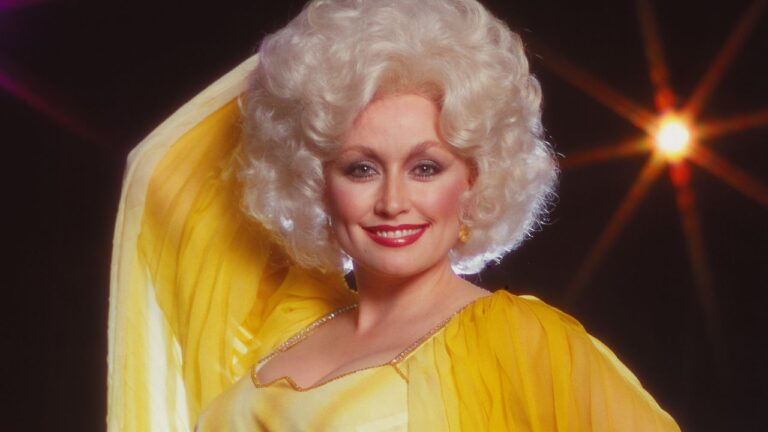
Dolly Parton’s approach to her appearance was fundamentally about character creation. Her heavy makeup, towering wigs, plunging necklines, skin-tight fabrics, and generous use of rhinestones formed an integrated visual language rather than scattered stylistic choices. Each element reinforced a deliberately constructed persona that she developed early and refined across her entire career.
The genesis of this aesthetic traced back to her childhood. She identified someone in her community—locally known as “the town tramp”—as her style icon. Rather than dismiss or outgrow this influence, she embraced the template entirely, transforming it into a decades-long commitment to a specific visual identity. She did not apologize for the choices, did not scale them back as she aged, and did not adopt the contemporary assumption that professional women should present themselves through restraint.
Her willingness to pursue cosmetic procedures fit within this larger philosophy. She viewed physical modification not as insecurity but as an extension of costume design—a tool for achieving a specific visual effect. In a 2021 interview with Allure, she articulated this distinction: “I’ll do what’s best for me, as everybody should.” The statement rejected the cultural expectation that women in her position should fade visually as they aged, trading visibility for gravitas.
The Philosophy Behind the Spending
The Cost of Beauty
Dolly’s famous statement about her appearance—”It takes a lot of money to look this cheap”—operates on multiple levels. On the surface, it acknowledges the investment required to maintain wigs, makeup, rhinestones, and the fabrics she favored. More significantly, it rejects the entire premise of “quiet luxury,” the contemporary philosophy suggesting that wealth announces itself through minimalism and understatement.
Rejecting Restraint
She stood in direct opposition to the “clean girl beauty” aesthetic that has periodically dominated cultural conversations. Her presentation contained no aspirational naturalness, no pretense of effortless perfection. Every element announced itself loudly as deliberate choice. Yet this very deliberateness created authenticity. She was not pretending to be something she was not; she was revealing exactly what she wanted to be.
The constant, uncompromising nature of her choices from the 1970s onward meant she was not chasing trends or attempting to appear younger than her years. She was expressing values through every visible decision.

The Coat and the Memory of Cloth
Before the professional styling, before the financial resources to construct her elaborate image, Dolly’s mother had sewn her a coat from fabric scraps. This “Coat of Many Colors” became her first and, by her own reckoning, one of her most meaningful adornments. Rather than shed this humble origin as she accumulated success, she maintained it as a defining symbol throughout her career.
Vanessa Friedman, writing in the New York Times, recently cited American Songwriter’s assessment that the Coat of Many Colors ranked as one of the three most famous pieces of clothing referenced in popular song. The other two—Prince’s raspberry beret and Elvis’s blue suede shoes—represented similarly iconic cultural moments. That a handmade coat constructed from scraps occupied this category alongside Prince and Elvis speaks to how thoroughly Dolly integrated this childhood memento into her public identity.
This integration revealed something fundamental about her understanding of costume: a garment’s power derives not from its cost or prestige but from the intention and emotion it carries. That insight shaped both her personal presentation and her influence on the designers who studied her work.
Influence Across Fashion’s Most Important Houses
Major Collections Drawing on Her Aesthetic
Dolly never attended the Met Gala, and the record does not indicate whether she received an invitation. What remains clear is that she influenced some of fashion’s most significant creative voices without requiring such institutional validation.
Alessandro Michele, during his time as creative director at Gucci, included a sleeveless denim jacket bearing Dolly’s portrait in his spring/summer 2019 show. The design rendered her name in the distinctive pink lettering associated with Dollywood, her Smoky Mountains theme park. The detail suggested Michele understood her not merely as a recording artist but as someone who had built an actual branded environment reflecting her aesthetic philosophy.
Designer Tributes and Reinterpretations
John Galliano, before his recent withdrawal from the Met position, had drawn directly on Dolly for his fall 1999 ready-to-wear collection. Models walked the runway in bibbed overall silhouettes and fringed knits set to “Jolene”—fusing her visual and sonic identities into a single artistic statement. The choice positioned her as a legitimate creative reference point, not a nostalgic nod or camp gesture.
Her Influence Across the Industry
Rebecca Bengal’s 2014 essay for Vogue, titled “Why Dolly Parton Doesn’t Need Fashion (And Why Fashion Desperately Needs Dolly),” examined this influence systematically. Bengal identified Dolly as “one of fashion’s greatest and most unlikely muses” and traced what she termed “fashion Dollyisms” across collections from Chanel, Rodarte, and Prada. These houses were absorbing and reinterpreting the underlying philosophy she embodied: ornamentation deployed as honest expression, excess as a form of authenticity, costume as a vehicle for joy rather than conformity to external standards.
Consistency Between Word and Action
Dolly’s influence on fashion might have remained purely aesthetic if not for her demonstrated commitment to translating values into action. She refused to accumulate wealth purely for its own sake, using her financial success to support philanthropic goals aligned with her stated beliefs.
When Allure magazine asked celebrities to define American beauty in 2017, Dolly moved beyond physical description entirely. She responded: “A true American beauty is a person who loves everybody regardless of race, religion, or sexual orientation. In today’s crazy world, we need more love and less hate. If everyone respects one another, the world would be a much better place.”
That answer reveals something critical about how she operated. The extravagant presentation was never at odds with her commitment to universal acceptance and kindness. The spectacle and the compassion coexisted perfectly, each reinforcing the other.
An Alternative Framework for Institutional Recognition
The Met Gala functions as one of the year’s most visible cultural events. The choice of theme and featured designer shapes conversations about what fashion means, who deserves celebration, and what values the industry claims to uphold.
A Dolly Parton-themed exhibition would honor something fashion consistently struggles to acknowledge: that style can be joyful rather than aspirational, democratic rather than exclusionary, and deeply authentic precisely because it is entirely constructed. The attendees arriving on the first Monday in May would not be required to achieve “elegance.” They would be asked to celebrate the joy of ornamentation, the power of character creation, and the ways costume can announce personal values.
Dolly understood something that decades of design and beauty criticism often obscure—that what we wear matters not because it conveys status but because it reveals and expresses who we choose to be.
Frequently Asked Questions
What made Dolly Parton's approach to beauty different from other celebrities?
She rejected quiet luxury and clean girl beauty aesthetics, instead embracing heavy makeup, towering wigs, and rhinestones as deliberate character creation. She famously said "It takes a lot of money to look this cheap," rejecting the notion that wealth should announce itself through restraint.
Which fashion designers were influenced by Dolly Parton?
Several major houses drew inspiration from her aesthetic, including Chanel, Rodarte, and Prada. Alessandro Michele at Gucci featured a denim jacket with her portrait in his spring/summer 2019 show, and John Galliano used her as inspiration for his fall 1999 ready-to-wear collection.
How did Dolly define American beauty?
In a 2017 Allure interview, she stated: "A true American beauty is a person who loves everybody regardless of race, religion, or sexual orientation. In today's crazy world, we need more love and less hate. If everyone respects one another, the world would be a much better place."
