
Key takeaways
- A $350 compounded copper-peptide cream delivered visible results over eight weeks—but identical concentrations are available retail for $32 to $165.
- One study found GHK-Cu increased collagen in 70% of participants after one month, though all human research remains small and often funded by brands selling the ingredient.
- Formulation factors like stability, pH, and delivery matter far more than concentration percentage, and established skincare brands typically invest more in these than compounding pharmacies.
Copper peptides have commanded significant attention across social media and skincare forums, particularly GHK-Cu, often described online as the “beauty” peptide. Originally studied for wound healing applications, research suggests the compound can support collagen production, enhance skin firmness and elasticity, reduce inflammation and oxidative stress, and facilitate skin repair—claims that have resonated strongly with consumers seeking anti-aging solutions. Celebrity endorsements, including from Hailey Bieber, have amplified interest in products containing this active.
The Compounding Claim
The theory behind compounded peptides is straightforward: a pharmacy prepares a medication tailored to an individual patient based on a prescription, theoretically offering purity and potency superior to commercial formulations. This appeal convinced me to explore GHK-Cu through Feelin Good Wellness, a peptide therapy provider that works with physicians and compounding pharmacies to create customized skincare routines. The company’s founder, Carlyn Mungle, who entered the wellness space during the pandemic after running a COVID-testing business, champions GHK-Cu as “a great tool to have in your toolbox” for maintaining healthy aging skin.
From Intake to Jar
The process began with a medical intake form requesting information about wellness goals and specific peptide interests. A nonclinical patient liaison—trained in peptide education but not a nurse or physician—guided me through what GHK-Cu does and coordinated communication between my account, the supervising physician (whose focus appeared to emphasize hormone and sexual health rather than dermatology), and the compounding pharmacy. Within days, the physician approved a prescription for a 0.5% GHK-Cu cream, normally priced at $350.
The Texture and Sensory Reality
Opening the jar revealed a gray-green cream with a distinctly metallic scent—far removed from the sensory experience typical of products at that price point. The medicinal appearance initially seemed reassuring, suggesting serious active ingredients rather than cosmetic flourishes. Applied daily for eight weeks as a serum layer beneath a heavier moisturizer, the cream caused no burning, peeling, or irritation despite my history of sensitivity to retinoids and struggle maintaining consistency with those products.
Visible Changes
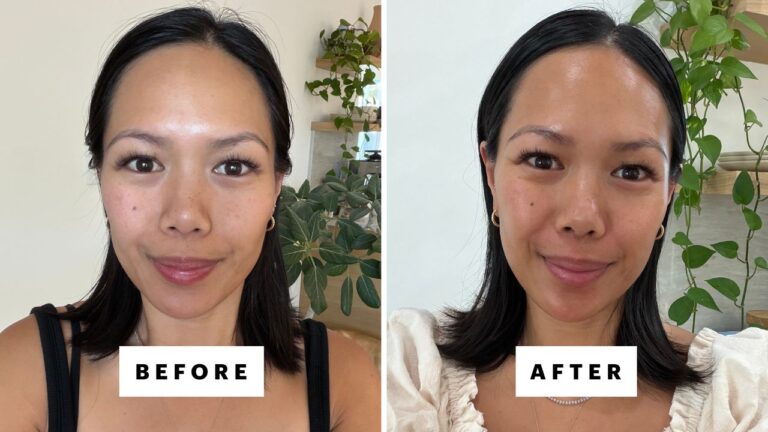
After several weeks of daily application, the results were tangible. Redness diminished across my cheeks, skin texture appeared noticeably bouncier, and overall complexion brightness improved. The effects were compelling enough that I wanted to continue—but the central question remained: was this 0.5% compounded cream actually superior to alternatives available without a prescription?
What the Research Reveals
To evaluate this claim, I consulted Dr. Nancy Samolitis, a board-certified dermatologist in Los Angeles, who conducted her own deep dive into published research on GHK-Cu. A particular study captured her attention: researchers applied different formulations to the thighs of 20 women around age 50 and measured collagen production via skin biopsies. After one month, collagen production increased in 70 percent of participants using GHK-Cu, compared to 50 percent in the vitamin C group and 40 percent in the retinoic acid group.
Retinoids vs. Peptides
This finding held significance because retinoids remain the gold standard for addressing aging signs, yet many people cannot tolerate their potential for irritation and sensitization. Dr. Samolitis characterized GHK-Cu as “a good retinol alternative,” though the two mechanisms differ: retinoids accelerate cell turnover and prevent collagen breakdown, while GHK-Cu supports repair and collagen production. They operate distinctly enough to potentially coexist in a routine.
The Caveat: Early Research
Despite these promising findings, significant limitations persist. All human studies on GHK-Cu remain small, typically conducted by cosmetic brands eager to market the ingredient, and lack the randomized controlled trial design considered essential for drawing definitive conclusions. Dr. Samolitis acknowledged the promise while emphasizing the need for larger, independent studies to accurately characterize benefits. Nevertheless, she was convinced enough to purchase two copper-peptide serums herself—both available over the counter.
Compounded vs. Over-the-Counter Comparison
When asked whether my compounded cream offered measurable superiority, Dr. Samolitis was direct: “Honestly, I’m not convinced you need it compounded.” This skepticism extended to every other expert consulted. Compounding a medication means a pharmacy sources the peptide as a bulk pharmaceutical ingredient, incorporates it into a cream or gel base, and prepares it in smaller batches for individual patients. This customization can be valuable when specific concentration, ingredient sensitivities, or particular bases are medically necessary—none of which applied to my situation.
Price Disparity with Similar Potency
My 0.5% compounded cream cost $350, yet retail alternatives offer equal or higher concentrations at substantially lower cost. Dr. Samolitis purchased The Ordinary’s Multi-Peptide + Copper Peptides 1% serum for $32 and Biossance’s Squalane + Copper Peptide Rapid Plumping Serum for $69. Additional OTC options include Musely’s prescription GHK-Cu serum at 3% concentration for $41 monthly and Agency’s 0.5% concentration serum for $165. The range of accessible pricing undermines the “premium compounded advantage” narrative.
What the Price Actually Covers
According to Ethan Melillo, a pharmacist and assistant professor of dermatologic pharmacotherapy at the University of Rhode Island, the higher compounding cost reflects medical consultation, pharmacy labor, small-batch preparation, packaging, shipping, and testing—not necessarily greater efficacy. He clarified that “a compounded prescription does not automatically make a copper-peptide product stronger or more effective.” Dr. Samolitis noted that she favored the texture of The Ordinary’s serum most among her purchases.
Why Concentration Numbers Mislead
The percentage on a product label—0.5%, 1%, or 3%—seems like an obvious indicator of potency. Cosmetic chemist Julian Sass, PhD, explains that insufficient clinical data exists comparing different GHK-Cu concentrations to establish an optimal therapeutic range. “There isn’t a ton of clinical data to be able to construct that full dose-response curve well,” he notes. Neither Melillo nor Sass could definitively state that 0.5% represents a minimum effective dose or that 1% necessarily produces superior results.
What Actually Determines Performance
The number on the label becomes nearly irrelevant when considering the factors that determine whether a formula actually works: pH, vehicle, stability, packaging, purity, and delivery system. A peptide sitting at the correct concentration on paper can still underperform if it degrades in the jar, fails to penetrate the skin barrier, or destabilizes in its base. Major cosmetic brands invest in encapsulation technologies to protect peptides, engineer delivery systems for absorption, and conduct stability testing over months. Compounded creams, produced in smaller batches without equivalent research and development infrastructure, often incorporate raw peptide into an existing base and stop there.
Commercial R&D vs. Compounding Realities
Sass emphasized that “if you’re chasing efficacy, a well-formulated skin-care product from a brand that has done testing on the formulation is going to be a much better option.” Melillo concurred: established brands typically employ more standardized manufacturing, supplier qualification, stability testing, and quality control processes. Compounding pharmacies source ingredients from bulk suppliers rather than manufacturing in-house, often relying on those suppliers’ documentation rather than conducting independent testing. While all U.S. compounding pharmacies must be state-licensed, that licensing does not mandate specific sourcing or testing standards. Feelin Good Wellness confirms their pharmacy tests each compounded product for potency but does not submit products to outside laboratories.
The Reality of Results
Part of the improvement I observed may have originated from the base cream itself, which increases hydration and can produce temporary plumping and redness reduction. Sass, who has conducted controlled studies comparing formulas with and without active ingredients, noted that a base moisturizer alone does not typically generate significant collagen production increases. While hydration clearly improves skin appearance, “that’s not collagen production,” he clarifies. Additionally, even when studies detect statistically significant increases in collagen under a microscope, that change does not always translate to visible improvement when looking in the mirror. Dr. Samolitis recommends using copper peptides alongside other products for cumulative effect, acknowledging that without directly comparing my compounded cream to an identical peptide-free version, quantifying GHK-Cu’s specific contribution to my results remains impossible.
When Compounding Actually Makes Sense
Compounded skincare holds legitimate value in specific scenarios. Dr. Samolitis regularly uses compounding in her own practice, particularly when creating formulations unavailable commercially—such as combining tretinoin with hydroquinone for addressing specific hyperpigmentation patterns. “There is not a need to compound something that’s available over the counter unless you are also wanting to use a prescription drug with it,” she explains. For my situation, requiring no prescription actives and presenting no ingredient sensitivities that demanded customization, compounding added unnecessary cost without corresponding benefit.
The compounded cream successfully converted me into a GHK-Cu believer; the results genuinely impressed me. However, conversion required neither the compounding infrastructure nor the premium price tag. A well-formulated commercial copper-peptide product delivers equivalent benefits at a fraction of the investment. For most people seeking copper peptide skincare, the pharmacy shelf offers substantially better value than the compounding service line.
Frequently Asked Questions
Is compounded GHK-Cu more effective than over-the-counter versions?
No, according to dermatologists and pharmacists interviewed. Compounding adds cost for customization but not necessarily greater efficacy. Dr. Nancy Samolitis purchased The Ordinary's 1% copper-peptide serum for $32 instead of a compounded version.
What concentration of GHK-Cu should I look for?
There's insufficient research to establish an optimal concentration. Retail options range from 0.5% to 3%, but cosmetic chemist Julian Sass notes that pH, vehicle, stability, and delivery matter more than the percentage listed on the label.
Does GHK-Cu actually work?
Research shows promise but is still early-stage. One study found collagen production increased in 70% of women using GHK-Cu after one month, compared to 50% with vitamin C and 40% with retinoic acid—but all studies are small and conducted by brands selling the ingredient.
