
Key takeaways
- Hair breakage results from accumulated damage to the protective cuticle and inner cortex, worsened by chemical processing, heat, and mechanical stress.
- Bond-repair products like Olaplex use patented ingredients to reconnect broken structural chains within the hair fiber at the molecular level.
- The most effective treatments combine fiber-strengthening actives with surface conditioning and environmental protection, but no product can fully restore severely damaged hair to its original state.
Hair breakage represents the structural breakdown of individual fibers—a physical failure rather than an aesthetic problem alone. Cincinnati-based cosmetic chemist Kelly Dobos defines it as cumulative damage: bleach, color treatments, heat styling, UV exposure, aggressive brushing, and the standard cycle of washing and drying gradually weaken hair’s integrity. The process doesn’t require one catastrophic blowout; instead, accumulated stress causes small defects to build until strands can no longer bear the load and snap.
The architecture of hair explains what’s at stake. The cuticle serves as a protective outer layer, defending the cortex beneath—where most of the fiber’s structural strength lives. Repeated cycles of tension from combing, brushing, washing, and drying create continuous stress throughout a strand’s lifetime. Chemical processes and heat amplify this vulnerability by compromising the structural elements that keep hair intact. Once the exterior wears down, the cortex becomes defenseless against the next round of mechanical stress or chemical exposure.
The right products address breakage through two complementary strategies: reinforcing weakened fibers from within while protecting the surface. Los Angeles cosmetic chemist Amanda Lam explains that bond-builders restore “the integrity of the hair cortex,” whereas “conditioning agents and oils work on the outer cuticle” to smooth and soften strands. Prevention and repair function together—preventing breakage relies on reinforcing already-stressed strands while minimizing the everyday friction and damage that push them past their structural limits.
K18’s Peptide-Based Approach
How K18Peptide Works
K18’s Molecular Repair Hair Oil translates the reparative technology of the brand’s Best of Beauty Award-winning Leave-In Molecular Repair Hair Mask into a lightweight styling product. The formula centers on K18Peptide, a biomimetic peptide engineered to mimic amino acid sequences found in hair keratin. Rather than simply coating damaged strands, this peptide penetrates the fiber itself to reconnect polypeptide chains disrupted by bleach, color, chemical services, and heat—all of which leave hair weaker and more snap-prone. The product withstands temperatures up to 450 degrees Fahrenheit, according to Lam, making it an effective barrier against heat-tool damage.
Surface Support
Beyond the peptide’s internal work, squalane, avocado oil, and sunflower oil address surface concerns—lubricating and smoothing the cuticle to reduce frizz, prevent flyaways, and restore shine. This dual approach pairs the immediate polish expected from a hair oil with technology targeting the structural damage underlying breakage.
Olaplex’s Bond-Repair Formula
The Mechanism
For breakage caused specifically by bleaching, coloring, or chemical straightening, Olaplex No. 3 Plus Complete Repair Treatment offers bond-rebuilding at the molecular level. The core ingredient is bis-aminopropyl diglycol dimaleate, Olaplex’s patented bond-repair molecule. Cosmetic chemist Sherry Backman, based in Brattleboro, Vermont, explains that this ingredient works by reconnecting broken disulfide bonds on a molecular level, essentially inserting a synthetic patch where a natural bond once existed. This reinforces the hair’s internal structure, making delicate strands stronger and less prone to snapping. The reformulated version adds cationic technology that adheres to damaged areas of the hair cuticle, smoothing and conditioning the surface while strengthening within. The updated formula requires just three minutes of processing—a significant reduction from the original’s ten-minute commitment.
Real-World Results
Kelly Dobos, who was introduced to the brand by her hairstylist shortly after launch, remains devoted to the original No. 3 for her color-treated hair. Two beauty editors tested the reformulated product with differing initial impressions. Sophya Panych, content director, found that after using No. 3 Plus, she needed considerably less effort to blow-dry her long, highlighted hair and achieved silky results without reaching for a flat iron. Elizabeth Gullino, senior staff writer, observed immediate softness with the new formula, whereas the original had left her hair feeling straw-like and requiring significantly more styling effort.
Prevention Through Daily Conditioning
Mechanical damage accumulates through aggressive brushing, yanking through tangles, rough towel-drying, and friction from styling—all of which wear at the cuticle and contribute to eventual breakage. Kelly Dobos considers Pantene’s Miracle Rescue Deep Conditioner essential prevention. The formula pairs traditional conditioning ingredients with bis-aminopropyl dimethicone, a silicone that latches onto damaged cuticle areas to smooth and reduce friction, particularly helpful when detangling or brushing weakened strands. Conditioning agents add slip to make knots easier to work through, while fatty alcohols soften and lubricate. Panthenol, also known as pro-vitamin B5, helps hair retain moisture and improves flexibility. The treatment works in just sixty seconds, making it a practical daily safeguard against tugging, pulling, and brush-induced damage.
Environmental Protection and UV Defense
Understanding the Challenge
Environmental damage compounds over time. Sherry Backman explains that UV exposure oxidizes hair pigments and deteriorates the fiber, while wind, low humidity, and weather increase dryness, roughness, and friction. Once hair becomes dry and weathered, increased friction makes an already-compromised fiber even easier to break.
Multi-Layer Defense
JVN’s Complete Leave-In Conditioning Mist tackles these concerns through multiple mechanisms. Black spruce (Picea mariana) bark extract supplies antioxidant protection, absorbing UV radiation, preventing pigment oxidation, and inhibiting free radicals linked to discoloration. Additional ingredients—squalane, panthenol, glycerin, sodium hyaluronate, tremella mushroom extract, and vitamin E—provide conditioning, moisture retention, and antioxidant support. The mist protects against heat up to 450 degrees Fahrenheit. However, Backman notes she hasn’t found evidence that this formula reduces UV-induced breakage by a specific percentage; she considers it a strong environmental-protecting and breakage-preventing leave-in conditioner rather than a treatment for severe structural damage.
Combined Strengthening and Moisture
When hair is dry and breaking, moisture alone solves only half the problem. Dryness and structural damage represent distinct issues requiring separate solutions. Humectants and emollients add flexibility and lubrication, but if the fiber itself is compromised, it requires ingredients that reinforce it. SheaMoisture’s Amla Oil Bond Repair Masque addresses both angles. The formula contains HydroPlex Infusion, composed of hydroxypropylgluconamide and hydroxypropylammonium gluconate. Backman notes this duo represents more than marketing language—studies describe the combination as strengthening hair fibers, though the exact mechanism remains incompletely understood. Unlike Olaplex’s patented approach, this doesn’t specifically reconnect broken disulfide bonds, but legitimate fiber-strengthening science supports the formula. Amino acids including serine, arginine, histidine, and glutamic acid further support the damaged-hair profile.
For hydration, SheaMoisture included shea butter, sunflower and coconut oils, glycerin, and amla—an antioxidant-rich fruit traditionally used in Ayurvedic hair care. These soften thirsty lengths and add slip, minimizing tangles and the breakage-inducing friction they create. Backman notes the formula addresses both dimensions of dry, damaged hair, pairing rich conditioning that restores slip and softness with fiber-strengthening actives. Those with fine or easily weighed-down hair may find it too heavy. Additionally, no bond-repair product, regardless of merit, can return severely compromised hair to a truly virgin state.
Support for Aging Hair
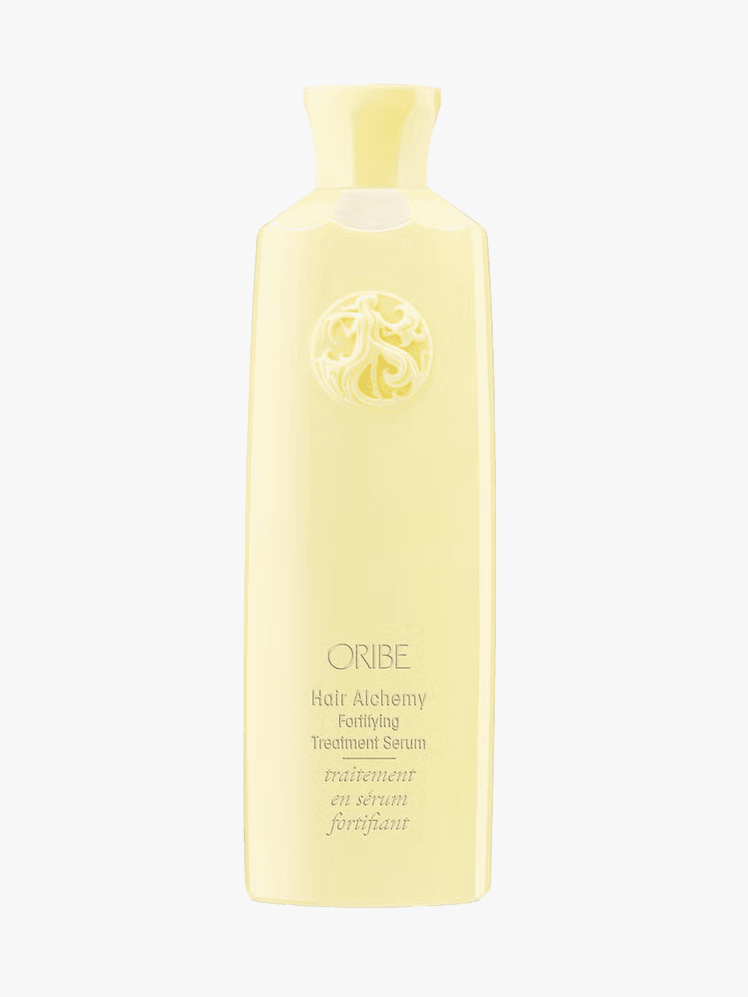
As hair matures, individual strands become finer, drier, and more fragile, making everyday brushing, blow-drying, and styling more damaging. Sherry Backman recommends serums like Oribe’s Hair Alchemy Fortifying Treatment Serum to shield aging strands. The lightweight leave-in reinforces vulnerable hair without the weight of a heavy mask. Hydrolyzed rice and vegetable proteins strengthen the fiber itself. Ceramides support the hair’s protective lipid barrier, while dimethicone and conditioning polymers lubricate the cuticle to reduce friction during brushing and styling. Panthenol, sodium PCA, and multiple forms of hyaluronic acid maintain hydration and flexibility. Chia seed and fermented bamboo leaf work deeper within the hair structure, helping form a “scaffold” around each strand.
The serum provides heat protection to 450 degrees Fahrenheit—preventing additional damage matters especially when individual fibers are already becoming vulnerable. Backman flagged important context regarding product claims: when paired with Oribe’s Strengthening Masque, the serum delivers three times less breakage after one use; claims of 133 percent stronger hair and 2.9 times more elasticity come from using the shampoo, conditioner, and serum together for five washes. The strongest numerical results don’t come from the serum alone, requiring commitment to multiple products within the line.
Frequently Asked Questions
What causes hair breakage?
Hair breakage is the physical failure of the hair fiber caused by accumulated damage. The cuticle, which forms the protective outer layer, shields the cortex underneath where most of the hair's strength resides. Bleach, color treatments, heat styling, UV exposure, aggressive brushing, and repeated cycles of washing and drying gradually weaken hair's integrity until strands can no longer withstand the stress and snap.
How do bond-repair products like Olaplex work?
Bond-repair products work by reconnecting broken disulfide bonds within the hair fiber on a molecular level. Olaplex's patented ingredient bis-aminopropyl diglycol dimaleate essentially inserts a synthetic patch where a natural bond once existed, reinforcing the hair's internal structure and making delicate strands stronger and less prone to snapping.
What's the difference between conditioning and bond-repair products?
Conditioning products add moisture and slip to the hair's surface through humectants, emollients, and oils, making hair more flexible and easier to detangle. Bond-repair products strengthen the hair fiber itself from within through specialized ingredients. The most effective approach combines both strategies to address dryness and structural damage simultaneously.
