
Key takeaways
- This lob required strategic layering, expert blow-dry technique, and regular maintenance to preserve its geometric precision and dramatic flip.
- Every accessory, from the white headband to the Chanel trim to the cat-eye sunglasses, was intentionally coordinated to create visual coherence.
- Higgins's hairdresser background informed her ability to execute the technically demanding styling, demonstrating professional understanding of volume and movement.
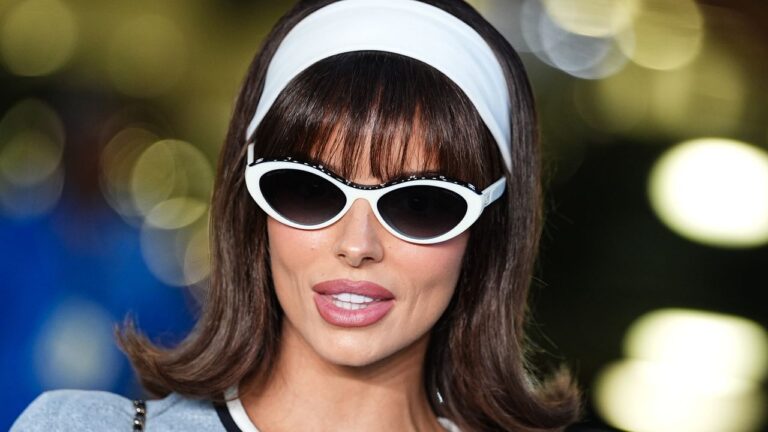
Maura Higgins, known for her appearances on The Traitors and her well-documented love of wigs, arrived at the 2026 US Open with a hairstyle that looked as though she’d stepped directly from a 1968 television screen. The voluminous shoulder-skimming lob, with its dramatically flipped-out ends creating an unmistakable kicky silhouette, was instantly recognizable from the golden age of ’60s and early-’70s fashion.
The Lob as Time Machine
Higgins’s hair didn’t simply reference the era—it inhabited it completely. The cut sat at shoulder level, with the bottom section curled sharply outward in that signature flip that defined an entire generation of styling. Each layer appeared intentionally shaped and sculpted, creating volume that required both technical skill and considerable precision in execution. This wasn’t a casual recreation of a vintage look; it was a studied, deliberate performance of retro glamour that demonstrated real understanding of the aesthetic.
The Mechanics of the Style
Creating the Flip and Volume
The body of the lob came from strategic layering and expert blow-dry technique. The crown held significant lift, while the mid-lengths and ends were shaped to swing outward with movement. This responsiveness—the way the hair flowed and responded as she walked—was crucial to achieving the illusion of authenticity. The flip had to catch light and move naturally, not appear stiff or overly processed.
The Statement Bangs
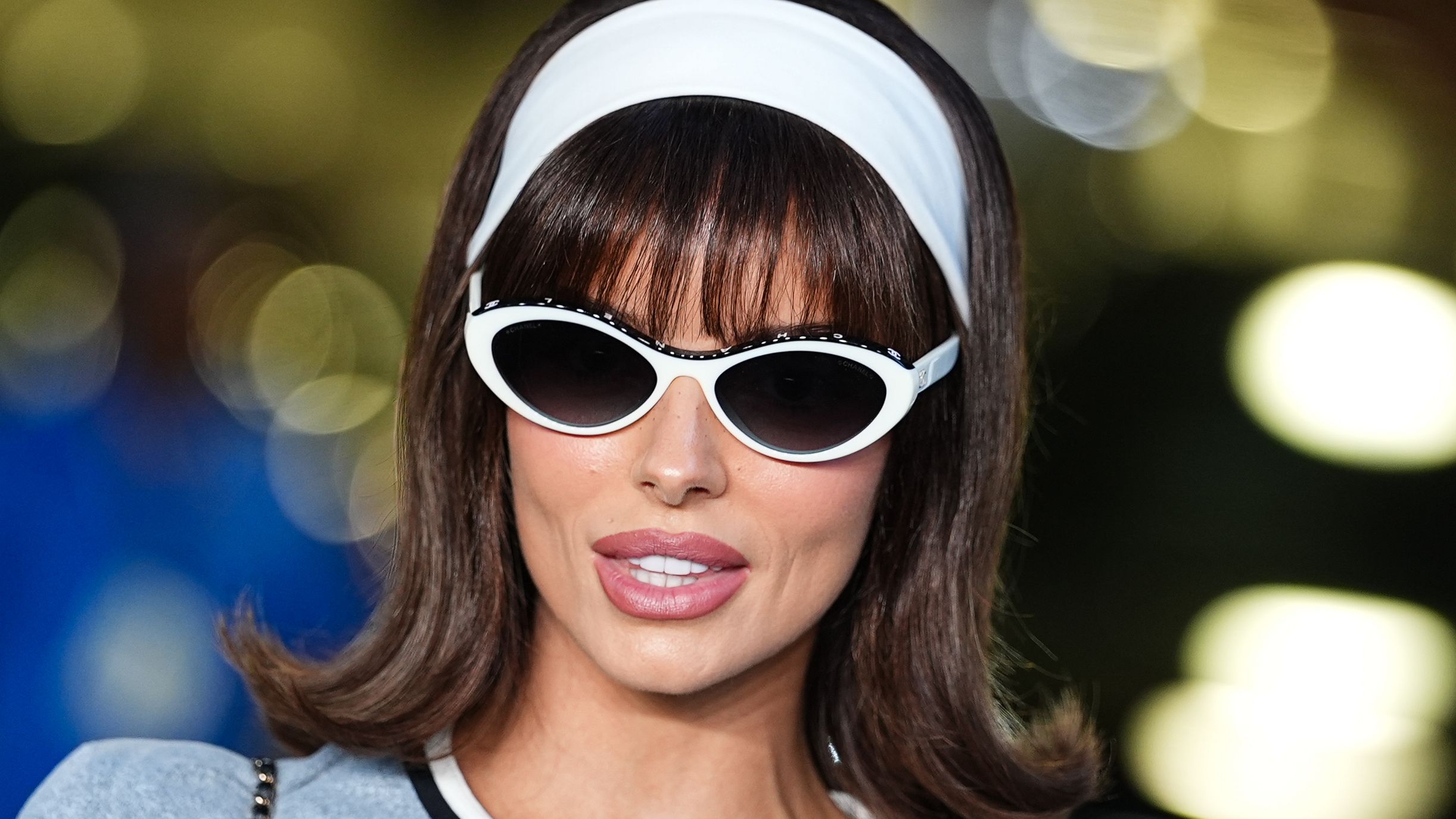
Full, blunt bangs cut straight across and landing just above the eyebrows completed the silhouette. They directly echoed Ann Marie’s iconic hair in the television show That Girl, which defined this exact aesthetic in the late 1960s. Bangs this heavy and geometric require genuine commitment and regular maintenance to preserve their precision. They frame the face entirely and cannot be styled casually—they either work or they don’t, which makes the choice bold.
The White Fabric Headband
A wide white fabric band positioned across the crown added height and provided the final polish to complete the overall vision. The accessory evoked 1960s department-store window displays and directly recalled Barbra Streisand’s styling during her Funny Girl years—theatrical, glamorous, and deliberate, with every element serving the overall aesthetic vision.
The Outfit and Complete Package
Higgins’s clothing matched her hair’s commitment to the era with equal intention. She wore a vintage Chanel set consisting of a cropped, short-sleeved top paired with a knee-length skirt, both trimmed with contrasting black-and-white bands. Cat-eye sunglasses—tucked strategically into her hair rather than worn across her eyes—mirrored the geometric trim work on her outfit, creating visual unity and coherence from head to toe.
Throughout the tournament, she remained consistent with this concept. Photographs from the event show the sunglasses positioned within her hair in every single shot, suggesting that maintaining this specific visual presentation was central to the statement.
The Cultural Reference
Marlo Thomas’s portrayal of Ann Marie remains the definitive expression of this aesthetic, and Higgins’s styling acknowledged that legacy directly and deliberately. The resemblance between her look and Thomas’s famous hair wasn’t accidental—it was the entire point of the exercise. For fashion-conscious observers, the reference translated instantly, creating a moment of recognition and appreciation.
Why This Matters
What made this styling choice significant wasn’t inherent difficulty but rather its absolute deliberateness. In an era when most red-carpet hair leans toward subtle and understated approaches, Higgins chose theatrical, specific, and thoroughly committed styling. Her background as a hairdresser informed this precision—someone trained professionally in creating volume and managing movement would instinctively recognize what this particular lob required to succeed.
What’s Next
Speculation circulated that Higgins might be joining the cast of Dancing with the Stars, and her willingness to embrace such specific, committed styling suggested she’d carry that same boldness into other professional ventures. Her stated love of wigs as transformation tools hinted at an understanding of hair as a narrative device rather than mere adornment. Higgins proved that 1960s glamour never truly fades—it waits to be excavated and reimagined by someone with the vision to commit fully to it.
Frequently Asked Questions
What television show inspired Maura Higgins's hairstyle at the US Open?
The style referenced Marlo Thomas's character Ann Marie from That Girl, a 1960s television show known for its iconic flipped lob and full bangs aesthetic.
Did Maura Higgins actually wear sunglasses on her head during the entire tournament?
Yes, in every photograph from the event, the cat-eye sunglasses were positioned within her hair rather than across her eyes, integrating them into the overall vintage aesthetic.
What was Maura Higgins's profession before appearing on television?
Higgins worked as a hairdresser before becoming a television personality, and she has publicly discussed her love of wigs as transformation tools.
