
Key takeaways
- Bemotrizinol, the first new FDA-approved sunscreen filter in over two decades, offers improved photostability and is now available from La Roche-Posay and other brands stateside.
- Hydrating sunscreens for dry skin should contain glycerin, hyaluronic acid, niacinamide, or ceramides to lock moisture in while protecting against UV damage.
- Texture matters—serum-like, creamy, tinted, and color-correcting formulas each serve different dry-skin needs, and layering with a lightweight moisturizer maximizes hydration benefits.
The dry skin dilemma when it comes to sunscreen is straightforward: conventional formulas often strip moisture while defending against UV damage, leaving the complexion tighter and more uncomfortable by midday. The solution lies in choosing a sunscreen that hydrates as it protects. Board-certified dermatologists agree on the fundamental approach. “When choosing a sunscreen for dry or sensitive skin, it’s important to find one that protects and hydrates the skin barrier,” says Mona Foad, MD, a board-certified dermatologist in Cincinnati. Her colleague Ashley McGuinness, MD, who practices in Chesterfield, Missouri, identifies the specific ingredients that accomplish this dual goal: hyaluronic acid, glycerin, niacinamide, and ceramides all attract moisture and lock it into the skin while simultaneously soothing irritation. Both mineral sunscreens built on zinc oxide and titanium dioxide, and chemical formulas loaded with hydrating agents, can deliver these benefits—the key is prioritizing hydration in the formula’s architecture.
The Breakthrough: Bemotrizinol and New-Generation Filters
The sunscreen market shifted when the FDA approved bemotrizinol (BEMT), marking the first new sunscreen filter authorized in more than two decades. La Roche-Posay was among the first brands to bring this innovation to the United States, incorporating 2% BEMT into the Anthelios UVDefense Sunscreen SPF 50. Bemotrizinol’s advantage lies in its photostability—unlike earlier filters, it resists degradation when exposed to sunlight, maintaining protective efficacy throughout extended outdoor exposure.
The formula extends beyond raw UV defense through Cell-Ox Shield technology, which pairs sunscreen filters with a blend of litchi extract, alteromonas, cassia senna alata, and vitamin E to neutralize free radicals generated by UV rays and atmospheric pollution. For dry skin, glycerin and butylene glycol provide moisture-attracting hydration, while dimethicone functions as an occlusive, sealing in water and smoothing rough, flaky patches. According to Allure’s testing, the texture sets this apart—it glides on like a serum, absorbing without white residue or stickiness. Tested during the Chicago Marathon by dermatologist Jane Yoo, MD, the formula proved its resilience over 26.2 miles, remaining lightweight and smooth despite generous reapplication at the halfway point, never turning greasy or irritating the eyes even under extreme conditions.
Mineral Formulas: Gentle Protection for Reactive Skin
Mineral sunscreens with zinc oxide and titanium dioxide offer inherent gentleness for sensitive complexions. Shiseido’s Ultimate Sun Protector Lotion Mineral SPF 60+, honored with a 2025 Best of Beauty Award, reimagines mineral protection as skincare. The formula incorporates raspberry extract, witch hazel, glycerin, and five types of algae to sustain hydration and calm the complexion. The texture defies mineral sunscreen stereotypes—it flows like a lightweight lotion, applying smoothly and settling into an invisible, non-greasy finish. According to Allure’s senior beauty editor Jesa Marie Calaor, the mineral formula melts into the skin with fluid speed, quickly blending with medium-tan skin and drying without greasiness. It delivers the summery, dewy glow that extra-dry complexions need, and its layering capability under makeup without pilling, plus its efficiency—a little truly goes a long way—makes it a practical daily option.
Creamy Textures That Double as Moisturizer
The K-Beauty Hybrid
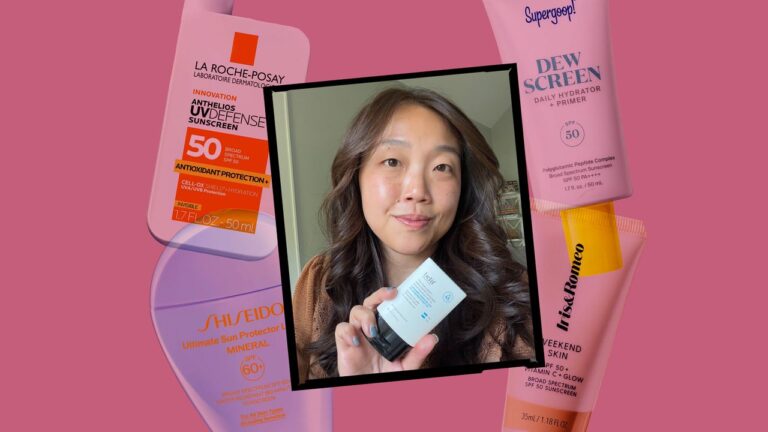
Belif’s Aqua Bomb Sunscreen SPF 45 brings the brand’s celebrated The True Cream Aqua Bomb Moisturizer philosophy into sun protection. It combines moisture-boosting glycerin, soothing panthenol, and brightening niacinamide with a botanical complex of oat seed, calendula, and calming herbs. The defining characteristic is texture—lightweight silicones and smoothing polymers create a silky, almost primer-like consistency that defies the typical lotion category. According to Allure’s contributing commerce writer Christa Joanna Lee, the formula absorbs with gel-like speed while maintaining cream-level moisture, leaving zero white cast. After just a couple of weeks of regular use, she found it functioned as both dedicated sunscreen and standalone moisturizer, delivering a plumped, comfortable feel throughout the day without the dramatic finish changes typical of other mineral formulas.
Serum-Like Elegance
La Roche-Posay’s bemotrizinol formula exemplifies the serum-texture category. These ultra-lightweight options appeal to those prioritizing an imperceptible feel. They absorb rapidly, requiring minimal blending time, making them practical for rushed mornings, yet their hydrating ingredient packages deliver the moisture-locking benefits of richer formulas. Allure’s commerce editor Sarah Han noted that the Anthelios formula feels like nothing on the skin, nearly disappearing on contact when applying the standard two-finger-length amount, and manages to double as both sunscreen and moisturizer without requiring a separate hydrating step.
Color Science: Correcting Redness While Hydrating
Redness paired with dryness demands a targeted approach. EltaMD’s UV Skin Recovery Red Color Correcting SPF 50, another 2025 Best of Beauty Award recipient, leverages color theory—green neutralizes red—through a sheer green tint that shifts imperceptibly as you blend. The mineral sunscreen goes further with soothing Centella asiatica (known as cica), an amino acid complex of taurine, arginine, and glycine to help stressed skin recover, and ceramides to reinforce the moisture barrier and prevent dryness. According to Allure editors, the lightweight, non-greasy mineral texture addresses sensitive, redness-prone skin facing temporary flare-ups, naturally flushed complexions, or cold-weather irritation. The formula applies green and transitions through white before sheering out, maintaining a dewy finish throughout the day even layered under multiple makeup products, from Pat McGrath Labs Skin Fetish Sublime Perfection Foundation to Lisa Eldridge Enhancing Skin Tint, without pilling or shifting.
Beyond Basics: Multitasking Formulas
Sunscreen as Makeup Base
Supergoop’s Dewscreen Hydrating Primer SPF 50 merges sun protection and primer function. This chemical formula deploys peptides for plumping effect, paired with hyaluronic acid and tremella mushroom for hydration, while creating a smooth, grippy surface that anchors foundation and ensures even application. The dewy finish resists greasiness even on combination skin prone to oiliness in the T-zone. According to Allure’s commerce editor Sarah Han, the formula’s moisturizing caliber justifies the slightly longer blending time—this sunscreen demands thoroughness to ensure adequate SPF coverage, but the hydration payoff rewards the extra seconds spent. She noted it delivers a dewy dumpling effect that instantly perks up tired-looking skin, making it ideal for those who want hydration and grip from a single step.
Tinted Sunscreen with Brightening Benefits
Iris & Romeo’s Weekend Skin SPF 50 + Vitamin C + Glow straddles sunscreen and tinted moisturizer territory. Offered in four complementary shades—Universal, Cool Glow, Warm Glow, and Bronze Glow—to flatter various skin tones, the formula prioritizes brightening through vitamin C, vitamin E (which stabilizes vitamin C), and niacinamide. The richer, more textured consistency wears more like tinted moisturizer than barely-there sunscreen, making it suited for days when light coverage and visible glow matter more than a feather-light feel. According to Allure’s senior commerce director Shanna Shipin, it delivers a natural radiance—glowy without glitter—that leaves skin looking airbrushed and well-rested, even managing acne scars, flakiness, and fine lines simultaneously. She uses it daily rather than reserving it for weekends, finding that a single product handles hydration, coverage, and SPF in one elegant step.
Ingredients and Application Strategy for Maximum Benefit
Selecting a hydrating sunscreen is only half the equation; application technique amplifies results. For visibly dry skin, start with a lightweight moisturizer and allow it to fully absorb before applying sunscreen, ensuring the skin barrier reaches peak hydration before adding sun protection. If your complexion isn’t severely compromised and you prefer chemical formulas, many modern hydrating options offer enough moisture to function alone—but layering provides insurance. Avoid sprays entirely; they typically contain alcohol, which actively dehydrates the skin.
When evaluating any sunscreen for dry skin, look beyond marketing claims. Broad-spectrum protection at SPF 30 or higher is non-negotiable. Cream or lotion formulas consistently outperform gels and sprays for dehydrated complexions. Antioxidants like vitamin E and vitamin C provide an additional shield against free radicals beyond what UV filters deliver alone. Hyaluronic acid, glycerin, niacinamide, dimethicone, and ceramides—appearing on any label—signal moisture-retention and barrier-support capabilities. The texture category you choose—serum-like, creamy, tinted, or color-correcting—depends on your morning routine’s priorities and your skin’s specific concerns. Testing one or two options reveals which balance of feel, hydration, and additional benefits fits best into your daily defense strategy.
Source: Allure
Frequently Asked Questions
What ingredients should I look for in a sunscreen if I have dry skin?
Board-certified dermatologists recommend hyaluronic acid, glycerin, niacinamide, and ceramides, which attract and lock in moisture while soothing irritation. Antioxidants like vitamin E and vitamin C provide additional protection against free radicals. Avoid sprays, which contain alcohol that dehydrates skin.
Is mineral or chemical sunscreen better for dry skin?
Both mineral sunscreens with zinc oxide or titanium dioxide and chemical formulas can work for dry skin when formulated with hydrating ingredients. Mineral options tend to be gentler on sensitive skin, though modern chemical sunscreens with moisture-boosting components perform just as well for hydration.
What is bemotrizinol and why does it matter?
Bemotrizinol (BEMT) is the first new sunscreen filter approved by the FDA in more than two decades. It is photostable, meaning it resists breaking down when exposed to sunlight, offering more consistent protection throughout the day compared to earlier filters.
