
Key takeaways
- Hair type refers to curl pattern; porosity refers to moisture absorption. Test both separately to find products that actually work for your hair.
- Low porosity hair needs lightweight products and heat to absorb moisture; high porosity hair needs heavy butters and oils to seal moisture in.
- The float test and absorption test give reliable porosity results in five minutes without guessing.
Your hair type and porosity are not the same thing, and conflating them is why many people buy products that work against their hair instead of with it. Hair type refers to the shape and texture of your strands from root to tip. Porosity describes how well your hair absorbs and retains moisture. Understanding both changes how you approach everything from shampoo selection to styling techniques.
The Hair Type Classification System
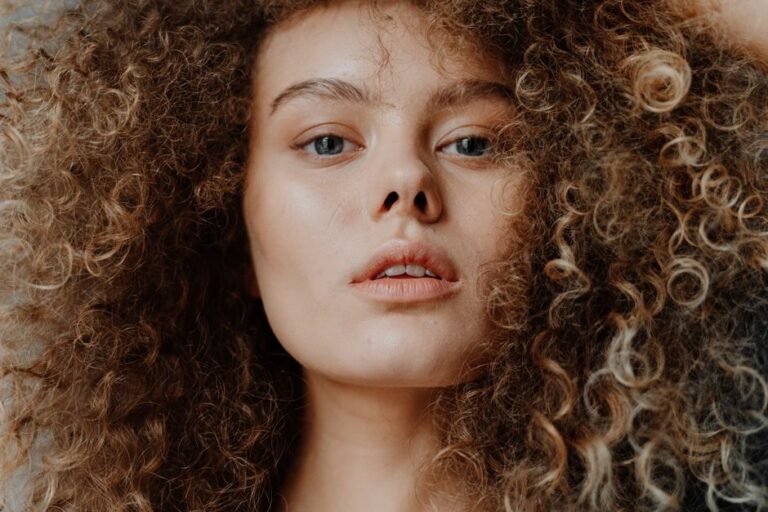
The most widely used system divides hair into four categories, numbered 1 through 4, based on the curl pattern of the strand. Type 1 is straight hair with no curl at all. Type 2 ranges from wavy to loosely curled, with an S-shape pattern. Type 3 is curly hair with well-defined spirals or coils. Type 4 is coily or tightly coiled hair, sometimes called kinky, where the curl pattern is very compact and close to the scalp.
Each main category subdivides further: Type 2A is loose waves, 2B is more pronounced waves, and 2C approaches curls. Type 3A curves gently, 3B has tighter spirals, and 3C has very tight curls. Type 4A is coily with a defined pattern, 4B is more Z-shaped or angular coils, and 4C is very tightly coiled with less defined spirals.
Why Type Matters for Products
Straight hair (Type 1) needs minimal hold and benefits from lightweight formulas that won’t flatten it. Wavy hair (Type 2) often needs products that enhance the wave without creating frizz—brands like SheaMoisture and Cantu make lines specifically for this. Curly hair (Type 3) requires creams and gels that define the curl without crunch. Coily hair (Type 4) needs rich butters and leave-in conditioners that provide slip and moisture, such as Carol’s Daughter Black Vanilla or Shea Moisture Raw Shea Butter Restorative Conditioner, which retails around $8–12.
Testing Your Hair Type at Home
Start with clean, air-dried hair that has not been heat-styled or chemically straightened, since these alter the natural pattern. Take a single strand from different sections of your head—front hairline, crown, nape—and look at it or compare it to reference images of the four types. The strand will show you its natural curl pattern when it dries without interference.
The Pencil Test
Wrap a damp strand around a pencil or your finger and let it dry completely without touching it. The size and tightness of the curl it forms tells you the coil circumference. A strand wrapped around a pencil that holds a tight spiral is likely Type 4. A strand that waves loosely is Type 2 or 3.
The Texture and Shine Check
Feel the strand between your fingers. Straight hair feels smooth. Wavy or curly hair has some texture but still some smoothness. Coily hair often feels denser and may seem rougher because the cuticles do not lay as flat. Hold it up to light; straight hair reflects light evenly along the length, while textured hair often looks matte because the curl pattern scatters light.
What Porosity Actually Is
Porosity is the hair’s ability to absorb and hold water and products. It is determined by how tightly the cuticle layer—the outermost part of the hair shaft—sits against the cortex. Low porosity hair has cuticles that lay flat and close together, making it hard for moisture to enter. High porosity hair has gaps in the cuticle layer, so moisture enters easily but also leaves easily. Medium (or normal) porosity is balanced: cuticles are raised enough to absorb moisture but not so much that it escapes quickly.
Porosity is independent of hair type. You can have straight Type 1 hair that is low porosity, or coily Type 4 hair that is high porosity. They require different moisture strategies despite their texture category.
Low Porosity Hair
This hair repels water. It takes a long time to wet, dries very slowly, and product sits on top rather than absorbing. Low porosity hair responds well to heat, which opens the cuticle and allows products to penetrate. It works against heavy oils and butters, which sit on the surface and weigh it down. Instead, low porosity hair benefits from lightweight leave-in conditioners, hydrating sprays, and products with humectants like glycerin or aloe vera.
High Porosity Hair
This hair absorbs product and water instantly but cannot hold onto it. It frizzes easily, especially in humid weather, because moisture rushes in and out of the cuticle. High porosity hair needs sealing products—heavy oils and butters applied to damp hair to lock moisture in. Protein treatments help temporarily reinforce the weakened cuticle. Shea butter, coconut oil, and products like SheaMoisture 100% Virgin Coconut Oil (around $6–8) work well for this.
Testing Your Hair Porosity
The Float Test
Take a single clean strand, fill a glass with room-temperature water, and drop the strand in. If it sinks immediately, your hair is high porosity. If it floats, it is low porosity. If it sinks slowly or suspends in the middle, it is medium porosity. This works because high porosity hair absorbs water and becomes heavier, so it sinks. Low porosity hair repels water, so it floats.
The Absorption Test
Spray clean hair with water and watch how it responds. High porosity hair darkens immediately and absorbs the water visibly. Low porosity hair beads up or takes several minutes to absorb the spray. Medium porosity hair absorbs water fairly quickly but not instantly.
The Mist Bottle Test
Mist your hair with water and observe how long it takes to dry. High porosity hair dries very quickly because water leaves as fast as it enters. Low porosity hair stays wet for a long time. This test is best done on a typical day without heat styling.
Combining Type and Porosity for Product Matching
Type 1 straight hair that is low porosity needs volumizing shampoos and lightweight conditioners. Puracy Natural Shampoo (around $5–7) works for this category. If Type 1 hair is high porosity, it needs hydrating shampoos and cream rinses to hold moisture.
Type 2 wavy hair benefits from curl-enhancing creams regardless of porosity, but low porosity wavy hair needs lighter formulas, while high porosity wavy hair needs richer ones. DevaCurl Defining Gel ($28) is popular for Type 2 and 3 hair because it provides hold without flaking, though it is expensive; SheaMoisture Coconut and Hibiscus Curl Enhancing Smoothie ($8–10) is a more affordable alternative.
Type 3 and 4 curly and coily hair typically benefits from creams and gels. Low porosity versions need lighter creams and gel-based products. High porosity versions need butters and oils to seal. Cantu Shea Butter Leave-In Conditioner ($3–5) is widely available and inexpensive for high porosity coily hair. Aunt Jackie’s Don’t Burn My Hair Creme Oil ($2–3) works as a sealant.
Common Mistakes in Hair Type and Porosity Testing
The biggest mistake is testing hair that has been chemically treated or freshly heat-styled, since these change the curl pattern and porosity temporarily. Wait at least two weeks after relaxing, coloring, or perming to test. Another error is testing only one strand; hair texture and porosity can vary by location on the head, so test multiple sections.
Many people confuse frizz with high porosity. Frizz can happen to any porosity level when the cuticle is damaged or when the moisture content in the air does not match the moisture in the hair. Low porosity hair actually frizzes more easily when product sits on top of the cuticle instead of sealing it smoothly.
Assuming porosity based on type alone is also common. Bleached or previously damaged hair is often high porosity regardless of whether the natural pattern is Type 2 or Type 4. A person who has been coloring their hair for years may have medium or high porosity at the ends while the new growth is low porosity.
Next Steps After Identifying Your Profile
Once you know your type and porosity, start with a shampoo and conditioner matched to both. Test one product for at least two weeks before adding other styling products, so you can see what actually works for your hair instead of layering confusion. Keep the float test strip in a drawer and retest every three to six months, since porosity can shift with damage, heat damage repair, or seasonal changes.
Frequently Asked Questions
Can hair type and porosity change?
Type stays the same, but porosity can shift. Chemical treatments, heat damage, and repair over time all change how well your hair absorbs and holds moisture. Retest porosity every few months if you color or heat-style regularly.
What if my hair is different textures in different areas?
This is common. Hair at the roots may be straighter or coilier than hair at the ends, and different sections can have different porosities. Test multiple areas and choose products that work for your most common type, then add targeted treatments for problem areas.
Do I need expensive products to match my hair type and porosity?
No. SheaMoisture, Cantu, Aunt Jackie's, and Puracy all make porosity-appropriate products under $10. Test budget-friendly options first before spending on premium brands. The match to your type and porosity matters far more than the price tag.
