
Key takeaways
- Modern at-home hair color kits now feature ammonia-free pigments, nourishing oils, and wide shade ranges rivaling professional salon options.
- Color-depositing masks and semi-permanent formulas condition while coloring; permanent options target specific needs like blonde, grays, or dimensional results.
- Product saturation and post-color conditioning prevent patchiness and fading; wait 48 hours before washing and always use sulfate-free shampoo.
- At-home developer is stronger than salon-grade, so check the back of the box for realistic results and choose darker shades for permanent color or lighter shades for semi-permanent.
Salon color appointments carry a premium price and significant time commitment. Today’s at-home hair color formulas have evolved: nourishing ingredients replace stripping chemicals, shade ranges span neutrals to bold brights, and application methods accommodate every skill level. Semi-permanent options and color-depositing treatments offer temporary color shifts. Whether you’re extending a recent salon visit, reviving faded color, or skipping the salon entirely, these ten kits deliver results that read professionally done.
Custom Formulas & Beginner-Friendly Options
eSalon’s Made for You Custom Hair Color eliminates guesswork: after answering questions about hair texture, skin tone, and gray density, in-house colorists hand-mix a permanent or semi-permanent formula tailored to you. The ammonia-free pigments have won five Allure Best of Beauty Awards and four Readers’ Choice Awards. According to Allure’s testing, the result “makes DIY at-home hair color foolproof—the beauty equivalent of a soufflé recipe that won’t collapse below sea level,” making it ideal for every skill level.
Semi-Permanent & Color-Depositing Treatments
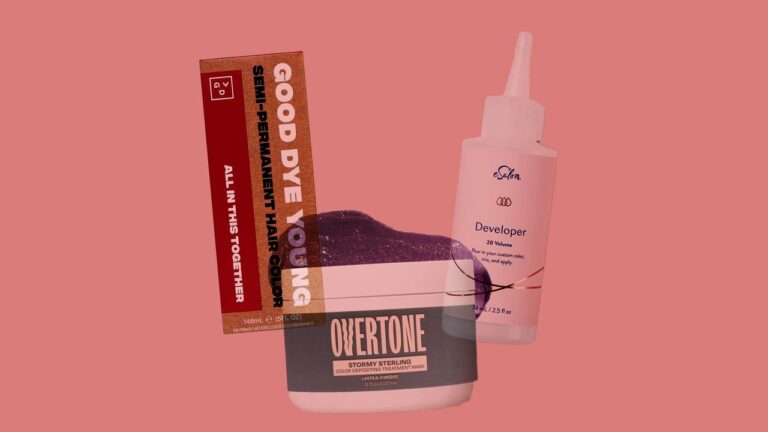
Overtone’s Nourishing Color Mask
Overtone’s Color Depositing Mask coats rather than lifts the hair shaft, preserving strand health while depositing pigment. With 38 shades ranging from muted neutrals to bold hues, and jojoba, castor, sweet almond, and coconut oils woven through the formula, it hydrates while it colors. Apply to dry hair for 10 to 15 minutes for full vibrancy. An Allure 2026 Best of Beauty Award winner, it proves you can shift color without compromise.
Good Dye Young’s Semi-Permanent Line
Good Dye Young’s Semi-Permanent Hair Color features an electric palette of neons and jewel tones, backed by musician Hayley Williams. Sunflower seed oil, hydrolyzed rice protein, and glycerin fight fading and dryness, while bergamot essential oil adds citrus scent. The formula’s staying power is strong enough that mixing it into conditioner between touch-ups is optional.
Kristin Ess Hair Gloss
Kristin Ess’s hair gloss revives faded color while conditioning. An Alkaline Neutralizing System blocks hard-water minerals from dulling color, and avocado, sunflower seed, and castor seed oils slow fading. Bicoastal colorist Cherin Choi recommends it for stretching color life to three or four weeks between washes.
Permanent Color for Every Hair Type
Foam Application & Beginner Success
John Frieda Precision Foam Colour eliminates dripping: Los Angeles hairstylist Damian Monzillo explains that foam keeps color off the hairline and bathroom while delivering even coverage. An Allure Best of Beauty Award winner that works for newbies, it includes gloves, after-color conditioner, and instructions. The 20 volume developer lifts hair exactly one level lighter than your current shade.
For Blonde Hair
Schwarzkopf’s Keratin Blonde addresses blonde’s unique challenges: brittleness, fineness, and dryness. Its three-step Bond Forcing System starts with a pre-color serum containing vitamin B6 and hydrolyzed collagen, followed by a lightening formula with keratin and hydrolyzed silk promising up to nine levels of lift, and finished with a purple conditioner featuring anti-brass benefits. Bicoastal stylist Marc Mena values formulas that “consider the hair’s condition as much as the finished color.”
For Gray Hair
AgeBeautiful’s Permanent Hair Color targets graying hair’s texture and shine changes. New York colorist Tiffanie Richards calls it essential for full silver coverage. Biotin, melanin, keratin, and peptides replenish what aging hair loses. Soft neutrals and warm-to-cool grays suit every stage of the graying process.
For Dimensional Shade
IGK’s Permanent Hair Color prioritizes shine. Chicago colorist Lorena Martinez Valdes notes it “increases the shine level, which many at-home color kits lack,” while the modern shade range avoids flatness. Madison Reed’s Radiant Hair Color Kit applies in 35 minutes with a thick cream texture, zero smell (ammonia-free), and zero drips. Keratin, argan oil, and ginseng root protect hair health. Stylist Gillian Doland praises it for salon-quality results.
Root Touch-Ups & Quick Color Fixes
DpHue’s root touch-up kit covers 100 percent of grays until your next salon visit. An Allure Best of Beauty Award winner, it includes an applicator brush, mixing bowl, and processing cap for precise hairline work. The low-ammonia formula maintains strand integrity. One editor with medium brown hair and blonde highlights reported perfect color match the next morning and full coverage lasting a month.
Choosing Your Shade Correctly
Package photos mislead. Kardashian-Jenner family stylist Andrew Fitzsimons advises checking the back of the box instead, since at-home developer is stronger than salon-grade. New York colorist Dana Ionato explains: “The color always ends up lighter than the model’s hair on the packaging because the developer in at-home permanent dyes is very strong—stronger than the ones we use in the salon—so it lifts the color.” For permanent dyes, choose slightly darker than your goal. Semi-permanent formulas work oppositely. They deepen the longer they sit and contain no developer, so pick a shade lighter.
Application & Preparation
Product saturation is critical. Damaged hair soaks dye quickly due to raised, porous cuticles, risking missed spots. Bicoastal stylist Meri Kate O’Conner warns against stretching formula: “insufficient saturation is one of the biggest causes of patchy color.” Hair length and density matter. Short or fine hair needs one box, but long, thick, or dense hair requires two for complete coverage. West Hollywood colorist Jess Gonzalez advises: “It’s always better to have extra color than not enough.”
Before dyeing, apply Vaseline along your hairline to prevent color lines. Divide hair into half-inch sections for even absorption. After dyeing, Fitzsimons emphasizes conditioning: “Using a deep conditioner seals the cuticle, so your strands stop absorbing the color. If you skip conditioning, you’ll end up darker than you expected.”
Protecting Color Longevity
Aftercare extends vibrancy. Marc Mena recommends waiting 48 hours before washing, then using sulfate-free, color-safe shampoo and cool to lukewarm rinses. Replace regular conditioner with hair masks to seal cuticles. Mena notes this matters especially for blondes, brunettes, and redheads. Avoid heat-styling without protectant, excessive sun, chlorine, and clarifying shampoos, all of which accelerate fading.
Source: Allure
Frequently Asked Questions
How do I choose the right shade from an at-home hair color kit?
Check the back of the box, which shows how the color looks on different starting shades. Front-of-package photos mislead because at-home developer is stronger than salon-grade. For permanent dyes, choose a shade darker than your goal; for semi-permanent, pick lighter since they deepen the longer they sit and contain no developer.
What's the difference between permanent hair color and color-depositing masks?
Permanent formulas like John Frieda and Madison Reed lift the hair shaft to deposit lasting pigment using developer for durable results. Color-depositing masks like Overtone coat the outside of strands, hydrating while transferring color temporarily. Color-depositing masks are semi-permanent and condition simultaneously, making them gentler on hair health.
How can I prevent my at-home dyed hair from fading quickly?
Wait at least 48 hours before your first wash, then use sulfate-free, color-safe shampoo and cool or lukewarm water. Replace regular conditioner with hair masks to seal cuticles, and avoid heat-styling without protectant, excessive sun exposure, chlorine, and clarifying shampoos—all accelerate fading.
