
Key takeaways
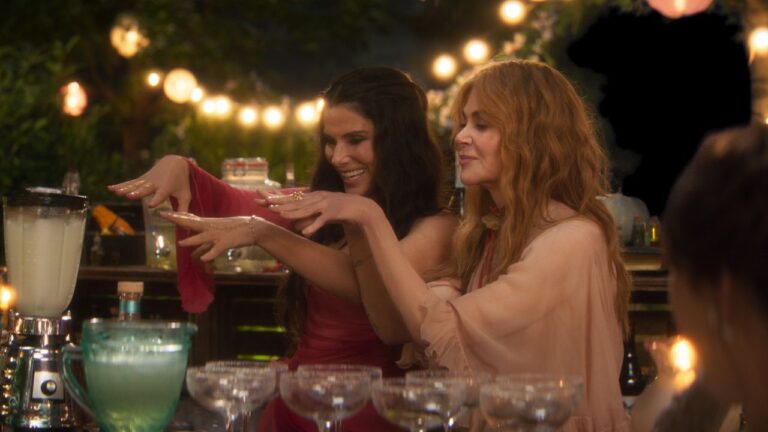
- Nicole Kidman's new wig for Practical Magic 2 features layers, dimensional color, and movement—designed to work with modern cameras that reveal far more detail than 1998 film stock.
- Sandra Bullock's Sally shifts from tightly controlled styling to loosened curls after the curse breaks, using LolaVie Leave-In Spray, Detangler, and oil products.
- Angela Levin applied whimsical, luminous makeup to Kidman's Gilly with shimmer and cool tones, breaking traditional film rules to create a mystical aesthetic.
- The de-aging flashback combined minimal makeup with AI technology, with Whitney James carefully matching Bullock's 1998 brow shape and cheekbone definition.
Nearly three decades separate the original Practical Magic from its 2026 sequel, and the beauty looks of the Owens sisters had to evolve accordingly. When hairstylist Kim Santantonio and makeup artist Angela Levin, who work alongside Nicole Kidman on set, began planning her character Gilly’s appearance for the new film, they faced an unexpected discovery: the iconic wig from 1998 couldn’t simply be re-used. Instead, Santantonio collaborated with wigmaker Rob Pickels to create entirely new wigs that captured Gilly’s essence while acknowledging how far camera technology and filmmaking standards had advanced.
Nicole Kidman’s Wig: Why It Needed to Change
The Original Wig’s Hidden Secret
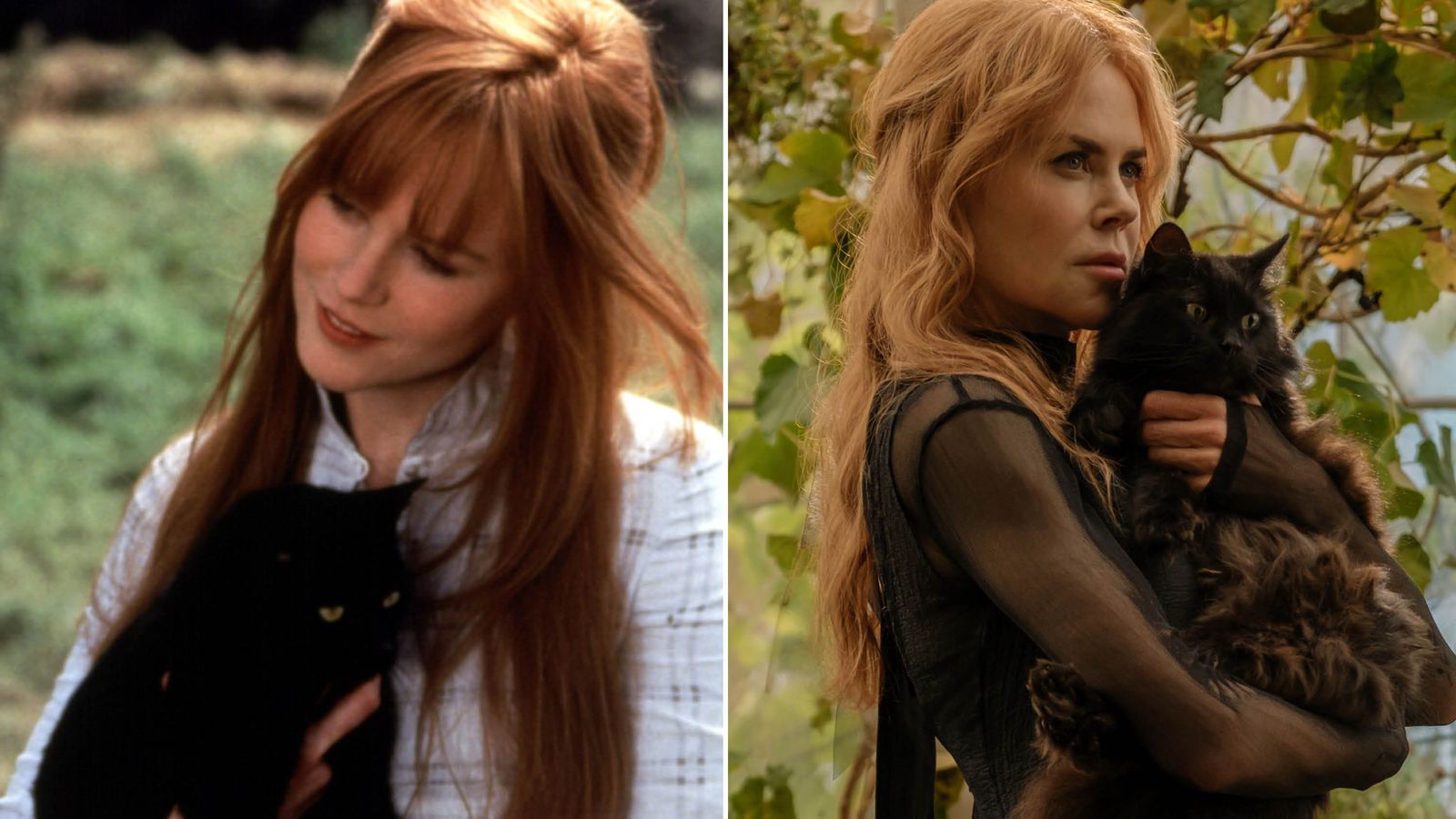
Audiences watching the 1998 version had no idea that Kidman’s signature auburn-and-copper hair came from a wig. Most viewers assumed it was her natural hair, and that misconception became part of the film’s legend. When the production team examined the original wig in preparation for the sequel, they realized immediately that its construction wouldn’t work for modern cinematography.
The wig was extremely straight, with every strand treated with a flatiron to achieve uniformity. “It felt heavy and looked all one length,” Santantonio recalls. More critically, the original color had no variation whatsoever—just one flat shade from root to tip. What looked perfect on 1998 cameras would appear lifeless on today’s equipment.
Building the New Wig
Santantonio and Pickels approached the new wigs with a philosophy of movement and texture. Rather than flatten the hair as they had in the original, they incorporated multiple layers throughout, particularly around the face. This strategic layering served a specific purpose: Kidman wanted her character to move more dynamically, with hair that flickered and flew during scenes.
Santantonio would first curl sections of the wig with a curling iron to build volume, then use a flatiron selectively to straighten other sections, creating what she describes as a “rock and roll” effect that maintained the edge viewers remembered from Gilly’s original characterization. Rob Pickels added dimensional highlights and lowlights throughout the new wig to mimic how natural hair actually catches light. Where the 1998 version had one flat auburn-copper tone, the 2026 wig now featured complexity and depth.
Modern Cameras Demand Different Hair
The decision to redesign the wig stemmed from practical filmmaking realities that nobody in 1998 had anticipated. Angela Levin, Kidman’s makeup artist, explains that the cameras and film stock used on the original were fundamentally different from the equipment available today. Lighting has evolved, color grading has become more sophisticated, and digital cameras pick up far more detail than they did nearly three decades ago.
“If you take the wig and the film they used in 1998, it looks amazing,” Levin says. “If you put that same wig on camera today, it would look totally different because we’re able to see more of the details, and it would not look as realistic.” The highlighter and lowlights became crucial not as a style choice but as a technical necessity—modern cameras would reveal them as essential to believability.
Sandra Bullock’s Sally: Hair Tells the Story
Controlled Styling Early On
While Kidman’s wig needed technical updates, Sandra Bullock’s Sally underwent a different kind of transformation. Hairstylist Janine Thompson, who worked on the original film 28 years earlier and returned for the sequel, noticed that Sally’s hair needed to reflect her emotional journey. In the story, Sally has endured the loss of another husband to the family curse, and she has become tightly controlled as a defense mechanism against further heartbreak.
This internal tension showed physically in her styling. Sally’s hair, which had been relaxed and swept into loose half-up styles and braids in the original, became far more structured. Thompson pulled her hair back intentionally to convey Sally’s attempt to control everything around her—yet made sure pieces escaped strategically. “Her hair is pulled back because she wants to control everything, but Sally isn’t really in control. So pieces are falling out. We very specifically pulled those pieces out to make it look like she can’t fight who she is,” Thompson explains.
Freedom After the Curse Breaks
The styling philosophy shifts when the curse breaks and Sally attends her daughter Kylie’s wedding. Thompson and Bullock discussed how to visually communicate Sally’s newfound peace. Rather than the rigidly controlled styles of earlier scenes, her curls become relaxed and loose, reflecting a woman who has finally stopped fighting her nature.
Thompson achieved Sally’s signature curls using products from LolaVie, the brand launched by Bullock’s close friend Jennifer Aniston. She applied generous amounts of the Leave-In Spray and Detangler to Bullock’s wet hair, then allowed it to dry overnight. The next day, she worked LolaVie oil through the dried hair to break up and separate the curls, creating an effortless appearance. She then used both half-inch and one-inch curling irons to add definition and maintain consistency throughout the film.
De-Aging: When Technology Meets Makeup
A brief flashback to Gary’s death required both sisters to appear in their early 30s, as they looked during the original film. This sequence combined de-aging technology with deliberately minimal makeup. Whitney James, Bullock’s makeup artist, studied the original photographs carefully to recreate Sally’s 1998 beauty.
Bullock’s brows were thinner back then, and her cheeks had a fresher, more flushed appearance compared to her current, more angular features. James also applied eyeliner to the lower lash line, matching the original makeup exactly. Rather than letting digital filters do all the work, James kept the makeup clean and understated. “Looking at the pictures from then and getting as close as we could, still making her look good, and then being able to de-age—it was a balancing act in all ways,” James says.
Two Sisters, Two Beauty Philosophies
Bullock’s Grounded Approach
For the main timeline of the film, the makeup for each sister served her character arc. Bullock’s Sally wears a natural, matte makeup look that grounds her in reality and reflects her conservative approach to life. The understated aesthetic reinforces the tension between her desire for control and her inability to fully achieve it.
Kidman’s Mystical Aesthetic
Kidman’s Gilly, by contrast, received a more whimsical, luminous treatment that plays with light in ways that wouldn’t normally appear in realistic filmmaking. Angela Levin used beige and gold tones with subtle shimmer for Kidman’s eyes, deliberately avoiding dark shadows that would feel too grounded. She selected cool tones—lilacs, lavenders, and grays—that complement Kidman’s eyes and skin tone, referencing the Lisa Eldridge Betty Eyeshadow palette.
For her cheeks, Levin used Dior Beauty’s Rosy Glow Radiance pH-Activated Blush Stick in Pink Lilac, a product that delivered the dewy, diffused flush that looked like it emanated from within rather than sitting on the surface. “When you do movies, you don’t really use anything sparkly because the camera tends to pick it up tenfold, and sometimes it’s not very realistic,” Levin explains. “But in this case, because the movie is not very realistic, I wanted to add something that’s not your everyday routine.” Every traditional filmmaking rule about makeup went out the window in service of evoking the mystical quality required by the story.
Frequently Asked Questions
Why did Nicole Kidman's wig need to be completely redesigned for Practical Magic 2?
Modern digital cameras and film stock pick up far more detail than 1998 equipment. The original flat, single-tone wig would look unrealistic on today's cameras, so Rob Pickels created new wigs with dimensional highlights, layers, and texture for contemporary cinematography.
What products did Janine Thompson use to create Sandra Bullock's curls?
Thompson used LolaVie's Leave-In Spray and Detangler on Bullock's wet hair, let it dry overnight, then worked in LolaVie oil the next day. She then used half-inch and one-inch curling irons to create definition and maintain consistency.
How did the makeup differ between the two sisters in Practical Magic 2?
Sandra Bullock's Sally received natural, matte makeup to reflect her grounded and controlled character, while Nicole Kidman's Gilly wore whimsical, luminous makeup with cool lilac and lavender tones and subtle shimmer to evoke a mystical aesthetic.
