
Key takeaways
- Lip liners restore definition to lips that have lost volume and border clarity with age, while preventing color from feathering into fine lines.
- Hydrating actives like hyaluronic acid and jojoba oil combined with film-forming polymers or light-diffusing silicates create formulas that grip without drying.
- Traditional pencils like Charlotte Tilbury and MAC offer staying power, while blurring, staining, and peel-off formulas provide alternative approaches for mature lips.
- Prepping lips with hydrating balm and using short outward strokes applied just outside the natural lip line, then diffusing the edges, minimizes harsh lines on mature lips.
Why Lip Liners Matter for Mature Lips
Lip liners help mature lips in two ways: they restore definition as the lip border becomes less distinct with age, and they prevent lipstick color from feathering into fine lines. “They’re the underrated MVP of the lip category,” says Fiona Stiles, an LA-based makeup artist. “They can help define your shape and maximize it while also giving your lip color more staying power.”
But why do lips need this help in the first place? “Structurally, the lips lose volume, and the border of the lips loses definition,” explains Joshua Zeichner, MD, a board-certified dermatologist in New York City. Add to that the fact that “the lips often become dry as the skin barrier becomes weaker as we get older,” and you have a genuine problem for color that doesn’t stay put or blends into lines.
Lip anatomy explains why. Lips have a naturally impaired skin barrier and few to no oil glands—far fewer than facial skin. That structural vulnerability means aging takes a unique toll. The vermilion border, that visible edge between lip and surrounding skin, becomes less distinct. Volume loss makes lips appear thinner. And formulas that drag or settle into lines become more noticeable.
The solution is a lip liner that glides smoothly without skipping yet grips pigment firmly enough to prevent migration. “You want to choose one that has staying power, but also isn’t too drying,” says Kirin Bhatty, a celebrity makeup artist based in New York City. Today’s options extend far beyond a basic pencil, including creamy formulas with hydrating actives, blurring technologies that diffuse fine lines, long-wearing stains that anchor color to the lip surface, and even peel-off applications that set and deposit color evenly.
Key Formula Ingredients That Work
Different products solve the maturity challenge through different mechanisms.
Hydrating Actives
Charlotte Tilbury’s Lip Cheat Long Lasting Waterproof Lip Liner addresses dryness head-on with hyaluronic acid and jojoba oil, both of which hydrate and moisturize. This ingredient combination gives the pencil the slip needed for smooth application without skipping—especially helpful for mature lips that lack oil glands to self-moisturize. “The texture is beautiful,” says Bhatty. “It’s not dry but not too creamy, so it wears really well.”
Film-Forming Polymers
The same Charlotte Tilbury formula uses polybutene, which Kelly Dobos, a cosmetic chemist based in Cincinnati, Ohio, describes as “a flexible film former that helps prevent feathering and smudging by locking pigments in place.” That means color stays precisely where you apply it, even through multiple cups of coffee. Huda Beauty Lip Contour Lip Stain uses a similar strategy: a film-forming polymer creates “a lightweight, flexible film on the lips” that anchors colorants to the lip surface, according to Dobos, contributing to the product’s transfer-resistant and long-wearing properties.
Blurring Silicates and Light-Diffusing Technology
Some formulas address fine lines not by preventing them but by making them less visible. Hydrated silica, found in L’Oréal Paris Blurfiller Blurring Lip Contour, “scatters and diffuses light to soften the appearance of fine lines and texture,” Dobos explains. Combined with waxes, these ingredients create a soft-focus effect that makes lip contours appear naturally defined. Refy Lip Blur uses polymers and silicones in the same way. “They scatter light and help visually soften the appearance of fine lines and uneven texture,” she says. Water-soluble dyes, used in Huda Beauty’s formula, stain the outer layers of the lips rather than simply sitting on top like traditional pigments, creating long-wearing color that doesn’t fade when gloss or balm is layered on top.
Best Traditional Pencil Liners
Charlotte Tilbury Lip Cheat Long Lasting Waterproof Lip Liner has become a makeup staple because it balances three things: comfort, staying power, and shade range. The formula glides onto skin without skipping, a feature Bhatty notes is “especially helpful for mature lips.” The brand’s iconic Pillow Talk family offers four variations on a single rosy-nude shade, making it easy to find a natural-looking match without overcomplicating shade selection.
MAC Cosmetics Creamy Lip Liner takes a different approach by prioritizing choice. With more than 28 shades spanning neutrals, pinks, reds, browns, and statement-making hues, the range allows you to match your liner to your specific lipstick rather than making one universal shade do everything. “They are so saturated in color, and they have a beautiful opacity,” says Bhatty, who regularly restocks the product in her professional kit. That intensity proves valuable when wearing a dramatic lip and wanting the liner to coordinate as part of the finished look. The trade-off is texture: MAC pencils run slightly drier than some alternatives, so prepping lips with a hydrating balm beforehand helps.
Innovative Formulas and Application Methods
Blurring and Soft-Focus Liners
L’Oréal Paris Blurfiller Blurring Lip Contour comes as a twist-up crayon designed to forgive less-than-precise application. “Lip shape can subtly change over time,” Stiles notes. “We lose not only volume in our lips as we age, but also the vermilion border—which is your visible lip line—tends to fade.” This product brings definition back to a less distinct edge without requiring a steady hand or reading glasses. Bhatty finds the formula so hydrating that she sometimes applies it across the entire lip surface rather than just as a liner, and the blurring effect means you can be less exacting and still achieve a naturally defined look.
Refy Lip Blur pairs blurring technology with a rounded applicator instead of a sharp point. “A traditional pencil is sharpened to a point so the line you produce is very clean and sharp,” Stiles explains. “The rounded shape creates a softer edge, which can make lips look subtly fuller and more naturally contoured.” This approach works especially well for lips where the line has become less defined—it delivers definition without drawing attention to fine lines.
Long-Wearing Staining Formula
Huda Beauty Lip Contour Lip Stain uses a felt-tip applicator to trace the natural lip shape or subtly enhance it. The staining effect means color lasts for hours and doesn’t fade when gloss or balm is layered on top, behavior that distinguishes it from wax-based liners that can shift. Stiles particularly loves the shade Rosewood, which she describes as “a perfect muted rose that feels like it’s enhancing my vermillion border.” One practical note: store the cap side-down to prevent the formula from drying out.
Peel-Off Application
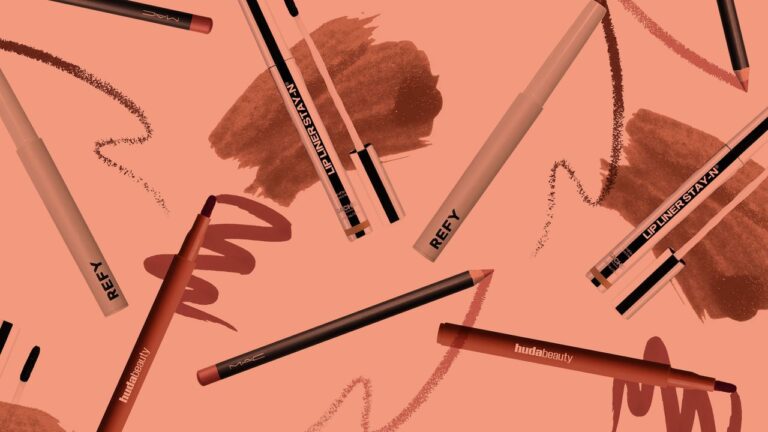
Sacheu Peel-Off Lip Liner Stayn gained attention partly through TikTok but offers functional benefit beyond social appeal. When you apply a generous, even layer and let it set for five to seven minutes before peeling away, “the film stays in place while the dyes are depositing, it can help create a more even stain and reduce the chance of immediate smudging or bleeding beyond the lips,” according to Dobos. There is a slight learning curve: Stiles recommends applying it at the start of your makeup routine so the stain has time to develop fully. After peeling, soften the resulting line with your finger or a brush to create a diffused finish. The result is a wash of color that can work as a subtle contour on its own or as a base for lipstick or gloss.
Preparing and Applying Liner Correctly
Setting the Foundation with Hydration
Start with hydration. Bhatty preps lips with a thick hydrating lip balm—she favors Sisley, which she calls “fancy but worth it.” She also applies moisturizer around the mouth so the surrounding skin is smooth and plump. “I’ll apply eye cream to the lips and around the mouth,” she explains. “Your lip skin is similar to eye skin. That will help the lip liner go on smoothly.”
Remove excess product before reaching for your liner. “Tissue off the excess balm so it won’t slide and I’ll use micellar water or a skin mist so it won’t be extra emollient,” says Bhatty.
Application Technique for Mature Lips
Apply liner just outside the natural lip line to subtly maximize volume. Rather than tracing one continuous line, use short strokes from the center of the mouth outward, stopping before reaching the corners. “Going to the edge can make the mouth look a little droopy as you get older,” Bhatty warns. Finish by using a lip brush or your finger to gently diffuse any harsh edges. This diffusing step makes the difference between a line that looks severe and one that appears naturally contoured.
Preventing Feathering and Bleeding
Fine lines around the mouth can turn a precise lip into a smeared one surprisingly quickly. “If feathering is an issue, then I would lean more towards long-wearing formulas as they have better staying power,” Stiles recommends. A second strategy is to use a clear lip liner applied slightly outside the natural lip line to create a barrier. “Those are made to function as a barrier and prevent feathering,” Stiles says. A clear liner prevents color migration without introducing another shade that might compete with your lipstick.
Overlining requires restraint. You can subtly exaggerate the cupid’s bow, but keep the liner close to your natural shape around the outer corners, where feathering becomes most noticeable. A softly blended edge generally reads more natural than a sharply drawn line, especially when the lip line itself has become less defined.
Source: Allure
Frequently Asked Questions
Why do lips change as you age?
Lips lose volume and their border becomes less distinct with age. Additionally, lips have a naturally impaired skin barrier and few to no oil glands, making them prone to dryness as the barrier weakens over time, according to dermatologist Joshua Zeichner, MD.
What ingredients help lip liners work better on mature lips?
Hyaluronic acid and jojoba oil provide hydration, polybutene and film-forming polymers lock color in place to prevent feathering, and hydrated silica scatters light to soften the appearance of fine lines. Different formulas emphasize different ingredients depending on their approach.
How do you prevent color from feathering into fine lines around the mouth?
Apply a long-wearing lip liner formula with staying power, or use a clear lip liner just outside the natural lip line to create a barrier. Alternatively, pair a traditional liner with short application strokes from the center outward, finishing with a gentle finger or brush to diffuse harsh edges.
