

Key takeaways
- Bond repair treatments rebuild the disulfide, hydrogen, and ionic bonds that break when hair undergoes bleaching, heat styling, or color treatment.
- Each formula works differently: Olaplex and Epres reconnect disulfide bonds, K18 uses peptide technology to reinforce protein chains, and Oribe creates new hydrogen and ionic bonds.
- Consistent use delivers visible results—editors reported significantly smoother hair texture, reduced frizz, and less breakage after regular applications.
- Genuine bond-building technology costs more because the formulas are patented and complex, though budget conditioners can still help smooth the cuticle between treatments.
When bleach, heat tools, or color treatments damage your hair, the harm goes deeper than the visible surface. Hair damage occurs at the molecular level, in the chemical bonds that hold the protein structure together. Bond repair treatments work by rebuilding these broken connections, creating stronger, healthier-looking strands. But not all repair treatments function the same way, and understanding their different approaches can help you choose the right one for your damage type.
Understanding How Hair Bonds Get Damaged
Hair’s structure relies on several layers working together. Beneath the outer cuticle sits the cortex, the thick middle section responsible for hair’s strength and elasticity. Within the cortex, keratin protein chains form the framework—picture them as the side rails of a ladder. The rungs connecting those rails are chemical bonds, says Sherry Backman, a cosmetic chemist based in Brattleboro, Vermont.
Three types of bonds can break under different stresses:
- Disulfide bonds are strong covalent connections that contribute significantly to overall hair strength
- Hydrogen bonds are weaker connections that constantly break and reform when exposed to moisture and heat
- Ionic bonds link amino acids temporarily and shift when pH changes
Bleach, perms, relaxers, heat styling, and chemical treatments damage these bonds in various ways, progressively weakening the hair from within.
Why Top Formulas Cost More
Developing technology to repair these bonds is complex and expensive. Many brands use patented, proprietary approaches, which means genuinely effective bond builders rarely appear at drugstore prices. Well-formulated drugstore shampoos and conditioners can still help by smoothing the cuticle, softening roughness, and reducing breakage, but they typically don’t address the underlying structural damage. While no topical product can restore hair to its pre-damage state, the best formulas create new supportive bridges within the hair structure, making damaged strands look and feel substantially healthier.
Olaplex No. 3 Plus Complete Repair Treatment
The updated Olaplex No. 3 Plus builds on the original formula’s proven technology while accelerating results. The core of Olaplex’s approach relies on bis-aminopropyl diglycol dimaleate, a patented ingredient that works by reconnecting broken disulfide bonds. According to Backman, this ingredient essentially “inserts a synthetic patch where a natural disulfide bond used to be,” reinforcing the hair’s internal structure and reducing breakage.
What distinguishes the Plus version is its faster action time. The original required 10 minutes; the reformulation works in just three minutes, thanks to the addition of glutamic acid, which helps the formula penetrate deeper into the hair cortex. The formula also includes Olaplex’s newer cationic technology, which adheres to the hair’s surface to smooth the cuticle, seal moisture, and guard against future damage.
Cincinnati-based cosmetic chemist Kelly Dobos notes that the updated formula features a modernized list of conditioning ingredients, particularly synthetic polymers that provide longer-lasting softness compared to the original. The combined effect delivers what Olaplex promises: healthier-feeling hair in significantly less time.
Real Results From Editors
A content director with long, highlighted hair, damaged from years of heat styling and color, reported that the treatment dramatically reduced the effort needed to blow-dry her hair. After using No. 3 Plus, she needed significantly less brush force to smooth the mid-lengths and didn’t require a flatiron afterward to achieve the silky finish she wanted. She found the treatment so helpful that she plans to incorporate it regularly into her hair-care routine, though she acknowledges that the extra shower step—even at three minutes—might be hard to fit into busy weekday schedules.
A senior staff writer who rarely colors or heats-styles her hair initially tried both the original and reformulated versions. The original left her hair feeling straw-like and didn’t impress her; she was skeptical about trying the new version. The reformulated formula proved her doubts wrong, making her hair feel noticeably softer immediately. While she didn’t experience the “stronger hair” claim right away, she recognized the potential for improvement with consistent use and became a new fan of the product.
K18’s Peptide-Based Repair Approach
K18 takes a fundamentally different direction than other bond builders. Instead of focusing directly on disulfide bonds, K18 developed a lab-created peptide designed to travel into the hair shaft itself. This peptide mimics part of hair’s own protein structure and is engineered to bind to damaged areas within the keratin chains. According to the brand, this approach helps disrupted disulfide bonds re-form into their correct configuration while addressing damage throughout the protein backbone.
The peptide technology originated from research led by a team at the Centre of Biological Engineering at the University of Minho in Portugal and Solfarcos Technologies, representing a different scientific pathway than in-house formula development. Backman calls it “a real area of legitimate cosmetic-peptide science,” though she notes that K18’s claims about permanently repairing covalent bonds would benefit from validation through independent, third-party research.
How to Use K18 for Maximum Benefit
Unlike traditional masks that rinse out in the shower, K18’s Leave-In Molecular Repair Hair Mask applies differently to your routine:
- Apply to towel-dried hair after shampooing—skip the conditioner step
- Work it through your strands
- Wait four minutes before adding other styling products
- Brush through and style as usual
The formula penetrates the hair shaft rather than coating it, delivering instant moisture and shine while supporting recovery from color and heat damage.
K18’s lightweight formula works across most hair types, though it contains a fair amount of ethanol, which can potentially dry curly and coily textures. Javon Ford, a cosmetic chemist based in Los Angeles, recommends following with a leave-in conditioner for extra moisture if you have these hair types. Because only a small amount is needed per application, a single bottle lasts surprisingly long.
A features director with ultra-fine, heat-damaged strands observed significant improvements in strength after regular use every couple of weeks. The formula also reduced frizz and added softness and shine to her delicate hair, making it especially valuable for fine hair dealing with breakage from styling and everyday stress.
Oribe Hair Alchemy Bond Building Elixir
Oribe takes a broader approach to bond building than many competitors. Rather than focusing primarily on disulfide bonds, the formula combines hydroxypropylgluconamide and hydroxypropylammonium gluconate—collectively called fiberHance BM Solution. This ingredient complex, developed by Ashland, won the Gold Award for Best New Functional Ingredient at in-cosmetics Global 2017 in London, one of the cosmetics industry’s largest trade shows.
These ingredients penetrate deep into the hair fiber and create new hydrogen and ionic bonds that support damaged keratin, improving strength, manageability, and flexibility. Unlike maleate-based molecules that reconnect disulfide bonds or peptides that target keratin chains, this complex approach works differently and can even be used during chemical processing to prevent weakening, not just afterward. However, if your hair has been heavily bleached or chemically processed, a treatment specifically designed to reconnect broken disulfide bonds may deliver better results for that type of damage.
Beyond strengthening, Oribe infuses the formula with arginine, plant proteins, and nourishing oils from safflower, olive, grape, and watermelon seeds to soften roughness and tame flyaways without weighing hair down. A gradual-release delivery system ensures that conditioning ingredients continue working long after styling, leaving hair feeling smoother, shinier, and less frizzy.
Epres Bond Repair Treatment
Created by the scientist who originally co-developed Olaplex’s bond-building technology, Epres takes a similar approach to repairing broken disulfide bonds but with a simpler formula. The treatment contains just four key ingredients, with diethylhexyl maleate doing the heavy lifting. This molecule works like Olaplex’s signature ingredient to reconnect weakened disulfide bonds.
What sets Epres apart is its delivery method: it comes as concentrated vials that you pour into a spray bottle and mix with water before use. This extra step keeps the formula fresh and stable until application, ensuring maximum potency with every use. The brand’s Bio-Diffusion technology continues working for hours after hair dries, rather than stopping at the rinse, making it one of the fastest-acting repair treatments available.
A Los Angeles-based hairstylist recommends leaving Epres on for at least 20 minutes, but notes it can be left overnight for maximum repair without heaviness or residue—you can sleep comfortably and rinse it out the next morning. A commerce editor who had never tried a treatment like it reported that it was remarkably easy to apply and made her color-treated, naturally rough and frizzy hair feel the smoothest and softest it had ever been. She appreciated being able to apply it to dry, unwashed hair and having it work its repair while she handled other tasks before showering.
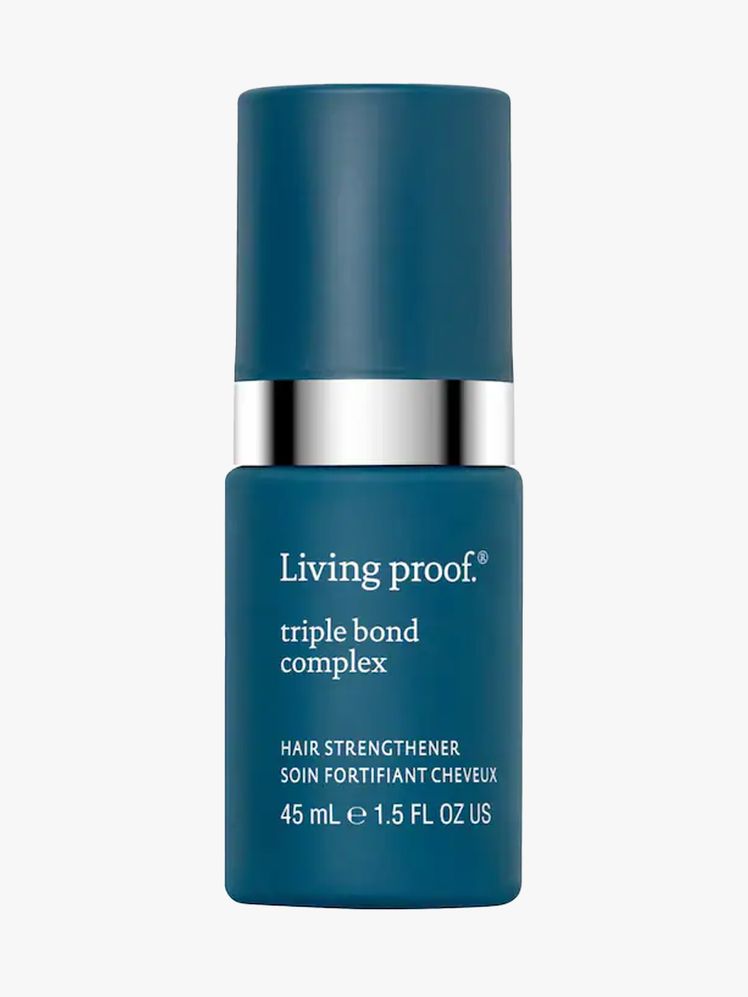
Living Proof’s Multi-Bond Strengthening Approach
Living Proof’s Triple Bond Complex uses a different strategy than most bond-repair formulas. Rather than focusing primarily on reconnecting broken disulfide bonds, its patent-pending 3D Fortifying Technology creates additional hydrogen, ionic, and covalent bonds within damaged hair. This approach adds multiple layers of reinforcement within the damaged structure rather than rebuilding one specific bond type.
The technology represents one of several distinct pathways within the “bond repair” category. The market includes small-molecule disulfide chemistry, peptide chain-targeting biomimetics, protein-filling approaches, and now this multifaceted bonding system—each with different mechanisms, different scientific evidence bases, and different claims about what they accomplish.
Frequently Asked Questions
What are the three types of hair bonds that can break?
Disulfide bonds are strong covalent connections that give hair strength, hydrogen bonds are weaker connections that break and reform with moisture and heat, and ionic bonds are temporary links between amino acids disrupted by pH changes.
Which bond repair treatment works the fastest?
Olaplex No. 3 Plus works in three minutes, compared to the original's 10 minutes, thanks to the addition of glutamic acid that helps the formula penetrate deeper into the hair cortex.
Can bond repair treatments restore hair to its original condition before damage?
No, no topical product can fully restore hair to its pre-damage state, but the best formulas create new supportive bridges within the hair structure and make damaged strands look and feel significantly healthier.
