
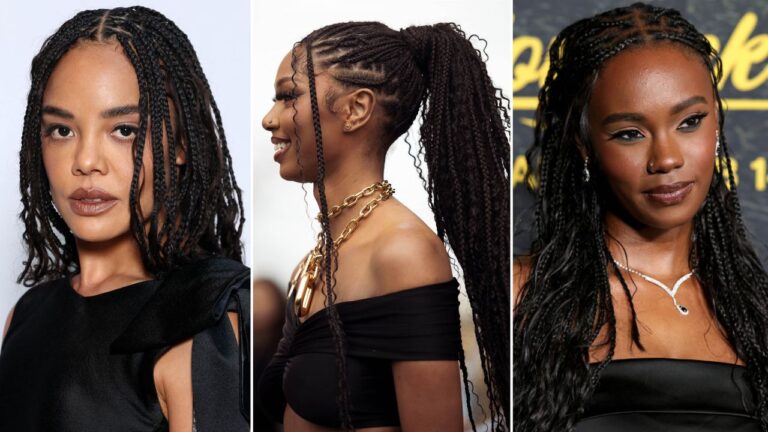
Key takeaways
- Goddess braids use knotless installation with curls integrated during the braiding process, costing $300 to $500 depending on materials and geographic location.
- Experts disagree on definition: some prioritize defined braids with minimal curls, while others emphasize fuller looks with more loosely woven hair throughout.
- Scalp care requires oiling 2-3 times weekly, shampooing every 2-3 weeks, and sleeping with satin protection to maintain braids for the full 6-8 week wear period.
- Style variations include small, smedium, half-up, ponytail, and lob lengths, each offering different versatility and installation time options.
Goddess braids represent a contemporary evolution in protective styling that blends the lower-tension benefits of knotless braids with decorative curls woven throughout the plaits. The style has gained significant traction among braiders and clients seeking alternatives to installation methods that place excessive stress on the scalp and hairline.
What Are Goddess Braids?
A Flexible Definition
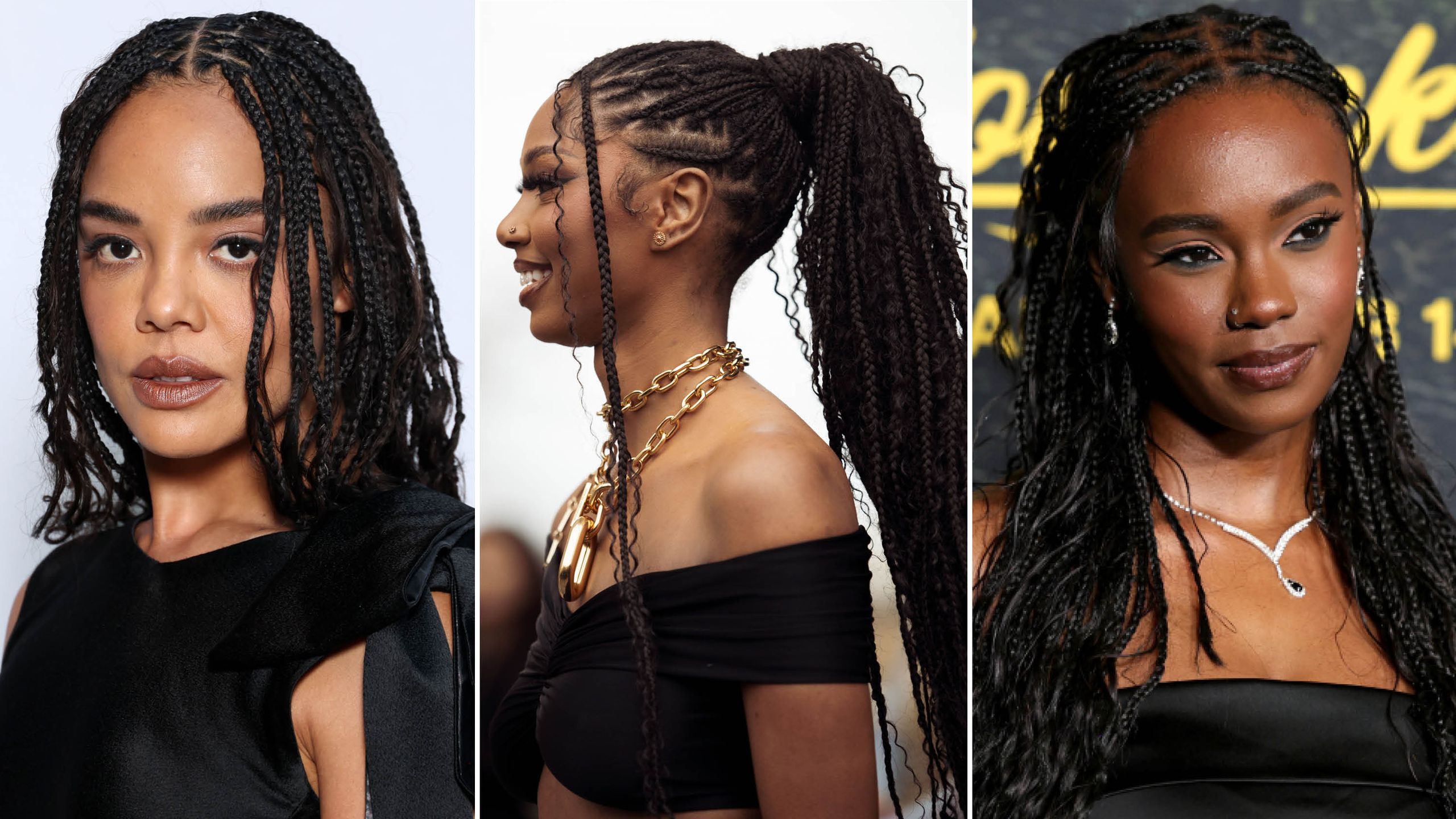
Defining the style proves tricky within the braiding community due to variations in interpretation and execution. Jess Rutana, founder of Zuri Hair Studio in London, observes that “the terms ‘goddess braids’ and ‘boho braids’ are often used interchangeably, and their meanings can vary between braiders.” Both styles employ knotless techniques with human or synthetic curls incorporated into the braids, yet practitioners disagree on fundamental characteristics.
The curl philosophy divides experts into distinct camps. According to Susy Oludele, a New York City-based braider, goddess braids use minimal curl integration. “Goddess braids take only a few curls. The braid stays defined and the finish is clean,” she explains. This approach prioritizes braid visibility and structured appearance while adding softness through selective curl placement. Rutana offers a contrasting perspective shaped by Zuri Hair Studio’s signature technique. “Goddess braids contain significantly more loose human hair, creating a fuller finish where the braids are less visible,” she states. This interpretation emphasizes volume and movement as defining characteristics, essentially inverting the priority of braid prominence versus curl dominance.
Why They’ve Become Trending
The surge in goddess braid adoption stems from multiple practical and aesthetic advantages that address longstanding concerns within protective styling. According to Shanna St. Cyr Alexander, a braider based in New York and Los Angeles, goddess braids deliver “versatility, longevity, and a little more dimension than traditional knotless braids.” The timing of this trend connects directly to evolving attitudes about scalp health and comfort during protective styling.
The 1990s and early 2000s saw dominance of Poetic Justice-style braids, which featured thick plaits anchored with knots at the roots. This installation approach created substantial pressure against the scalp and tension on the edges and hairline. Oludele articulates the cultural shift: “There’s less weight, less pressure on the scalp, and less tension on the edges. We’ve all watched what heavy styles do to a hairline over time, and women are done with it.” The knotless method eliminates this concern entirely. Beyond tension reduction, the woven curls add fullness and movement without requiring the hair weight associated with thicker braids. “Goddess braids give you a full, beautiful look without your head hurting for three days after you leave the chair,” Oludele notes, highlighting the comfort factor that distinguishes this style from more demanding protective options.
The Installation Process
Preparation sets the foundation for a successful installation. Oludele explains that “natural hair gets cleansed, deep-conditioned, and stretched or blow-dried first.” This preliminary work ensures the natural hair is in optimal condition before additional tension is introduced. Once the foundation is ready, the braider introduces braiding hair and loose curls. The curl integration happens during the braiding itself rather than as a separate step. “The curly pieces go in while you are braiding, worked into the braid as you go,” Oludele describes. Regarding materials, Rutana indicates that “synthetic hair, human hair, or a combination of both may be used,” depending on the client’s preferences and the braider’s design choices.
What to Budget
Goddess braids typically range from $300 to $500, according to Oludele. Ariana Greene, who works in New York and New Jersey, adds that using exclusively synthetic hair may reduce costs compared to human hair options. However, Oludele emphasizes a critical budgeting step: hair cost clarification. “Ask your braider if hair is included in the initial quote before you even sit in the chair,” she advises. “That’s where people get caught.” This distinction matters significantly, as some salons bundle hair into the total price while others charge separately. Pricing varies based on geographic location, the quality of materials chosen, and the complexity of the desired finished look.
Maintaining Goddess Braids
Weekly and Bi-Weekly Scalp Care
Scalp care demands consistency to preserve both the style and the health of your natural hair. Oludele recommends oiling your scalp two to three times weekly and washing every two to three weeks using diluted shampoo applied with an applicator bottle. “A dirty scalp breaks hair,” she emphasizes, underscoring the connection between cleanliness and longevity. For oil, Camille Rose’s Rosemary Oil Strengthening Hair + Scalp Drops combines rosemary and peppermint oils for soothing benefits. Aunt Jackie’s Grapeseed Style and Shine Recipes Power Wash Intense Moisture Clarifying Hair Shampoo incorporates apple cider vinegar and aloe, both possessing antibacterial and antimicrobial properties suited to scalp maintenance.
If You Choose Human Hair
If human hair constitutes your loose curls, additional attention becomes necessary. Rutana explains that “the loose human hair strands require regular care because they are more likely to tangle if neglected.” Her maintenance protocol involves gentle separation and detangling with intention. “Start at the ends and work upward, holding the hair close to the braided section to avoid pulling on the braid or natural hair,” she instructs. A soft-bristled detangling brush suits this task better than fine-toothed combs. Between washes, a leave-in conditioner like Shea Moisture’s Jamaican Black Castor Oil Strengthen & Restore Leave-In Conditioner refreshes the style. Alexander recommends adding “a serum to keep the hair looking shiny and help prevent matting.” Rutana suggests L’Oréal Paris’ Elvive Extraordinary Oil Miracle Hair Serum for smoothing loose hair and adding shine without weighing down the braids.
Overnight Protection and When to Remove
Nighttime protection preserves your braids and maintains their appearance throughout the wear cycle. Greene advises sleeping with a satin pillowcase alongside a satin scarf, then splitting hair into two sections and fastening them into braids or twists. This prevents friction and tangling while you sleep. Kitsch’s XL Satin Bonnet for Sleeping provides an oversized option that accommodates fuller braid styles. Finally, Oludele stresses the importance of timely removal: “A protective style should give your hair back to you healthier than it came.” She recommends taking down braids after six to eight weeks, at which point your natural hair benefits from a break before the next protective style application.
Popular Styling Options
Small goddess braids sit between micro and traditional sizing, offering versatility and extended neatness when maintained properly. The smaller dimensions allow for more intricate updo options while holding their shape longer throughout the wear period. Moving up the size spectrum, smedium goddess braids split the difference between small and medium dimensions, creating a fuller appearance while requiring less installation time than smaller variants. This sizing appeals to clients seeking visual impact without the extended salon appointment associated with micro-level braiding.
Half-up, half-down styling keeps braids away from the face while showcasing curl details, a particularly striking option with curly goddess variations. This arrangement functions both practically and aesthetically, allowing easy styling transitions throughout the day. Pulling small or smedium braids into a ponytail serves both practical and aesthetic purposes, with options ranging from wrapping braids around the ponytail base for a regal effect to leaving face-framing pieces for a romantic presentation. A goddess-braided lob offers a shorter alternative to traditional waist-length braids, combining the trending cut with protective styling benefits while maintaining the visual interest of curl-enhanced plaits.
Source: Allure
Frequently Asked Questions
How much do goddess braids cost?
Goddess braids typically cost between $300 and $500. Price varies by geographic location, material quality, and whether the braider includes hair in the initial quote or charges it separately. Always confirm whether hair is included before sitting in the chair to avoid surprise costs at checkout.
How often should I wash and oil my scalp while wearing goddess braids?
Oil your scalp 2-3 times weekly and wash it every 2-3 weeks using diluted shampoo in an applicator bottle focused on the scalp itself. Proper scalp care is essential because a dirty scalp breaks hair, so consistency matters throughout your braid wear cycle.
How long can I wear goddess braids?
Keep goddess braids in for 6-8 weeks maximum before removing them to allow your natural hair to recover. A protective style should return your natural hair healthier than when you started, which is why timely removal is important for long-term hair health.
