
Key takeaways
- Koebnerization—the immune system's response to skin trauma—is the primary concern when removing hair with psoriasis, as minor injuries can trigger new plaques even in previously unaffected areas.
- Shaving and laser hair removal are generally the safest options for people with controlled psoriasis, while waxing carries the highest risk of causing microabrasions.
- Managing your psoriasis with prescription treatments like Humira or Skyrizi significantly reduces Koebnerization risk, making hair removal safer overall.
For people managing psoriasis, hair removal can feel like navigating a minefield of potential triggers. Yet with the right knowledge and precautions, you can safely remove unwanted hair even while dealing with this inflammatory skin condition. According to board-certified dermatologists specializing in skin health, the key lies in understanding how psoriasis interacts with common hair removal methods and choosing approaches that minimize trauma to your skin.
What Makes Hair Removal Tricky When You Have Psoriasis
The primary concern for people with psoriasis considering hair removal is a phenomenon dermatologists call Koebnerization. This is the tendency for trauma to the skin—even minor injuries—to trigger new psoriatic plaques in previously unaffected areas. “For people with psoriasis, the Koebner effect occurs when trauma stimulates the immune system to develop plaques,” explains Shira Y. Wieder, MD, a board-certified dermatologist at Montefiore Einstein Advanced Care in New York City. A small nick from a razor or a burn from too-hot wax can potentially activate this response, particularly if your psoriasis is already active.
It’s important to understand that this is not the condition “spreading” in the contagious sense. Psoriasis is not infectious. Rather, minor skin injuries can initiate a new inflammatory reaction anywhere on your body, especially if your psoriasis remains uncontrolled by medication. According to Divya Shokeen, MD, a board-certified dermatologist and founder of OSVI Dermatology and Surgical Institute in California, people with psoriasis also contend with inherently drier skin, which compromises the skin barrier. This means irritation develops more easily than it would for people without the condition. The skin tends to develop more redness, stinging, or lingering marks from things that a non-psoriatic patient would tolerate without issue.
The Foundation: Managing Your Psoriasis First
Prescription Treatments and Biologic Medications
The first step in approaching hair removal safely is to ensure your psoriasis is well controlled through prescription treatments. Many modern psoriasis medications can completely eliminate symptoms, dramatically reducing Koebnerization risk. Injectable biologic medications like Humira and Skyrizi have proven particularly effective at achieving this control. “If you’re taking an injectable medication like the biologics Humira or Skyrizi,” notes Tracy Evans, MD, a board-certified dermatologist and medical director of Pacific Skin and Cosmetic Dermatology in California, “you’re likely in a much better position to pursue hair removal safely.”
The Reality of Risk Management
However, since psoriasis cannot be cured—only managed—the risk of Koebnerization from hair removal technically remains for anyone with the condition. That said, the risk drops significantly in people whose psoriasis is well controlled by medication. “The risk of triggering new plaques drops but doesn’t fully disappear,” Dr. Shokeen clarifies. The situation changes dramatically if you’re still searching for a treatment regimen that works for you. In those cases, all hair removal methods carry substantially higher risk, as anything causing repeated mechanical trauma could potentially trigger a flare.
Speaking With Your Dermatologist
Before trying any new hair removal method, it’s essential to have a conversation with your own dermatologist about your specific situation. The path forward involves trial and error to find which approach works best for your individual skin, guided by professional medical advice.
The Safest Hair Removal Methods for Controlled Psoriasis
Shaving: The Baseline Option
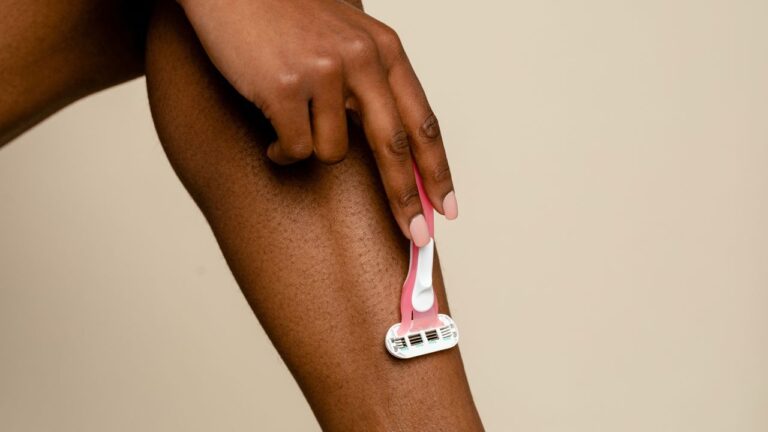
All three dermatologists interviewed for this guidance agree that shaving ranks among the safest hair removal options for people with psoriasis. The mechanism is relatively straightforward: shaving removes hair above the follicle rather than pulling it out, which reduces trauma. Dr. Evans emphasizes this distinction: “You’re [removing hair] above the follicle, not pulling it out.”
However, technique matters enormously. Dr. Wieder stresses using a sharp razor and shaving in the direction of hair growth rather than against the grain. Both practices help ward off the irritation that can trigger Koebnerization. If you’re navigating around an existing psoriasis plaque, proceed with extreme caution. “Avoid shaving off the scales because it’ll bleed underneath,” she warns. Cutting into plaque tissue can initiate bleeding and further damage.
Laser Hair Removal: A Surprisingly Effective Option
Laser hair removal might seem like it carries high trauma risk, yet dermatologists agree it’s actually one of the safer options for psoriasis patients when administered correctly. Studies have even shown lasers’ potential for treating psoriasis itself. “Even though you would think a laser would be traumatic to the hair follicle, it does seem to be safe,” Dr. Wieder says. Heat and light don’t appear to pose problems for people with psoriasis in the way physical trauma does.
Dr. Shokeen performs laser hair removal on psoriasis patients regularly and has clear preferences about equipment. She favors long-pulsed Nd:YAG lasers operating at 1,064 nanometers, though diode lasers (about 800 to 810 nanometers) can also work if the settings are properly adjusted. The balance is delicate: if the device’s energy is too low, you’ll get hair regrowth; too high and you risk laser burns that could trigger Koebnerization. “It’s complicated to treat a psoriatic patient with lasers, to say the least,” Dr. Shokeen notes.
For this reason, she strongly recommends seeking laser hair removal in a physician-supervised, medical-grade setting rather than at standard laser chain locations. The expertise required to calibrate settings for psoriasis patients exceeds what many commercial facilities provide. “There are more med spas than McDonald’s,” she observes, expressing skepticism about whether all of them employ staff fully trained to handle psoriasis safely.
Depilatories: A Gentler Chemical Approach
Hair removal creams offer another gentle option for psoriasis management because, like shaving, they don’t cause significant trauma to hair follicles. However, depilatories can be irritating to many people, with or without psoriasis. Dr. Wieder always recommends a patch test on the areas where you plan to apply the product before full use. If you want to use it on your face, she suggests trying “some spots under the chin to see if you can tolerate it” first.
Methods Requiring Extra Caution or Avoidance
Waxing and the Risk of Microtrauma
Although people with controlled psoriasis can certainly get waxed, this method arguably carries the most risk among common options. “Waxing could pull on the skin and create microabrasions or tears,” Dr. Evans explains. Psoriasis is more likely to develop in areas that have been injured, even when damage is minor. If waxing damages the skin, new flare-ups could emerge even in areas where you didn’t previously have plaques.
Licensed esthetician Shailer Carruth, based in Brattleboro, Vermont and specializing in Brazilian waxing, approaches psoriasis patients with heightened vigilance. “The first thing I do if I’m going to wax someone who has psoriasis is check for any broken skin,” she says. If you’re handling waxing yourself, Carruth recommends using hard wax, which adheres only to hair, not surrounding skin. Strip wax, by contrast, exfoliates the top skin layer—further aggravating a psoriatic condition.
Tweezing: High Follicle Trauma
Plucking presents similar concerns due to the trauma inflicted on hair follicles during the removal process. “Plucking is very traumatic to the hair follicles,” Dr. Wieder cautions. While psoriasis on the face is relatively uncommon, it’s not impossible. If you’re prone to facial plaques, you should think carefully before choosing tweezing as your hair removal method.
Managing a Flare-Up After Hair Removal
Despite all precautions, micro-injuries during hair removal can occasionally trigger a flare-up in people with psoriasis. If this happens, you can typically manage the area using your topical prescription medication. If the flare persists beyond what your topical treatments address, contact your dermatologist for guidance, as they may need to adjust your overall psoriasis management plan. Professional intervention ensures the reaction doesn’t escalate.
Frequently Asked Questions
What is Koebnerization and why is it important for people with psoriasis considering hair removal?
Koebnerization is the tendency for trauma to stimulate the immune system to develop new psoriatic plaques, even in areas that weren't previously affected. For hair removal, this means minor injuries like razor nicks or wax burns can trigger flare-ups, particularly if your psoriasis is uncontrolled.
Which hair removal methods are safest for people with controlled psoriasis?
Shaving (using a sharp razor in the direction of hair growth) and laser hair removal (in a medical-grade setting with proper settings) are considered among the safest options. Depilatories are also relatively gentle. Waxing and tweezing carry higher risks of skin trauma.
What should I do if hair removal triggers a psoriasis flare-up?
Apply your topical prescription medication to the affected area. If the flare persists despite treatment, contact your dermatologist for guidance, as they may need to adjust your overall psoriasis management plan.
