
Key takeaways
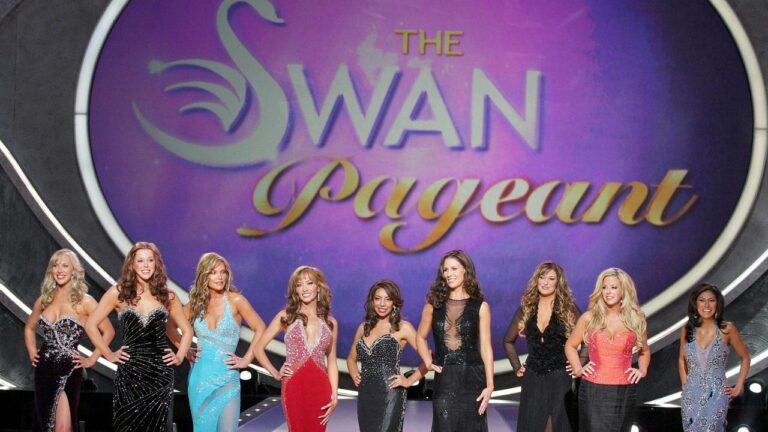
- The Swan's finale featured almost 1,000 guests watching nine women crowned after secretive surgeries and months of isolation, with one contestant's reunion with her family cut from the aired version.
- Surgeons Randal Haworth and Terry Dubrow performed procedures on contestants who underwent eight hours of surgery on average, with recovery complications like infections that never aired.
- Kelly Alemi's transformation included saline breast implants, liposuction from waist to ankles, a brow lift, and a 45-pound weight loss, leading to a TV-ready comeback in Baltimore.
- Critics condemned the show as objectifying women and setting unrealistic beauty standards, while creator Nely Galán defended cosmetic procedures as personal choice and self-improvement.
When The Swan debuted on Fox in 2004, the reality makeover series became an instant cultural phenomenon. Audiences tuned in to watch nine female contestants receive complete physical transformations—surgical and otherwise—before competing for the title of Ultimate Swan at a televised pageant finale. What happened offscreen, however, told a far more complex story than what aired nationally. Ahead of a new Hulu documentary examining the controversial series, Allure contributor Joan Kron revisited her September 2004 investigation into the show’s first season, revealing the details contestants never disclosed and the behind-the-scenes realities that shaped the experience.
The Finale Nobody Expected
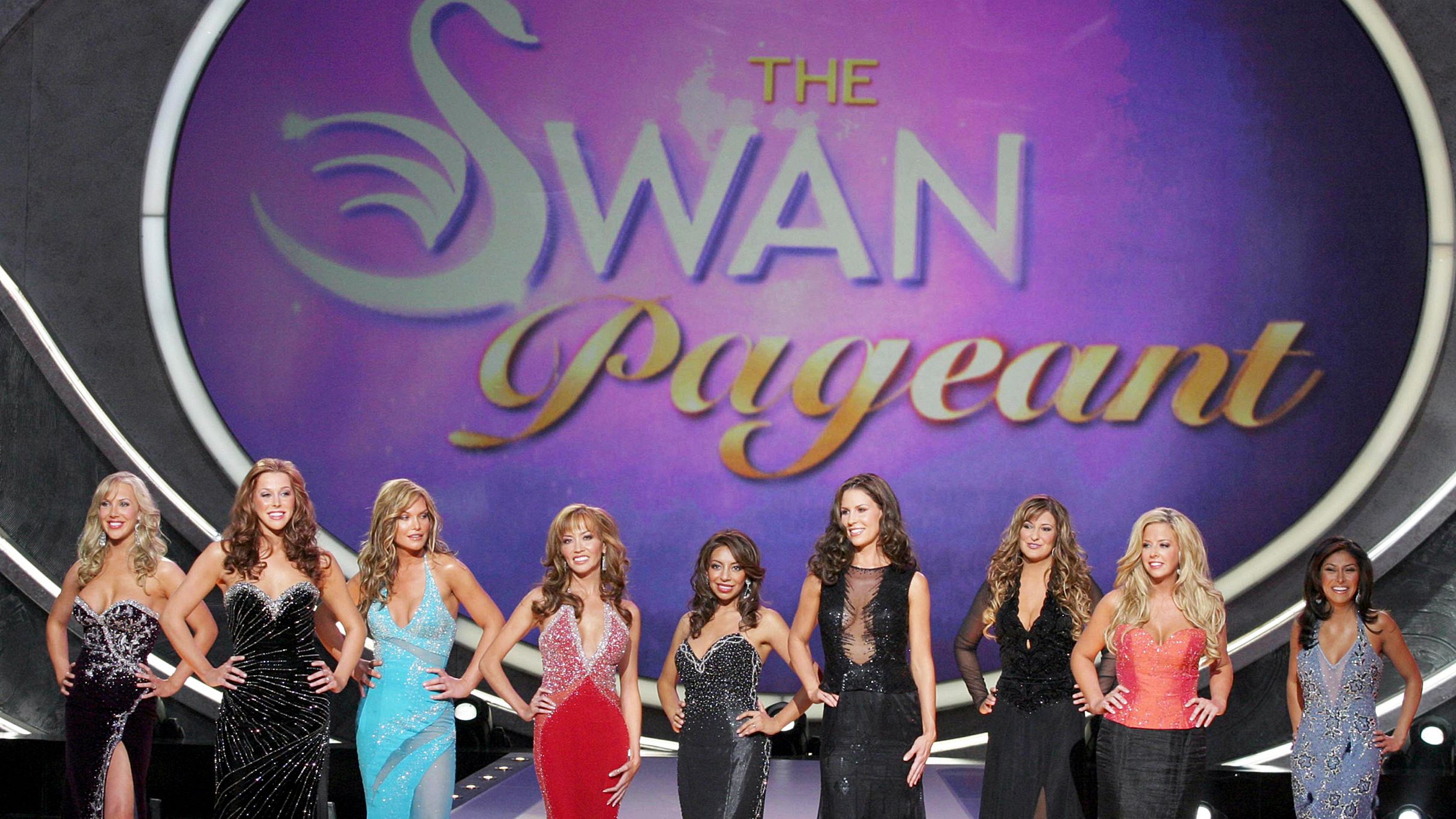
Nearly 1,000 guests, mostly families, friends, and producers, filed through metal detectors to attend the Swan pageant finale on a soundstage adjacent to the American Idol set. Spectators surrendered cameras at the door, waved homemade signs supporting their favorites, and settled into the VIP section beneath a fake deep blue sky studded with sparkling lights. For most viewers watching at home, the two-hour broadcast showcased nine polished women in evening gowns, presented with their before videos and emotional confessions.
What the television audience did not see, according to Allure’s reporting, was a carefully managed production designed to hide uncomfortable moments. When contestant Beth Lay reunited with her family after four months apart, with her husband carrying their four-year-old son, the child did not recognize his own mother. The boy twisted away from her arms, trying to escape. Production stopped. After a 45-minute pause to allow the family to reacquaint privately, the scene was reshot without the child, and no other contestant received a filmed reunion that day. Allure noted that when the pageant aired three days later on national television, the moment vanished entirely.
Who Created The Swan
Series creator and executive producer Nely Galán, the former head of entertainment at Telemundo, designed the show around a philosophy of transformation as self-improvement. She believed that competition would motivate participants more effectively than any other incentive. “What would motivate me to get in shape?” Galán asked herself while developing the concept. “If I was in a movie naked, or in a beauty pageant.” She was equally candid about her own cosmetic history. According to Allure’s interview, Galán had undergone Botox injections, collagen fillers, Restylane, tooth veneers, and was considering a breast augmentation. “If something bothers you, you have it fixed,” she told the publication. “I’m not ashamed. I don’t make a secret of anything.”
The Medical Arsenal
Behind each transformation stood a full roster of specialists. Two plastic surgeons, Randal Haworth and Terry Dubrow, led the surgical component, supported by a cosmetic dentist, a dermatologist, a Lasik eye specialist, a psychotherapist, an exercise trainer, a choreographer, and a pageant coach. Backstage at the finale, ten makeup artists, ten hairstylists, and nine dressers finished the Swans for their pageant debuts, according to Allure’s account. The infrastructure existed to remake nine women simultaneously, and it operated with precision.
What Happened During Those Four Months
The show’s production timeline compressed all surgical procedures into a single four-to-five-week window. Contestants then entered recovery inside a cluster of mirror-free, phone-free apartments in Marina del Rey, California, with views of the Hollywood sign. This was a controlled environment where they had no contact with the outside world and only one another for support. Round-the-clock nursing staff, a psychotherapist, and Galán supervised their recovery. Allure’s investigation revealed that this period harbored complications the broadcast never acknowledged.
The Hidden Complications
Some contestants cancelled procedures after witnessing the swelling in women who underwent them first. A few experienced yeast infections during recovery, a common complication after surgery and antibiotics, yet these incidents remained off-air. Alemi noticed that some Swans became hesitant about lip lifts after seeing the post-operative swelling in early recipients. The medical team managed these concerns quietly, but the contestants bore the full burden of recovery without external support systems or the ability to reach out to family and friends.
Life Without Phones and Mirrors
The isolation served a purpose: prevent contestants from dwelling on their changing appearances or questioning their choices. But the psychological toll was evident once they left. Kelly Alemi, a 28-year-old graduate student from Baltimore, later described the experience as plastic-surgery prison. When she and her fellow finalists were finally released after the pageant taping concluded, Allure reported that Alemi ran through the studio hallways screaming, “We’re free, we’re free!” The ability to make a phone call, to eat normally, to move freely without supervision—these basic freedoms became cause for celebration.
One Contestant’s Eight-Hour Transformation
Kelly Alemi’s surgical journey illustrated the scope of what the show considered necessary transformation. According to Allure’s reporting, Alemi’s surgery lasted eight hours and included a brow lift, removal of cheek fat, lip enlargement using fat harvested from her abdomen, saline breast implants, and liposuction from under her chin, her waist, and all the way down to her ankles. Surgeons Haworth and Dubrow had recommended additional procedures, a nose job and cheek implants, but Alemi and Dubrow agreed she did not need them, so those were declined.
Alemi’s recovery was what she called excruciating. She could not walk for two days and could not turn over in bed for three weeks. Her motivation, she confided to Allure, was straightforward: “All my life I wanted other people’s features, Angelina Jolie’s lips, Jennifer Aniston’s hair, Demi Moore’s body, and big boobs.” By the end, she had acquired reasonable facsimiles, and she reported proudly that people want my features now.
Returning to Baltimore
Ten days after the finale taping wrapped, Alemi stood at her Baltimore condominium door 45 pounds lighter, with 34D saline breast implants (which she referred to as her Hollywood boobs), spray-on tan, and long blonde hair extensions worth $3,500. A Welcome Home Kelly banner hung in her living room, left over from a party where she and her boyfriend, Bob Moxley, watched the pageant broadcast on their plasma television. Stacked on an end table were copies of People, US Weekly, and TV Guide featuring coverage of the show.
The reintegration into normal life proved disorienting. Alemi, who had worked as a flight attendant for USAir for five years before becoming a licensed makeup artist for Prescriptives, found herself unable to navigate a supermarket after four months of having her meals provided. She had forgotten how to use her cell phone. Walking her dog alone at night required adjustment. She told Moxley, “I’m used to having a security guard with me.” Yet she also experienced immediate recognition. At a crab shack in Baltimore, a waitress made five separate trips to her table to stare. At an Orioles game, a player slipped her a note asking to sleep on her couch. A cashier at Sam’s Club asked for an autograph.
The Extensions Didn’t Last
Within months, Alemi’s transformative elements began to dissolve. The $3,500 hair extensions, human hair welded to her head, ended up in a plastic bag of Swan memorabilia. “I couldn’t brush my hair for three months,” she explained to Allure. “You had to order special shampoo. The extensions were beginning to fall out, and replacing them was expensive.” Soon the Botox in her brow and the perm in her eyelashes would wear off. By contrast, the surgical changes would remain, as would her engagement ring. Moxley proposed on Fourth of July during fireworks, and Alemi immediately began pitching her wedding to Fox and to 20 magazines as a sponsorship opportunity. “I’d get married on TV in a heartbeat,” she told Allure. “That would be fun, a fairy tale America helped me achieve.” Only a local wedding magazine responded to her pitch.
The Nation’s Reaction
The Swan’s popularity among audiences did not translate to critical approval. USA Today called it a plastic surgery horror show. Rosie O’Donnell denounced the series publicly, arguing it sets women back 30 years. Plastic surgery associations warned that the show created unrealistic expectations. The Boston Globe was particularly harsh, criticizing the contestants’ rubbery lips eerily cast from the same mold and teeth from the same box of Chiclets, comparing the pageant competitors to a fleet of flaming drag queens in trashy lingerie.
Beauty, Fraud, and Hierarchy
Sociologist Jacque Lynn Foltyn, quoted by Allure, identified a deeper anxiety underlying the backlash: the belief that surgically altered women are beauty thieves who assume a status that should belong exclusively to those born naturally beautiful. This framing cast cosmetic surgery recipients as frauds compared to the aristocrats of beauty, those with genetic advantages. The word pretty itself, Foltyn explained, derives from Old English meaning trick or being tricked. In American culture’s unofficial hierarchy, natural beauty consistently trumps artificial beauty, even as Americans celebrate self-made success in nearly every other domain.
Ambivalent Audiences
What may have unsettled viewers most, according to Foltyn’s analysis cited by Allure, was how ambivalent we are with surface manipulation, especially when it is brazenly displayed rather than hidden away and denied. We’re rooting for the contestants, and at the same time, we’re snickering and resenting them. The show simultaneously attracted and repelled its audience. People watched religiously while criticizing the contestants for vanity and the show for promoting objectification. Few viewers acknowledged their own dissatisfaction with their appearance or admitted they’d consider similar procedures.
What Came Next
The Swan’s cultural moment proved durable. Fox launched a second season in October 2004, with fresh contestants. The format was exported to a dozen countries, beginning with Germany. Regan Books, the publisher behind the best-selling Zone Diet series, released The Swan Curriculum, an inspirational self-improvement guide promising makeover guidance on practically every topic except how to perform one’s own surgery.
For Alemi and her fellow Swans, life moved forward, though not all received the hero’s welcome she experienced. Some relatives and friends who had cared for the contestants’ children while they were in isolation grew resentful of the women’s sudden stardom. Several Swans struggled to define who they were after the cameras stopped rolling. Rachel Love-Fraser, the 27-year-old construction-company clerk who won the title of Ultimate Swan, and the others faced the reality that a televised makeover, however thorough, could not resolve the deeper questions the show had raised about beauty, identity, and self-worth.
Source: Allure
Frequently Asked Questions
What was The Swan reality show about?
The Swan was a Fox reality makeover series that premiered in 2004, giving nine female contestants access to surgeries, dental work, fitness training, and styling before competing in a pageant finale. According to Allure's reporting on the first season, the show provided a full team of medical professionals and specialists.
How many procedures did the contestants undergo?
According to Allure's investigation into the show, contestant Kelly Alemi underwent eight hours of surgery including a brow lift, cheek-fat removal, lip enlargement using abdominal fat, saline breast implants, and liposuction. Contestants could choose or refuse procedures recommended by surgeons Randal Haworth and Terry Dubrow.
What happened to Kelly Alemi after The Swan?
Kelly Alemi lost 45 pounds during the show and returned to Baltimore with her 34D saline breast implants, which she called her Hollywood boobs, along with hair extensions and a spray tan. According to Allure, her boyfriend Bob Moxley proposed to her on Fourth of July with fireworks, and she later pitched her wedding to Fox and magazines for sponsorship.
